





.jpg)

 (1).jpg)
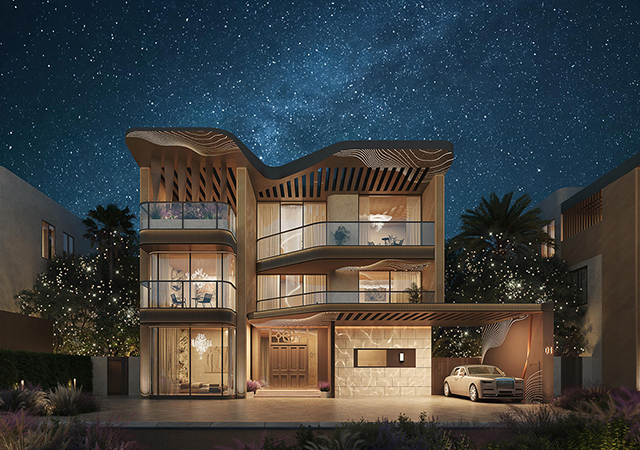



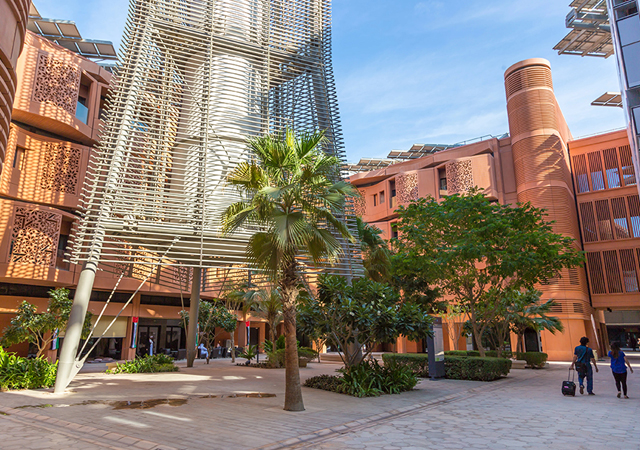
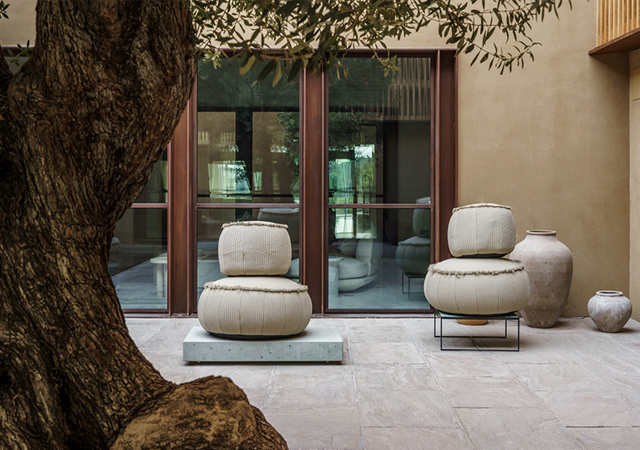
 COR-TEN’s natural oxidised patina blends well with both modern glass façades and traditional stonework.
COR-TEN steel, a corrosion-resistant, high-tensile steel alloy recognised for its striking weathered appearance, is gaining popularity as a material of choice for distinctive architectural projects across the Middle East region. Combining long-term durability with a naturally warm, organic aesthetic, it offers an appealing solution for contemporary, low-maintenance façades, according to Façade Solutions.
COR-TEN is a trademarked brand name for steel that was developed by the US Steel Corporation in the 1930s.
“COR-TEN steel, also known as self-weathering steel, is increasingly seen as a desirable material in modern architectural projects due to its distinctive rust-like appearance and inherent strength,” Asif Kibria, Managing Director for Façade Solutions, tells Gulf Construction in an exclusive interview. “Its natural oxidised patina provides a warm, contemporary aesthetic that blends well with both modern glass façades and traditional stonework.”
APPEAL IN THE MIDDLE EAST CLIMATE
Asif emphasises that, in the Middle East, where design often seeks to leave a bold and lasting impression, COR-TEN steel offers multiple advantages, including its low maintenance, aesthetic appeal, and inherent strength.
He points out, however, that its application must be well planned. “COR-TEN steel can be a very desirable choice in the Middle East when used thoughtfully – ideally in controlled environments or inland projects – delivering both iconic aesthetics and practical durability,” he says.
 |
|
COR-TEN requires virtually no repainting or surface treatment once the patina has stabilised. |
The key to the material's performance is its self-weathering property, a process that differentiates it from ordinary steel. “Unlike ordinary steel, COR-TEN develops a stable oxide layer, or patina, when exposed to alternating cycles of wet and dry conditions,” Asif explains. “This patina acts as a protective barrier: it resists further corrosion and gives the material its distinctive rust-like appearance, which deepens in colour over time.”
To guarantee a high-quality finish for architectural applications, Façade Solutions employs controlled methods to manage the weathering process.
“At Façade Solutions, we recognise that achieving a uniform and controlled patina is essential for architectural applications,” Asif states. “Pre-weathering techniques are often applied in controlled environments, allowing the steel to begin the patina cycle before installation.”
The firm also focuses heavily on design details. “Detailing and drainage design are carefully engineered to prevent streaking, water stains, or patchy weathering,” he states.
One of the company’s “most innovative challenges,” Asif recalls, involved a COR-TEN façade exposed to the Middle East region‘s demanding climate.
“The project required creating a bold, rusted steel exterior that would serve as the signature identity of the building, but the local environment – characterised by high heat, humidity, and occasional salt exposure – posed significant risks of uneven weathering and accelerated corrosion,” he explains.
 |
|
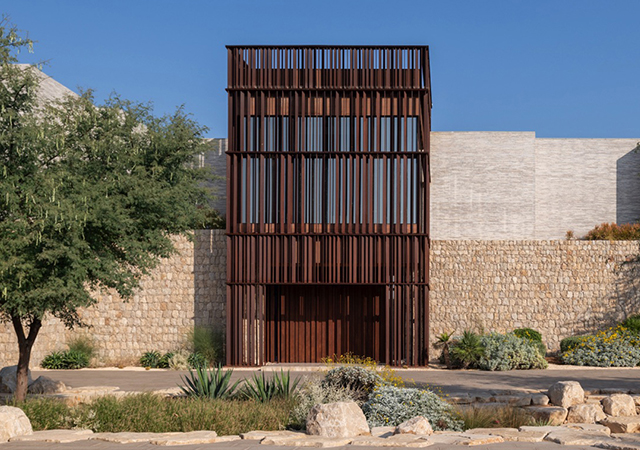
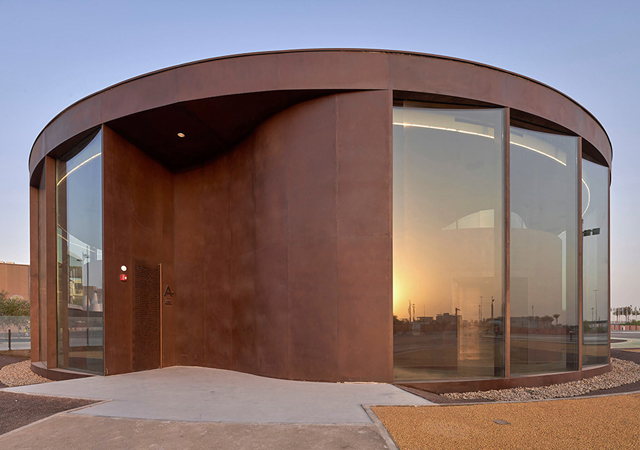
COR-TEN steel was used to create an impressive façade for a heliport terminal. |
“Façade Solutions’ engineering and design teams played a central role in overcoming these challenges,” he says. “They developed precise jointing and drainage solutions to prevent streaking or premature corrosion at weak points. To guarantee uniformity, our designers specified controlled pre-weathering of panels before installation, ensuring the façade began with a consistent tone and matured naturally on site.”
“Our engineers optimised panel thicknesses and support systems so the steel retained its sculptural lightness while meeting strength and safety requirements. Designers collaborated with fabricators to create full-scale mock-ups for client approval, fine-tuning the visual outcome before full deployment. Through this collaboration, we not only met the architect’s bold vision but also demonstrated how COR-TEN steel can be adapted for the Middle East context – balancing aesthetic innovation with technical performance,” he says.
COMPARISON AND SUSTAINABILITY
When compared to alternative cladding materials like aluminium and stainless steel, COR-TEN offers an exceptional blend of qualities.
“COR-TEN steel stands out as a low-maintenance, durable, and sustainable cladding option that combines structural strength with a distinctive, evolving aesthetic,” he says. “It forms a self-protecting patina that resists further corrosion, making it highly durable in inland and dry climates, and requires virtually no repainting or surface treatment once the patina has stabilised.”
 |
|
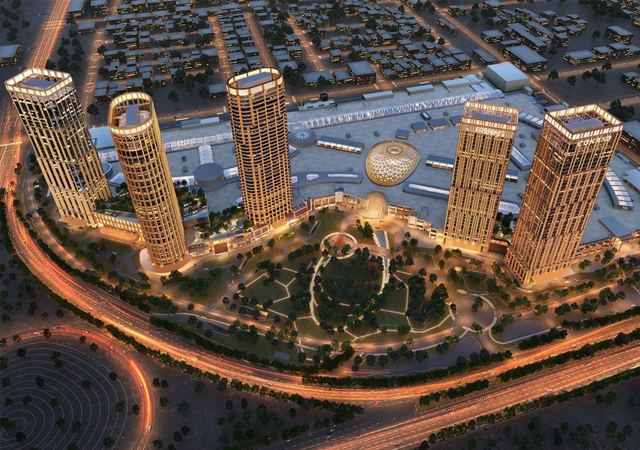
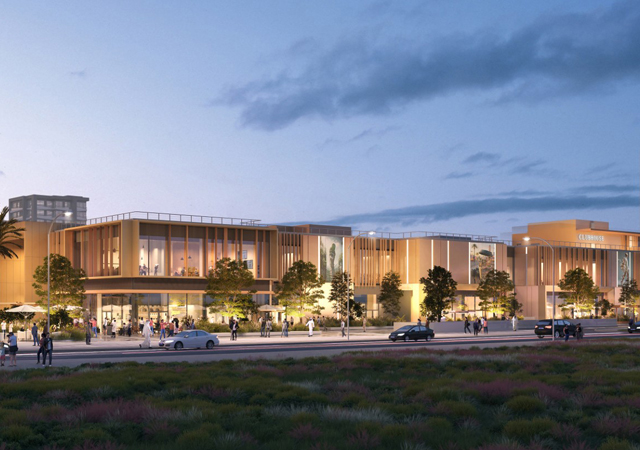
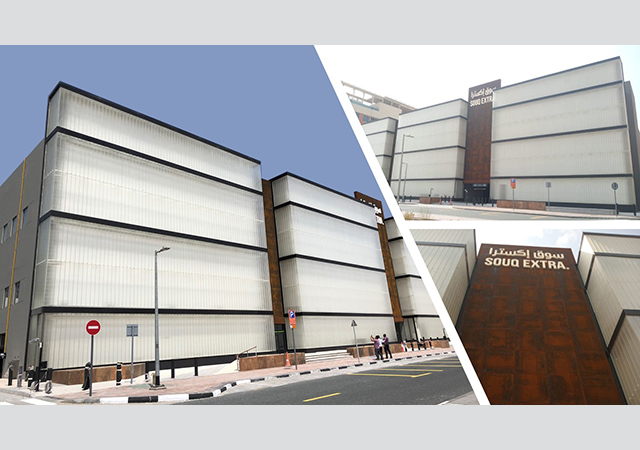
COR-TEN delivers a warm, evolving appearance with natural rust tones for a shopping centre in the UAE. |
In terms of aesthetics, he notes that COR-TEN delivers a warm, evolving appearance with natural rust tones while other materials offer a “sleek, modern look” or a “polished, high-tech aesthetic.”
Furthermore, the material aligns with the company's commitment to sustainable construction. “COR-TEN steel plays a valuable role in supporting our commitment to greener, more responsible construction,” Asif comments, citing its extended lifespan, low maintenance and reduced chemicals, 100 per cent recyclability, and material efficiency.
ARCHITECTURAL APPEAL
Ultimately, Asif says, COR-TEN steel is about enabling powerful architectural statements.
COR-TEN steel empowers bold architectural visions because its unique properties allow for façades that truly stand out and engage the viewer. Its most notable feature is its distinctive aesthetic identity – the natural, earthy patina of reddish-brown rust that develops and evolves over time, giving each building a unique, “living” character unlike conventional metals.
This rich colouration allows for strong visual contrast, enabling architects to design striking compositions when pairing it with sleek materials like glass and concrete, or allowing it to harmonise beautifully with natural stone and wood. Furthermore, COR-TEN steel's high structural strength grants sculptural flexibility, supporting slim profiles, custom detailing, and bold geometries without compromising durability.
“COR-TEN steel is not just a cladding material – it’s a design statement that empowers architects and clients to realise façades that are memorable, iconic, and enduring. The self-weathering surface matures gracefully, ensuring façades maintain their standout impact for decades,” he concludes.
