











































 (1).jpg)
The construction and engineering sector across the Gulf Cooperation Council (GCC) is undergoing a profound transformation, moving rapidly from an analogue past to a digital, data-driven future. However, this shift has exposed an acute talent crisis: a “hybrid skills gap” that threatens to slow the region’s ambitious pipeline of giga-projects.
According to Stéphanie Reniers, Co-Founder and CEO of Gentis, a leading AI-powered talent solutions provider, the most pressing need isn’t for purely technical proficiency, but for professionals who can seamlessly integrate engineering expertise with digital fluency and sustainability knowledge. The need for hybrid talent is now paramount.
“The biggest gap isn’t purely technical, it’s hybrid,” Reniers states. “You need engineers who can read both blueprints and dashboards; BIM specialists who also speak sustainability; project leads who think beyond delivery and into lifecycle.”
The region’s projects are now complex digital ecosystems, yet many seasoned professionals were trained for a simpler era – an analogue world. This mismatch means brilliant engineers are often struggling to navigate the data-rich environments of modern mega-projects. Addressing this demands a fundamental shift in both training and recruitment strategy.
 (1).jpg) |
|
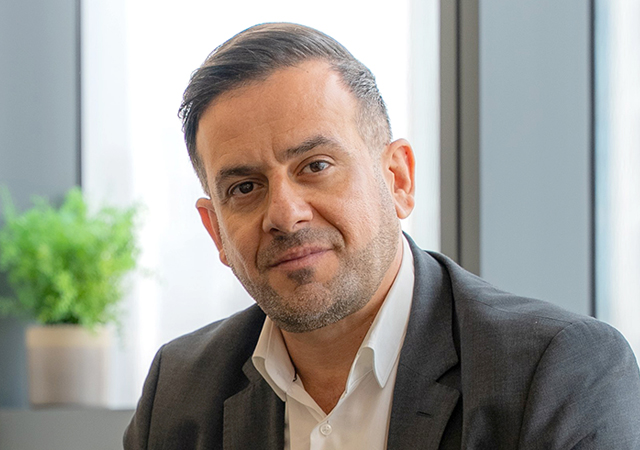
Gentis has been in the Middle East since 2022, helping organisations attract, retain and grow top-tier talent. |
CONTRACTUAL IMPERATIVE OF SUSTAINABILITY
The global and regional push for sustainability and green building certifications is no longer a peripheral corporate social responsibility concern; it has become a contractual necessity. Reniers emphasises that “the sustainability wave is no longer optional, it has become contractual. Every tender now carries green KPIs.”
This new reality has created a severe demand for a specific, scarce set of competencies. Roles like energy modellers, sustainability engineers, and digital construction managers are at the top of every hiring list. The challenge for GCC firms, however, is not just attracting these experts, but knowing how to effectively integrate them into existing project workflows and organisational structures.
The increasing stringency of green standards has exponentially increased the value of environmental and energy expertise.
 (1).jpg) |
|
Blending technology and human focus is central to Gentis’ onboarding strategy. |
AI: FROM REACTIVE HIRING TO PREDICTIVE READINESS
The traditional, reactive model of recruitment is proving incapable of meeting the scale and complexity of GCC project demands. Gentis has pioneered a transformative approach using Artificial Intelligence (AI) through its recruitment platform, Wiggli, shifting the focus from simply filling vacancies to predictive workforce planning.
“Through Wiggli, our AI-powered recruitment platform, we’ve moved from reactive hiring to predictive workforce planning,” Reniers explains. “It analyses project timelines, skill databases, and market availability to forecast talent demand months in advance.”
This predictive capability fundamentally alters the project lifecycle. Instead of ‘firefighting’ to secure staff just before a project’s kickoff, firms can strategically place compliant and site-ready personnel in advance. This focus on readiness, not replacement, is where AI delivers its most significant value.
A powerful case study from a major mixed-use project in Saudi Arabia demonstrated the tangible impact of this approach. By introducing predictive matching through Wiggli, the project achieved a remarkable 68 per cent reduction in time-to-hire and saw retention rates improve by 34 per cent, Reniers says.
“We didn’t just fill roles faster; we filled them smarter. AI allowed us to match not just technical fit, but behavioural alignment which is what keeps people on site longer,” she adds.
THE TRUE CHALLENGE OF AI ADOPTION
While the potential of AI is immense, Reniers cautions that its adoption is gated by fundamental data infrastructure challenges across the construction sector. “AI can only be as smart as the information it’s fed,” she notes.
The primary obstacle is the prevalence of data silos. Most construction firms still rely on disparate systems for HR, procurement, and project management that fail to communicate. This traps crucial project insights, preventing the predictive analysis that AI requires to be effective.
To unlock AI’s full potential, GCC construction companies must commit to three key elements of data-driven workforce planning:
Unified data ecosystems: Establishing a single source of truth across all organsational functions.
Predictive modelling: Moving beyond static dashboards to implement “what-if” simulations for every conceivable scenario, from material delays to labour shortages.
Skills-based management: Shifting the focus from managing by titles to managing by actual capabilities.
Gentis leverages its AI models to analyse past project data, upcoming tenders, and even visa or mobility patterns across the GCC. This provides a deep understanding of the market pulse, allowing the company to anticipate not only what skills are missing but when and where they will be needed, delivering data-driven recruitment powered by human intuition.
“So, when a client calls us for a mega-project in Riyadh or Abu Dhabi, we already know the market pulse. It’s data-driven recruitment but powered by human understanding because no algorithm replaces intuition built over 20 years in this field,” Reniers remarks.
GENERATIVE AI AND THE HUMAN TOUCH IN TALENT ACQUISITION
Beyond predictive modelling, Generative AI is shaping talent acquisition by enhancing the human elements of recruitment. Gentis uses it to craft personalised, human-sounding messages for candidates, moving away from generic corporate communication. It also assists in simulating interview scenarios and building development plans based on nuanced soft-skill insights.
Reniers views Generative AI as an “assistant for empathy”, enabling recruiters to focus their energy on listening and engaging, rather than rote screening.
This blend of technology and human focus is also central to its onboarding strategy. Digital tools are used to create highly effective, visual pre-site-readiness programmes, such as virtual site tours and AI-guided learning paths, ensuring new joiners arrive “confident, not confused”.
However, the most effective practice, Reniers argues, is the blend of automation with emotion: “AI can customise training and monitor progress, but it’s the human anchor, a mentor or site buddy for instance, that makes onboarding stick.
“At Gentis, we design ‘humanised onboarding’ frameworks that balance both. It’s tech-enabled, but heart-led,” she says.
STRATEGIC SHIFT: FROM CREDENTIALS TO CAPABILITIES
Ultimately, predictive staffing tools are helping the industry make a crucial strategic pivot: from credential-based to skills-based hiring.
“We stopped asking ‘what’s your degree?’ and started asking ‘what can you do?’” Reniers notes. AI’s ability to map transferable skills hidden within a CV has opened doors to a more diverse talent pool, including individuals with non-linear career paths who bring the agility required for modern projects.
The economic impact of this data-driven shift is significant. In one UAE infrastructure project, analytics flagged a 12 per cent inefficiency caused by subcontractor overlaps. Digitally re-sequencing the workflow resulted in savings of over a million dirhams,” she points out.
For construction leaders navigating this transformation, Reniers advises against allowing automation to overshadow connection. “Don’t let automation kill connection. Technology should remove friction, not feeling,” she says.
The future success of the GCC construction sector hinges on its ability to embed a data culture that leverages AI for efficiency, while ensuring a humanised onboarding process that fosters long-term retention and project success.