






Bahrain’s construction sector is awaiting the launch of several landmark infrastructure schemes, notably the Busaiteen Bridge, the $3-billion Bahrain Metro and the $5-billion King Hamad Causeway — projects that take on added significance as the GCC states accelerate efforts to realise a long-envisaged Gulf railway network. The kingdom has already taken concrete steps to strengthen its transport infrastructure, with works under way to improve airport connectivity, and industry stakeholders now expect it to be only a matter of time before these long-anticipated schemes are formally announced by the Tenders Board.
While transport is on everyone’s mind because of these big-ticket projects, the nation has demonstrated a landmark commitment to housing, with a record BD800 million ($2.1 billion) allocated in the 2025-2026 budget to fast-track the creation of 50,000 new residential units. This directive, stemming from His Majesty King Hamad, targets the reduction of the current social housing waiting list, leveraging large-scale public-private partnerships (PPPs) and major housing cities like Madinat Salman, Khalifa City, and East Sitra to meet citizens’ needs. As part of the National Day celebrations last month, His Majesty also directed the immediate provision of housing services to 7,000 citizens.
Beyond housing, Bahrain’s construction sector continues to advance with key infrastructure, transport, and energy projects supporting Economic Vision 2030. The kingdom is fundamentally reshaping its utilities and transport networks through ambitious PPP schemes. The energy sector is transitioning with the planned Sitra Independent Water and Power Production Plant (IWPP), a major facility set to deliver up to 1,500 MW of power and 30 million gallons per day (MGD) of water. Concurrently, new anticipated tenders for the Bahrain Metro – a vital 109-km automated network – and crucial GCC rail links underscore a strategic pivot toward sustainable and efficient mobility, aiming to support the nation’s economic vision and integrate Bahrain more fully into the regional infrastructure grid.
Looking ahead, the construction industry is expected to record an annual average growth of 4.9 per cent between 2026 and 2029, supported by investments in transport infrastructure and renewable energy projects aligned with Bahrain’s Economic Vision 2030, according to Research and Markets, an online platform that provides market and research data from publishers, consultants, and analysts.
 |
|
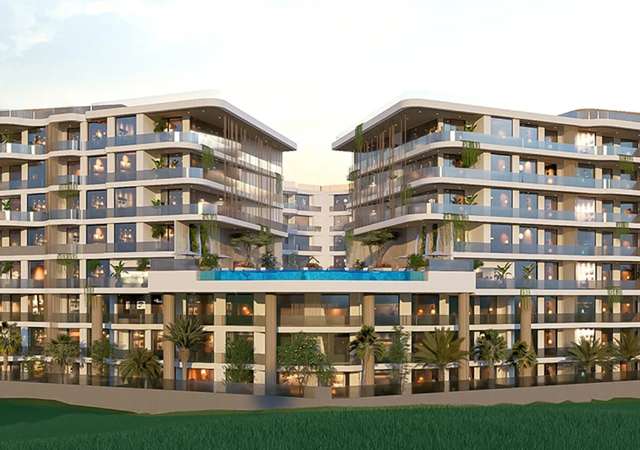
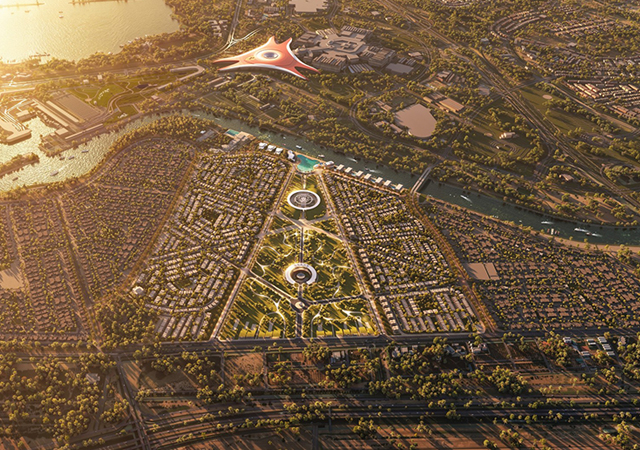
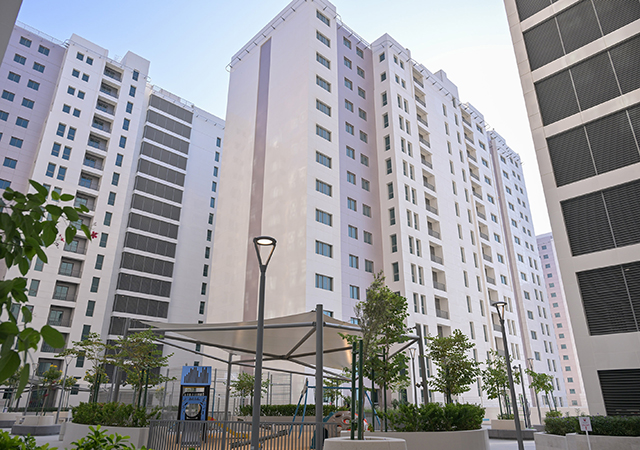
Bahrain has delivered and handed over a large number of homes through new housing cities such as Madinat Salman. |
HOUSING
Bahrain’s housing sector is currently witnessing an unprecedented level of government investment aimed at meeting citizens’ housing needs following a landmark directive by His Majesty King Hamad, who ordered the fast-tracking of such projects to achieve a target of 50,000 new units. A record BD800 million has been allocated for housing in the 2025-2026 budget to support this goal in a bid to reduce the number of families waiting to be allocated social housing which currently stands at approximately 47,600.
Over recent years, Bahrain has delivered and handed over a large number of homes through new housing cities such as Madinat Salman, Khalifa City and East Sitra. In Sitra alone, Phase One has already delivered 1,077 units, Phase Two (531 units) is around 90 per cent structurally complete, and Phase Three (1,269 units) is under way, indicating steady progress on one of the kingdom’s flagship projects.
Early last year, work was launched on 372 new residential units in Phase One of Khalifa City, with a much larger subsequent phase planned to feature 3,000 residential units.
In Madinat Salman, Phase Two of the Advanced Generation Residential Buildings Project, which involves the construction of 432 apartments, has commenced. This follows the successful delivery of 1,382 units in Phase One. The Ministry of Housing and Urban Planning is spearheading these projects and, to achieve its targets, it is partnering extensively with the private sector. In these efforts, it has already secured private sector partnerships with Delmon Gate, Almoayyed Contracting, Naseej, and First Bahrain Real Estate Development to build new residences in the city.
The Government Land Development Rights Programme (GLDP) is central to this government’s strategy, with an ambitious target to build over 7,000 homes by 2027 under its first phase. Key GLDP projects showing significant completion rates include the 131-unit Al Naseem project (79 per cent complete), the 76-unit Al Wadi project in Buhair (59 per cent complete), and the 47-unit Hoorat Sanad project (at the foundation stage, 15 per cent complete).
The expansion of supply, together with financing programmes, has helped reduce the national housing waiting list. Authorities also report high uptake of newer, more flexible housing services like the Mazaya and Tas’heel schemes, indicating a shift toward demand-driven, finance-based support rather than reliance only on direct unit allocation.
 |
|
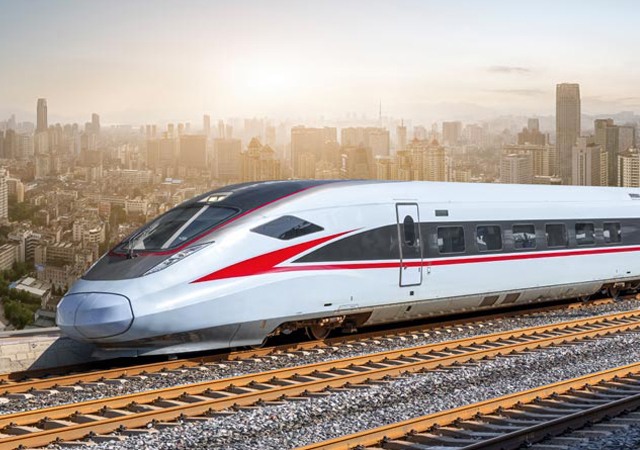
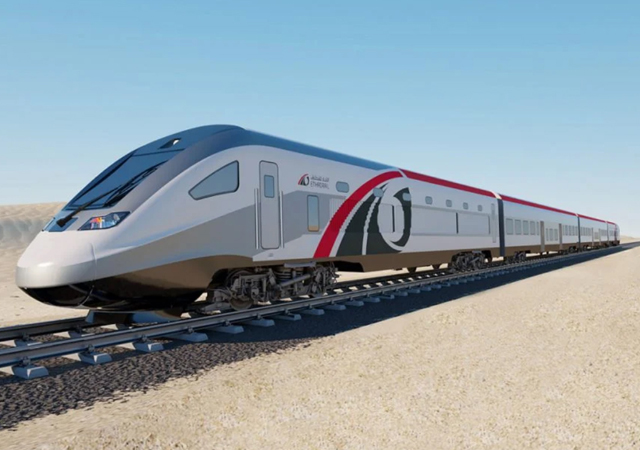
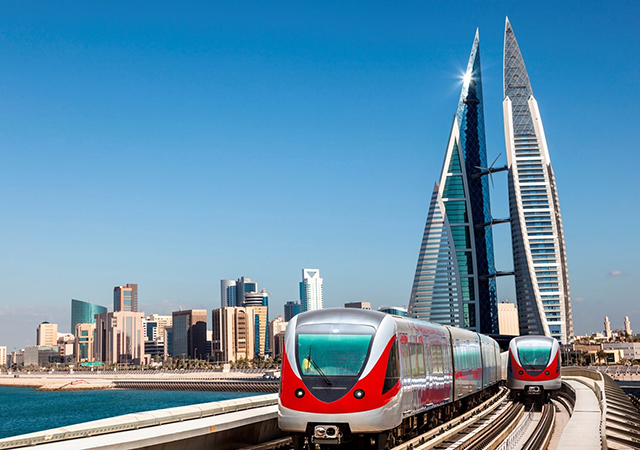
Bahrain Metro … a 109-km automated, driverless system comprising four lines. |
POWER & WATER
Bahrain’s Electricity and Water Authority (EWA) is also adopting the PPP route to boost the kingdom’s power generation and water desalination capacity.
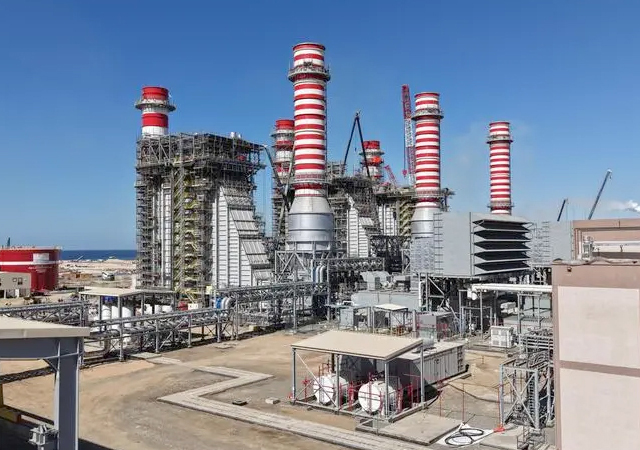
The most prominent infrastructure project in this sector is the Sitra IWPP, which is being developed under a build-own-operate (BOO) system. This major facility will utilise advanced reverse osmosis (RO) desalination technology. EWA has prequalified a number of global and regional industry leaders for this project, including Japanese groups Jera and Sumitomo Corporation and Korea Electric Power Corporation (Kepco) as well as regional players such as Saudi utility major Acwa Power, UAE-based Abu Dhabi National Energy Company (Taqa) and Kuwait’s Gulf Investment Corporation (GIC), as well as a consortium comprising Chinese companies China Energy Engineering Corporation (CEMC) and China Datang (Overseas Hong Kong), said EWA. The plant is targeted to achieve initial commercial operation (600 MW of electricity and 30 MGD of water) in the second quarter of 2028, with full commercial operation scheduled for the second quarter of 2029.
In parallel, EWA is pushing ahead with plans for a utility-scale solar power project, which will be located over a 1.2-sq-km area in southern Bahrain near the Bilaj Al Jazayer beachfront area. The authority has launched an international tender for this solar photovoltaic plant to be developed under a public–private partnership on a build–own–operate basis. The tender specifies an estimated capacity of at least 100 MW AC, with the winning bidder responsible for development, financing, construction, operation, maintenance and eventual decommissioning over a 25‑year term.
It is targeted to start commercial operations by end‑September 2027. Once operational, it is expected to supply power to 6,300 homes and cut more than 100,000 tonnes of carbon emissions annually. This initiative is a cornerstone of the National Renewable Energy Plan, aiming to increase the share of clean energy to 20 per cent of Bahrain’s energy mix by 2035 and supporting the national goal of achieving net-zero carbon emissions by 2060.
EWA is also implementing the Al Dur Solar Power Plant project as part of its key initiatives in support of the kingdom’s energy transition pathway. The foundation stone for the 100 MW project, which is expected to be completed in Q3, was laid late last month.
EWA has also launched an international tender for the engineering, procurement, and construction (EPC) of the Hawar Seawater Reverse Osmosis (SWRO) Desalination Plant. This facility is designed to produce 1 MGD of potable water, and the EPC contract will interface with related contracts for offshore seawater intake/outfall systems and ground storage tanks/pumps. The entire contract is set for completion within a two-year period following the selection of the winning bidder.
 |
|
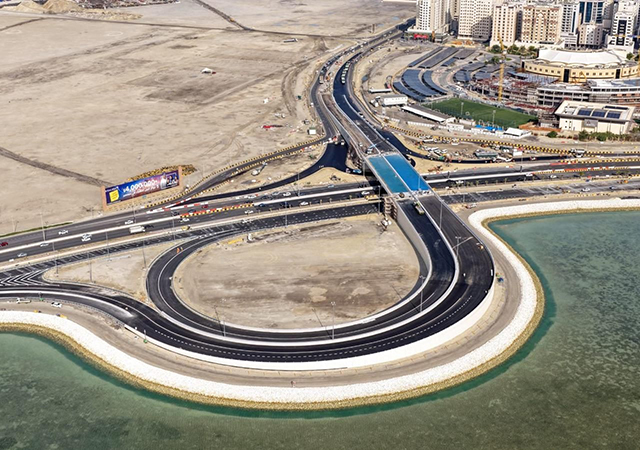
A new flyover connecting Shaikh Isa bin Salman Causeway to Avenue 105 in Busaiteen was opened last month. |
TRANSPORT & COMMUNICATIONS
The Ministry of Transportation and Telecommunications (MTT) is pursuing plans for both a domestic metro network and the integration of crucial regional GCC rail links, recognising the sector’s central role in the nation’s economic strategy, where transport and telecommunications currently account for nine per cent of Bahrain’s GDP.
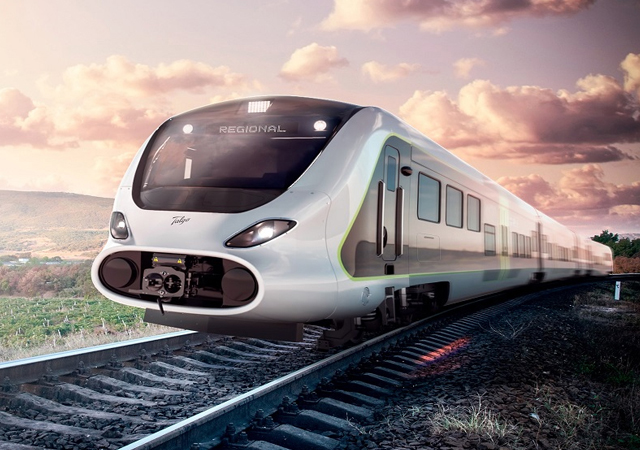
The long-awaited Bahrain Metro is a flagship PPP initiative to deliver a 109-km automated, driverless system across four lines, aligning with Bahrain’s Economic Vision 2030 for sustainable urban mobility and reduced congestion. The ministry is currently reviewing the optimal transport mode for the network, assessing whether to proceed with a traditional metro system or a monorail, to ensure alignment with Bahrain’s evolving urban needs. This decision is expected imminently and could influence tender awards (see Regional News, Page 90).
Following a decision on the transport mode, the ministry will proceed to the tender stage for Phase One, which will encompass 29 km and include 20 stations across two key lines. The first line will connect Bahrain International Airport to the Seef District, while the second line is planned to run from Juffair through the Diplomatic Area and Salmaniya, terminating at the Isa Town Educational Area.
Phase 1A Extension of the metro is also envisaged, which will comprise an 8-km spur to King Hamad International Railway Station in Ramli, enabling integration with the GCC Railway network and potential ties to the proposed King Hamad Causeway for Saudi connectivity.
 |
|
Busaiteen Link ... the 550-m signature suspension bridge will form the centrepiece of the 7.8-km North Muharraq Highway extension. |
The metro is projected to serve 200,000 passengers daily initially, cutting peak travel times by up to 50 per cent and supporting Bahrain’s population growth to 2.1 million by 2032. It complements road projects like the delayed Fourth Manama-Muharraq Crossing by providing park-and-ride hubs near key highways.
Meanwhile, connectivity to the Gulf region is expected to receive a major boost via rail through the proposed King Hamad Cause, building on the success of the King Fahad Causeway – which has seen an average 10 per cent annual traffic growth since 1986. The kingdom is actively discussing the causeway project with Saudi Arabia, a vital new link that will serve as Bahrain’s connection point for the wider GCC Rail Project.
The King Hamad Causeway is in planning as a logistics game-changer connecting to Saudi Arabia. The project has received further impetus after the 46th GCC Summit last month endorsed the General Agreement for connecting GCC states with the GCC Railway Project. The target completion date for the entire GCC Rail network is December 2030, with the UAE, Saudi Arabia, and Kuwait already having commenced work on their respective national segments. In addition, Saudi Arabia and Qatar have also sealed an agreement for a high-speed rail link linking the two countries (see Regional News, Page 87).
Further demonstrating its commitment to regional links, the Bahrain-Qatar Causeway project has been revived, with the board of the Bahrain-Qatar Causeway Authority reappointed and scheduled to meet soon. This long-standing proposed link is planned to feature a rail component as part of the causeway structure itself.
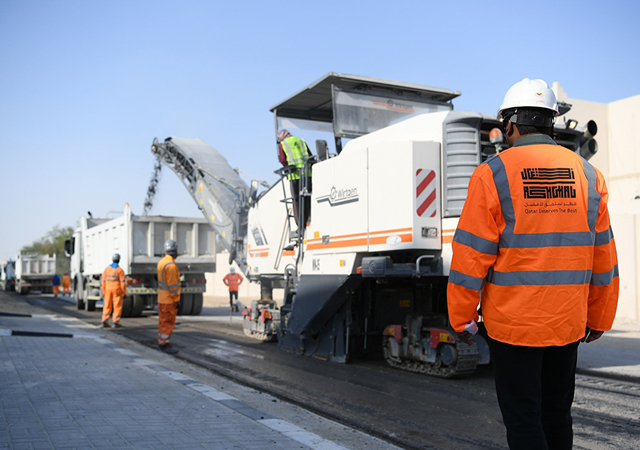
Significant progress has been made on Bahrain’s road infrastructure, demonstrated by the opening of the Muharraq Ring Road, one of the largest strategic road projects in the kingdom and a new flyover connecting the Shaikh Isa bin Salman Causeway to Avenue 105 in Busaiteen. This ring road is part of a broader government plan to improve connectivity between Muharraq and the capital through the upcoming fourth Manama-Muharraq Crossing (Busaiteen Link). The 550-m signature suspension bridge with four to five lanes in each direction, will form the centrepiece of the 7.8-km North Muharraq Highway extension and will provide the much-needed fourth road link between Manama and Muharraq Governorate.
Primarily funded by the Saudi Fund for Development, the project is intended to relieve severe congestion on the existing three causeways and serve growing northern developments including Diyar Al Muharraq, Amwaj Islands and Dilmunia. To date, land reclamation and earlier highway packages are complete, but Package Four – covering the main bridge, approach ramps and loop-road connection to the existing North Manama Causeway Phase One – remains in the pre-construction phase. Tenders were opened in November 2023, with Haji Hassan Group having submitted the lowest bid of BD104.2 million in late 2024; however, the contract has not yet been formally awarded.
 |
|
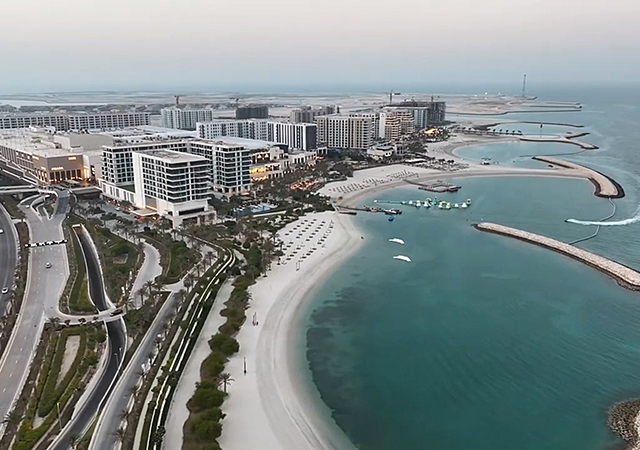
Major progress has been made on Marassi Al Bahrain, being developed by Eagle Hills Diyar, within the Diyar Al Muharraq master community. |
Another key project under way in Muharraq is the Bahrain International Airport access improvement programme which involves the transformation of Arad Highway through the Falcon Interchange. It includes reclamation for a new 398 m dual-carriageway flyover connecting Arad Highway and Khalifa Al Khabeer Highway, a new bridge over Arad Bay, and associated works.
Meanwhile, the Kuwait Fund for Arab Economic Development (KFAED) is financing the development of Shaikh Jaber Al Ahmad Al Sabah Avenue, a vital artery connecting the Southern Governorate and the capital, serving industrial, residential and commercial areas. The project scope includes widening the avenue over a total length of 11 km.
These projects underscore Bahrain’s continuous efforts to upgrade infrastructure to keep pace with rapid demographic, economic, and urban growth.
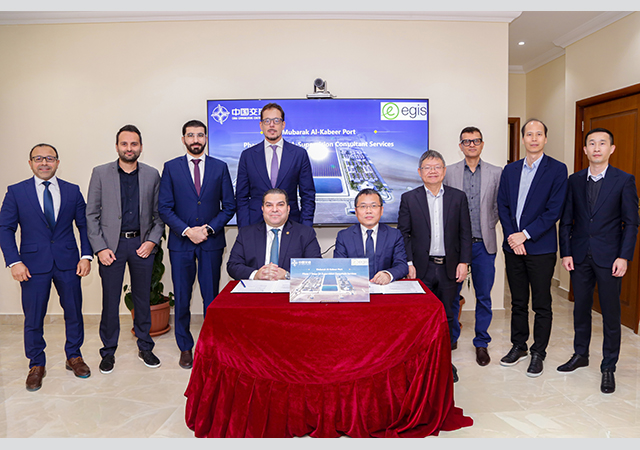
Among other developments, stc Bahrain and center3 announced significant progress on two of the kingdom’s most transformative ICT infrastructure projects: the 2Africa Pearls Submarine Cable and the Bahrain Data Center Park.
Supported by the Bahrain EDB, these projects represent a combined investment of up to $320 million. The 2Africa Pearls Subsea Cable, part of the world’s largest submarine cable system, connects 33 countries through 46 landing points, including recent deployments in Kuwait, Bahrain, Qatar, and Saudi Arabia. Meanwhile, work on the Bahrain Data Center Park, continues to progress with more than 65 per cent of the project complete.
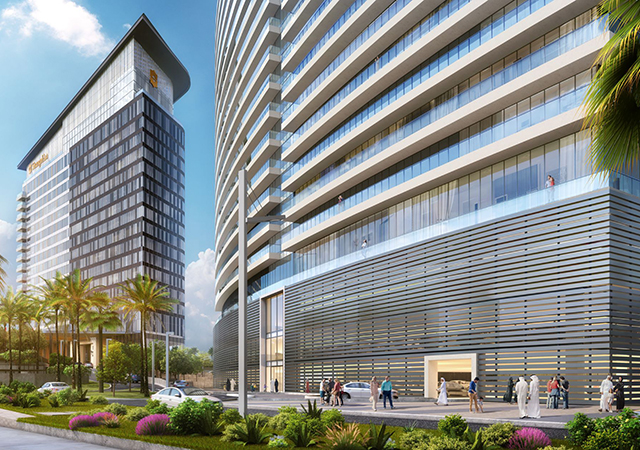
 |
|
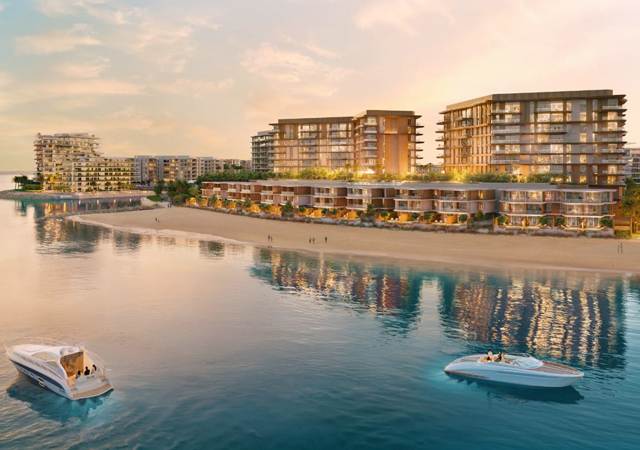
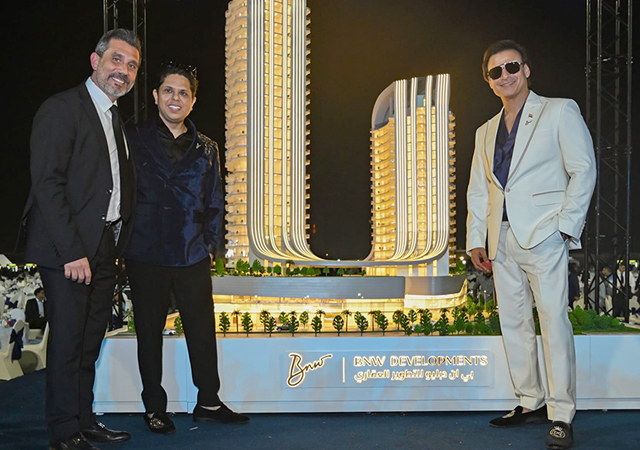
Four Seasons Bahrain Bay Private Residences ... a major project completed last year. |
REAL ESTATE
Bahrain’s real estate market demonstrated solid growth in the first half of 2025, with total transaction values rising to BD775.2 million, up from BD745.8 million in the prior year period, according to the Survey and Land Registration Bureau (SLRB).
The rise was fuelled by an accelerating pace of foreign investment, with transaction values among non-Bahraini buyers surging by 20.75 per cent year-on-year. While local demand remained strong, Bahraini-led transactions saw a more moderate rise of 4.39 per cent. This collective activity underpinned the period’s high point, which saw a single-day transaction value reach BD53.6 million on April 21.
Geographically, the Capital Governorate anchored the market’s performance, leading all areas with BD265.4 million in transactions and posting a growth rate of nearly 33 per cent. The Northern and Muharraq Governorates also showed robust activity, contributing BD215.1 million and BD197.6 million, respectively.
Several large-scale projects underscore Bahrain’s commitment to high-end residential and integrated lifestyle developments. Among them, Diyar Al Muharraq has demonstrated substantial progress across its masterplan, successfully transitioning key residential communities into the handover phase while concurrently advancing critical infrastructure on its North Islands developments.
The Al Naseem project, a fully-integrated villa community, has reached 100 per cent completion with the handover process for the final phase under way. The focus remains heavily on the North Islands, with significant strides in the Al Wasem and Suhail developments. At Al Wasem, secondary infrastructure works have begun and are expected to be completed by mid-2026.
Launched in September, Suhail is the latest freehold addition to the North Islands. It offers 62 premium residential plots, situated along both the main and inner water canals, with sizes ranging from 360 sq m for inland plots up to 1,185 sq m for waterfront plots. The project is designed to enhance community life, supported by modern infrastructure and proximity to key destinations like Dragon City and Marassi Al Bahrain.
 |
|
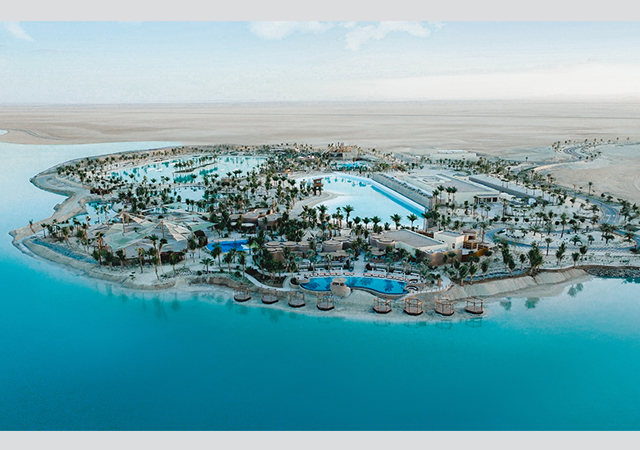
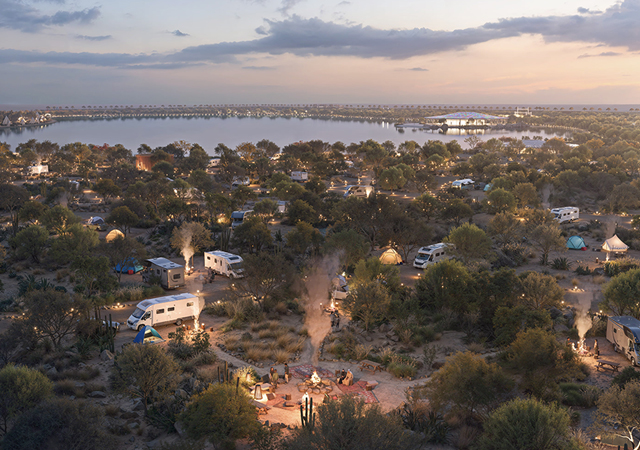
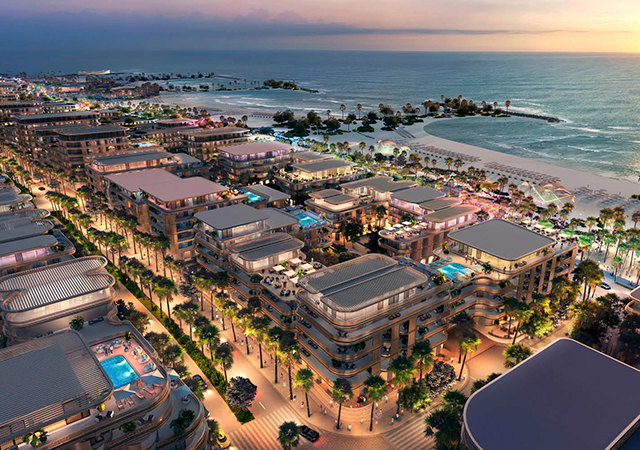
Bilaj Al Jazayer, Edamah’s flagship waterfront tourism and real estate development, taking shape along Bahrain’s southwest coast. |
Advancements in major utility projects are under way to support the expanding North Islands. AtkinsRéalis has been appointed as the lead consultant for the construction of two crucial 66 kV power substations – Umm Jaileed and Muharraq – which will power to the Al Wasem project, the commercial district, and the broader North Islands area.
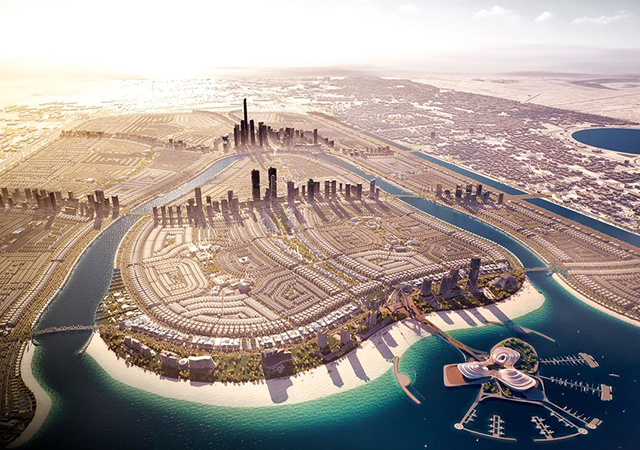
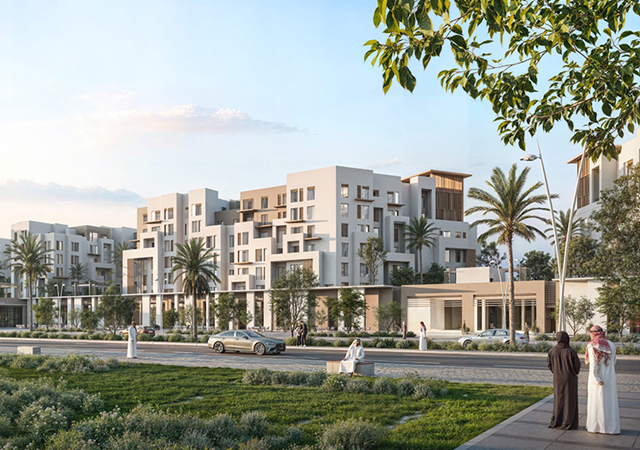
Major progress has also been made on Marassi Al Bahrain being developed by Eagle Hills Diyar within the Diyar Al Muharraq master community. Here, Kooheji Contractors is engaged in the construction of two significant residential towers: Marassi Palace, a 10-storey tower, work on which began construction in November 2024 and is scheduled for completion by May 2027; and Marassi View, also a 10-storey tower, which commenced work in December 2024 and is targeted for completion by June 2027.
Kooheji Contractors’ associate company Kooheji Development is spearheading work on two of its flagship projects in Bahrain Bay, Onyx Watergarden and Onyx Skyview. Onyx Watergarden, a 45-storey tower with 429 luxury units, is aimed for completion in 2028. Onyx Skyview is a 58-storey architectural icon which combines 442 upscale residences with 12 floors of office space, offering panoramic views and comprehensive amenities including pools, sports courts, and a cinema lounge.
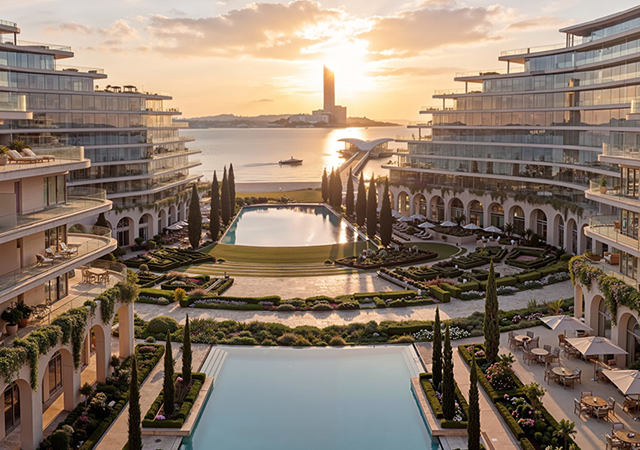
Among other luxury projects at Bahrain Bay, Bayside Developments has commenced the handover of the 112 residences at the Four Seasons Private Residences, which are linked to the Four Seasons Hotel and offer five-star concierge services.
Meanwhile, the construction sector is watching with great interest the rapid progress being made on Bahrain Marina, a transformative waterfront project on Manama’s eastern waterfront. Its developer, Bahrain Marina Development Company, recently announced the completion of 75 per cent of the first phase of construction. CBRE Bahrain has been appointed to manage the retail units and develop a leasing strategy for the 128 retail spaces within the BD200-million development, which is scheduled for delivery in the fourth quarter of 2026 (see Page 52).
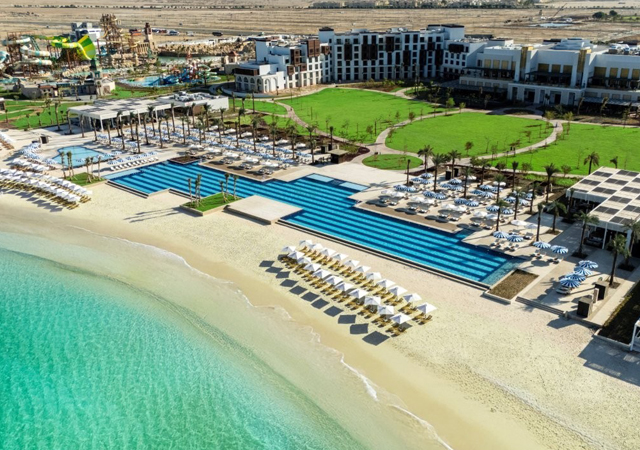
However, the epicentre of new tourism and leisure developments is in southwest Bahrain, close to key attractions such as Bahrain International Circuit, Bahrain Horse Racing Track, Exhibition World Bahrain and Al Dana Amphitheatre, where work is in progress on Bilaj Al Jazayer, Bahrain sovereign wealth fund Edamah’s a flagship waterfront tourism and real estate development (see Page 54).
The area is also expected to host a new Sports City.
Other key real estate projects include:
Bahrain Digital City: Beyon, Bahrain’s largest communications and IT company, has submitted the masterplan for its Digital City to the Urban Planning and Development Authority (UPDA). Bahrain Digital City is envisioned as a flagship smart district designed to integrate technology, enterprise, and community in one vibrant ecosystem. Featuring sustainable design and a multimodal transport system, the $1.5-billion masterplan outlines a mixed-use digital innovation ecosystem that blends commercial, educational, and research facilities with residential, retail, hospitality, and lifestyle components, all connected by state-of-the-art infrastructure and 70,000 sq m of green, pedestrian-friendly spaces.
Al Areen Masterplan: Areen Development has awarded construction contracts for its Boulevard Al Areen, a premium mixed-use development (see Regional News, Page 90) and its 151-unit residential project, Tilal. Tilal features three- to five-bedroom luxury villas and townhouses across 93,600 sq m. Furthermore, Al Areen Holding Company has partnered with Olazabal Design to create a modern 18-hole golf course spanning 1.4 million sq m as part of the masterplan for the leading destination for residence, hospitality, entertainment, and business.
Dilmunia Island: Al Ma’awdah Group is nearing completion of infrastructure works at Sharq Neighbourhood, a premium residential development featuring 32 villa plots, including exclusive seafront properties. The site was expected to be ready for villa construction by December.
Amwaj Islands: Infracorp has appointed Cyprus Cybarco Tabet (CCT) as the main contractor to execute the finishing works on the western tower of its Meliá Beachfront development in Amwaj Islands. This luxury project is designed to offer an integrated beachside lifestyle and comprises three 22-storey residential towers and 94 waterfront townhouses. The contract specifically covers the finishing of the western tower, which features 240 residential units. The development benefits from direct access to the new Muharraq Ring Road, enhancing connectivity for residents.
.jpg)