













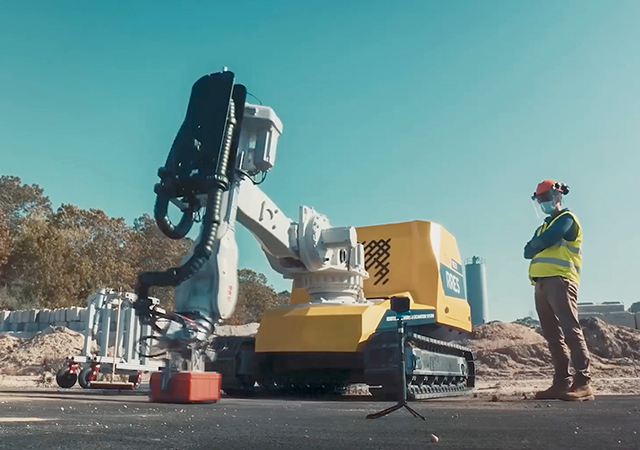







































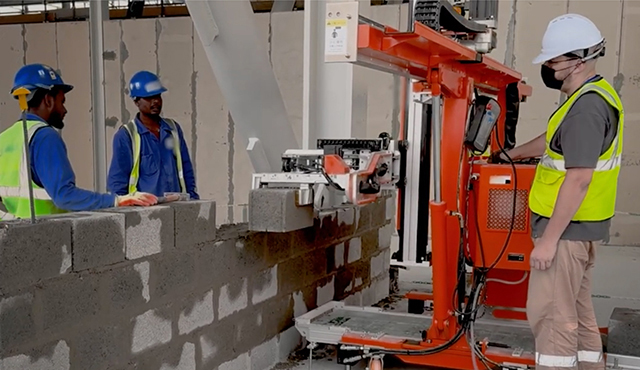
Buildroid AI, an AI robotics startup, has emerged from stealth with $2 million in pre-seed funding led by Tim Draper, known for backing Tesla, SpaceX, Skype, and Robinhood. The company also announced the launch of its first block-laying robot (BLR), built using BIM-to-Build simulation, having unveiled the technology at the Big 5 Global Construction Conference in November last year.
Slava Solonitsyn, the Co-Founder of the start-up, believes these robots have great potential in the regional market.
Speaking exclusively to Gulf Construction, he says: “We believe the deployment of robots will change the structure of the labour market, enabling the creation of more professional and highly paid positions such as robotic operators. Overall, the number of people required on a typical construction site will decrease, while design-to-build time will be optimised by 15 to 20 per cent. Over the next five to seven years, some workflows on site will become autonomous, with multiple robots collaborating to deliver end-to-end automation.”
 |
|
Buildroid AI’s team pose in front of the BLR. |
Solonitsyn, a YC alumnus who previously founded Mighty Buildings, raising over $100 million and delivering more than 50 3D-printed homes, founded Buildroid AI with Anton Glance, founder at Glance Clock (acquired by NeXtime).
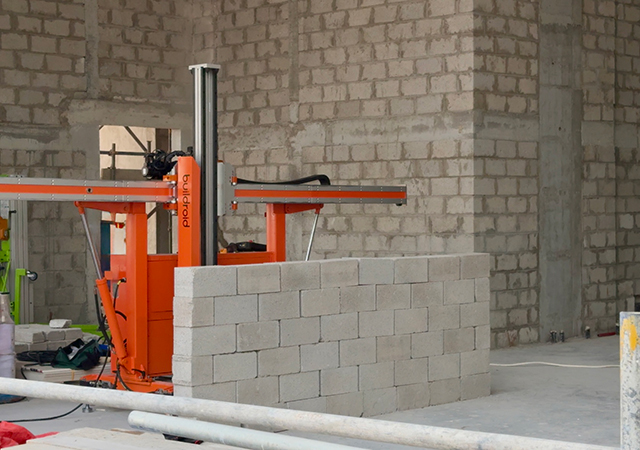
Buildroid initially aims to transform the labour-intensive partition walls segment and then open its platform for other use-cases for the UAE’s $42.75 billion construction market.
Construction in the UAE was projected to grow 5.2 per cent in 2025 and reach $130 billion by 2029, driven by infrastructure development and a surge in mega projects. Buildroid’s launch aims to boost productivity in one of the most demanding sectors with its robotics platform.
 |
|
Buildroid initially aims to transform the labour-intensive partition walls segment. |
“The UAE’s construction growth demands solutions to persistent labour shortages and productivity bottlenecks. Construction robots have been around for over a decade, but have had limited success, primarily because they automate narrow skills and require significant additional labour to support them. With the rapid development of AI, it has become possible to bring general-purpose and industrial robots to construction as well,” says Solonitsyn, who is Buildroid’s CEO.
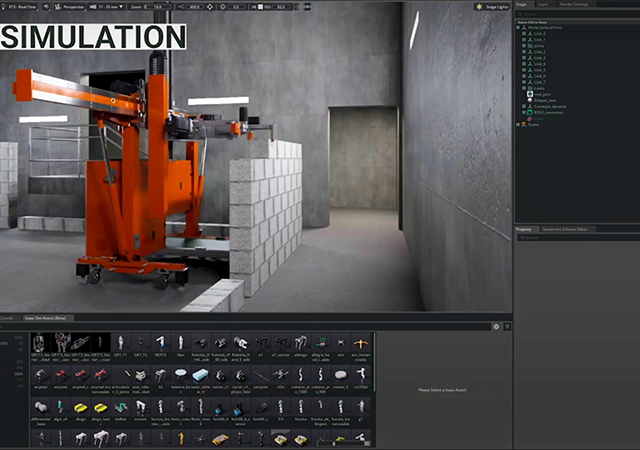
The platform integrates building information models (BIM) with AI-driven digital twin simulations powered by Nvidia Omniverse to optimise robotic workflows, enabling faster project schedules, reduced costs, and higher quality on-site execution. Its first simulated block-laying robot is already being piloted on live job sites in the UAE, such as those of leading local contractor ALEC Engineering & Contracting. It will soon be supported by autonomous mobile robots, which will deliver concrete blocks directly from pallets of materials to the block-laying robot, eliminating the need for manual support.
“ALEC self-performs significant blockwork across our projects. In line with our robotics strategy, we are piloting Buildroid’s robotic block-laying system on one of our sites. We also look forward to leveraging their upcoming BIM simulation tools to virtually test robotic solutions and de-risk on-site deployment,” said Imad Itani, Head of Innovation of ALEC.
Buildroid says its multi-robot approach delivers productivity gains of up to 10 times and cost savings of up to four times compared to manual labour. In the near future, Buildroid also plans to expand into other use cases by opening its platform to robotic operators, vendors, and contractors, effectively building a centralised operating system that manages all aspects of robotics on a construction project. This ERP system drives adoption through simulation-first workflows before orchestrating robots on live job sites.
 |
|
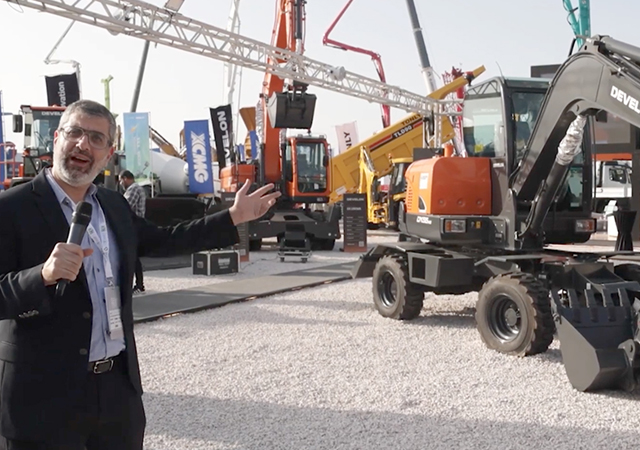
Solonitsyn ... the deployment of robots will change the structure of the labour market. |
This methodology enables developers and general contractors to deploy robots at scale, with higher overall utilisation and throughput, fundamentally differentiating the company from single-purpose robotic vendors in the Mena region, where the construction market is expected to reach $401.2 billion by 2030, the company says.
Draper noted: “Unlike single-robot solutions, Buildroid’s platform combines the best robotic technologies validated through BIM-based simulations. Such an approach empowers builders with scalable, flexible vendor-agnostic automation that maintains the critical role of skilled human operators. I’m excited to back a team that’s transforming how buildings are made, improving efficiency while empowering workers.”
Solonitsyn points out that the main impact of robots will be on build time and quality improvements, while admitting that most robots are still relatively expensive and have a longer ROI of around two to three years due to currently low utilisation rates.
 |
|
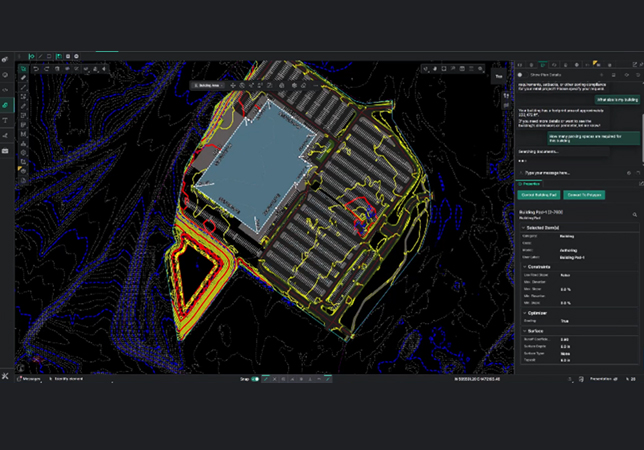
The BIM-to-Build pipeline explained. |
“However, increasing the variety of robots on sites will allow human workers to be excluded from significant portions of the work. This multi-robot collaboration will create opportunities to increase overall robot utilisation and significantly improve ROI,” he says.
With the raised funding, Buildroid plans to expand pilot programmes, refine simulation and autonomous capabilities of robotic crews, and accelerate commercial deployments. Starting with non-load-bearing walls, the company aims to rapidly scale its impact and expand into interior fit-out and broader construction workflows.
Beginning in Q2, Buildroid will deploy the first commercially available AI-powered robotics teams through partnerships with top general contractors, aiming to receive a portion of the net savings generated by the deployments.
Buildroid AI is an AI robotics startup that integrates specialised and general-purpose robots directly into contractor workflows. Its cutting-edge AI platform connects BIM with real-world execution via digital twin simulations and proprietary AI orchestration software.