












































It heats our living rooms, cooks our food and without it life would be unimaginable, yet each year fire kills an estimated 166,000 people worldwide – that’s nearly 19 fatalities every hour of every day.
Fire, when tamed, is one of the essential building blocks of civilised existence. Untamed, it can be a serial killer. The International Technical Committee for the Prevention and Extinction of Fire (CTIF) estimates that the annual cost of fire damage adds up to a whopping one per cent of international GDP or $400 billion.
In countries like the UK and across continental Europe, the threat from fire is being slowly reduced with stricter building regulations covering both passive and active fire safety measures – everything from better detection systems to catch the fire early to better sprinkler systems to put it out.
It is at our places of work – or in public buildings such as schools and hospitals – where the greater threat lies.
New commercial buildings do, of course, enjoy a much higher level of in-built passive and active fire security systems than their predecessors – both to guard against the incidence of fire and to actively control it if a fire does occur.
Those systems are also designed to prevent the spread of fire to adjoining parts of the building – or to adjacent buildings – and to provide safe and secure escape routes for everyone inside. However, far too many new buildings around the world are still being designed with one fundamental flaw built in – a defective or inappropriate glazing system.
Although designers now understand the importance of fire glass – and incorporate it into both external and internal applications – many are still relatively unaware that intrinsic safety does not simply come from the glass alone but from the whole glazing system.
It is therefore saddening to see major building projects around the world that incorporate the very latest in materials and design technology but which also utilise systems that, in a fire, will melt, buckle and fail.
Until recently, designers failed to factor superior protection of an advanced steel system into their designs. There may not have been any regulatory requirement to do so and in many parts of the world there is still no requirement.
However, the latest generation of steel glazing systems offer designers no excuses for not using a latest-generation steel system where fire security is an important consideration.
Steel systems have reduced greatly in price, look fantastic and – if the crunch actually comes – offer a huge safety advantage.
To put that into perspective, modern steel systems can deliver 120 minutes of fire resistance – more than enough time to evacuate a building and isolate the blaze. The question for any architect or designer is: why put fire glass into an inferior frame? Okay, the fire glass will work, but the framing system might not – and fire, heat or toxic fumes could get through.
In addition, a modern system is intrinsically stronger and can therefore achieve much greater spans with less material – an aesthetic consideration that not all designers have yet grasped. Yes, if size matters, it has to be steel.
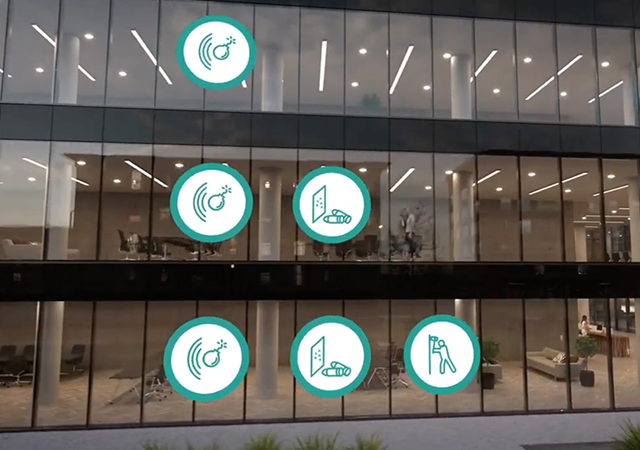
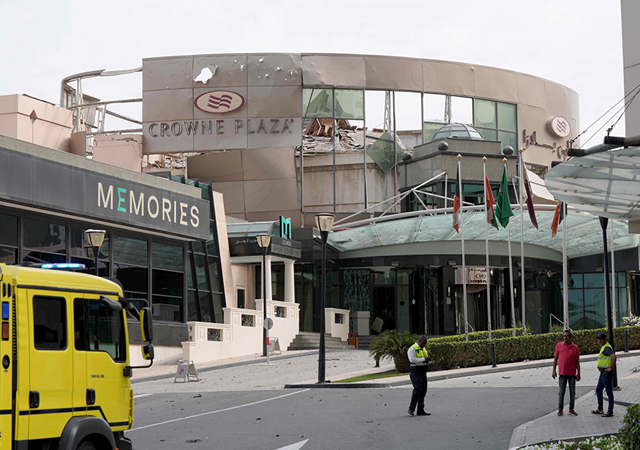
Lastly, steel offers a unique level of blast protection for those buildings that might be at particular risk. Our own SR steel glazing system has been through government-sponsored and rigorous testing to prove its blast effectiveness.
Simply, a good steel system will hold the glass in place and absorb the shock, protecting against both primary and secondary injury – as well as the tertiary injuries associated with being lifted off your feet and thrown against walls or office furniture. An inferior or aluminium system, not having the same tensile strength, will fail and the glass will leave its frame – perhaps intact, but with devastating consequences.
Steel glazing has developed rapidly in the past few years. It now offers cost-effectiveness coupled with aesthetics coupled with practical safety. The trouble is that there are still designers out there who don’t know it yet or who are, in many countries, working to building regulations that don’t yet specify a high enough level of fire safety
However, around the world, those regulations are changing – driven by insurance companies increasingly troubled by terrorist uncertainty and the catastrophic risk posed by fire in large commercial buildings. Increasingly, designers are learning that a key element in the building envelope must be steel – exactly what we need to keep friendly fire at bay.