




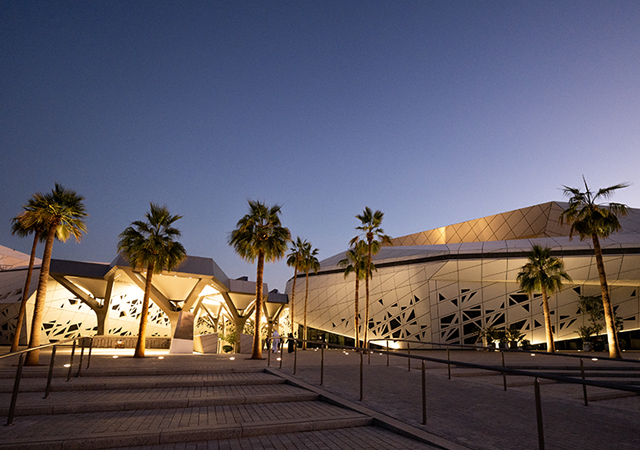
Saudi Arabia has opened what it describes as the world’s first museum dedicated to examining oil’s impact on human civilisation, marking a new addition to the kingdom’s expanding cultural sector.
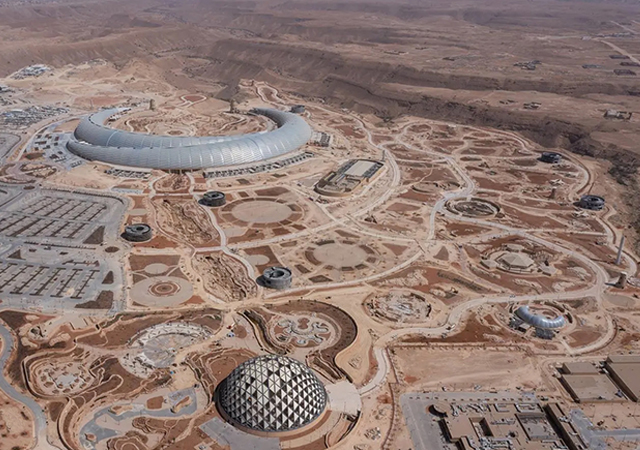
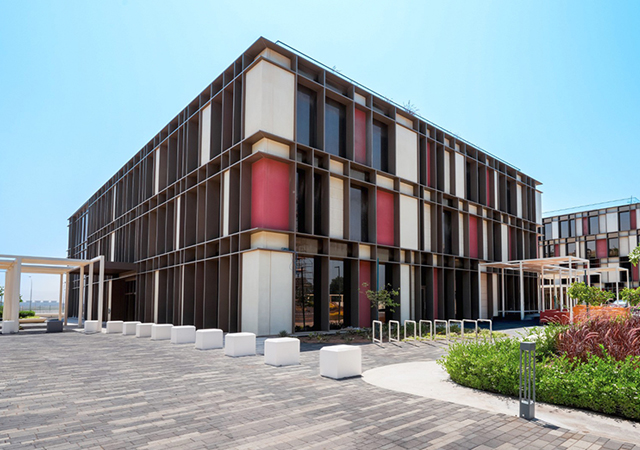
The Black Gold Museum, inaugurated last month (April), is located within the campus of King Abdullah Petroleum Studies and Research Center (KAPSARC) in Riyadh. The facility occupies a former research library designed by Zaha Hadid, comprehensively transformed by London-based DaeWha Kang Design into a state-of-the-art cultural institution.
Covering about 6,800 sq m over four levels, the museum presents oil’s historical and societal influence through modern and contemporary art rather than a traditional scientific or industrial narrative. Its permanent collection includes more than 350 works.
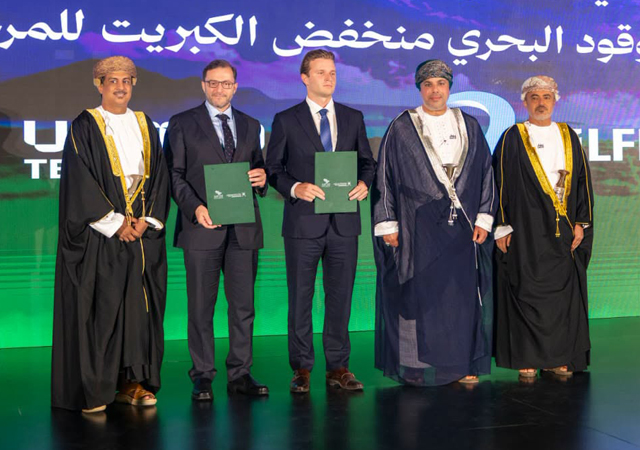
The museum was officially inaugurated by Prince Abdulaziz bin Salman bin Abdulaziz Al Saud, Minister of Energy and Chairman of KAPSARC’s Board of Trustees, and Prince Bader bin Abdullah bin Farhan Al Saud, Minister of Culture, underscoring the institutional weight behind this project and its significance to Saudi Arabia’s Vision 2030 cultural ambitions.
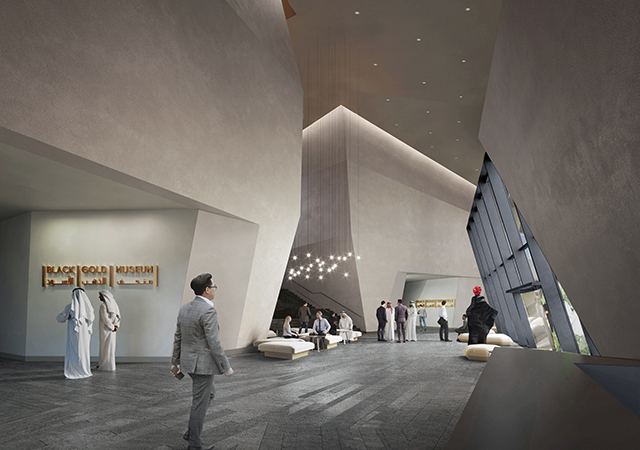
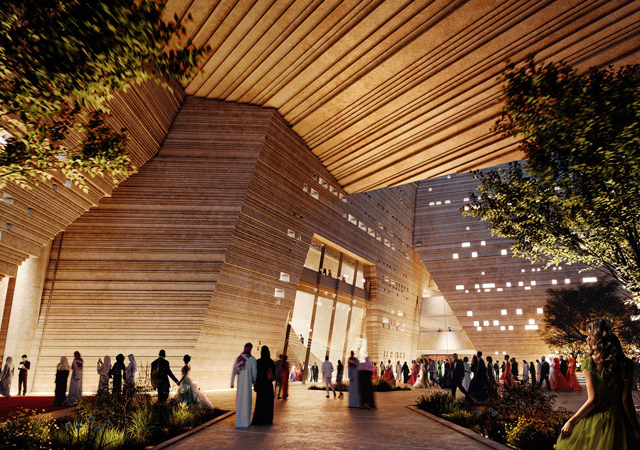
The welcome hall of Black Gold Museum.
Design strategy: Adaptive reuse
Rather than erecting a new facility, DaeWha Kang Design undertook one of the most ambitious adaptive reuse projects in the region to date. The practice converted the existing Zaha Hadid-designed research library, which was completed in 2017, into a fully operational, museum-grade cultural institution. The approach was driven by both sustainability imperatives and the desire to work sensitively within a landmark building.
Of the museum’s 6,800 sq m gross floor area, only 440 sq m of new structure was added – representing just six per cent of the total. These carefully placed insertions focused on establishing the museum’s primary circulation infrastructure, enabling the transformation to proceed without compromising the structural integrity or architectural character of the Zaha Hadid original.
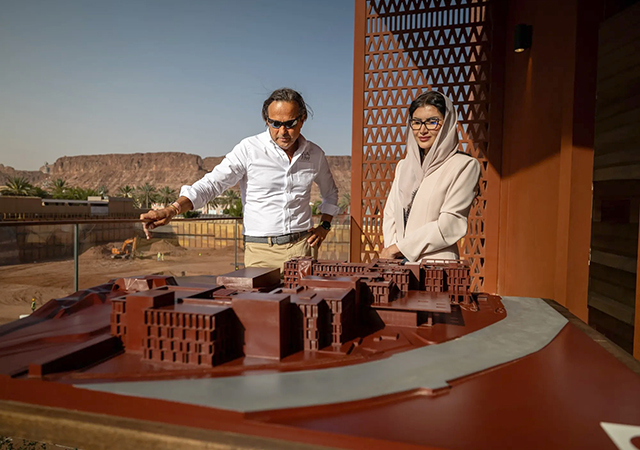
DaeWha Kang, Founder and Director of the practice, describes the challenge: “Transforming the former library into a museum required a complete rethinking of how people will move, gather, and encounter artworks within the building. Our aim was to bring clarity and rhythm to the existing geometry, creating a sequence of spaces that guides visitors intuitively while giving each gallery its own identity.”
“This project brought together our experience in adaptive reuse, scenography, and human-centred design, with the aim of offering a museum experience that feels contemporary, intuitive, and grounded in the character of the site,” he adds.
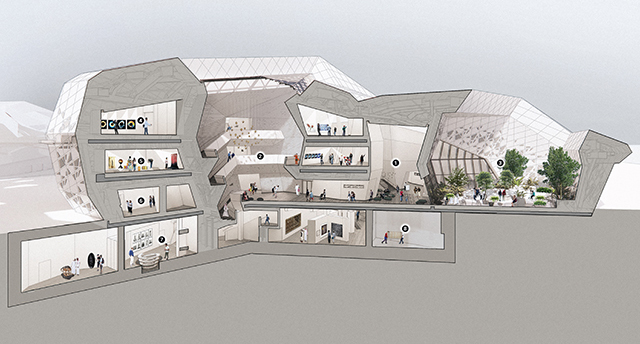
The Black Gold Museum covers about 6,800 sq m over four levels.
Sustainability credentials
Sustainability was central to the design philosophy. By preserving the building’s existing facades and structural frame, and limiting demolition to the minimum, the project significantly reduced embodied carbon, material consumption, and construction waste compared with a new-build scheme. Key sustainability measures included:
• Retention of the Zaha Hadid facade and structural frame;
• Minimal demolition to reduce embodied carbon and construction waste;
• Durable material selection – terrazzo and polished plaster finishes – to ensure longevity;
• Museum-grade climate control for energy-efficient conservation of artworks;
• Robust back-up power systems for operational resilience;
• Integrated back-of-house infrastructure for long-term operational efficiency.
The project positions itself as a model for sustainable cultural infrastructure in the Gulf region and beyond, demonstrating that adaptive reuse can deliver world-class facilities while honouring heritage assets.
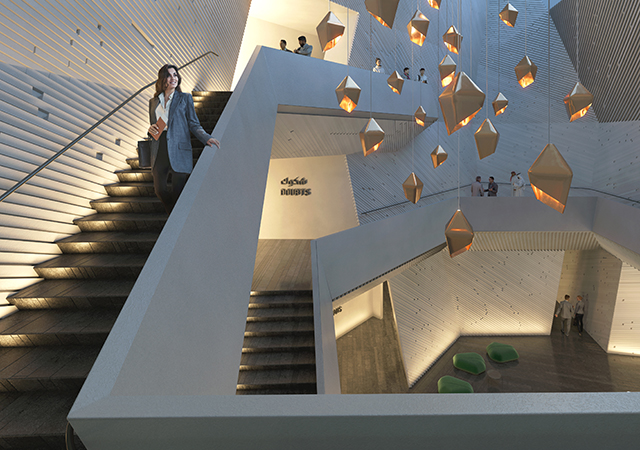
The new central atrium and sculptural spiral staircase now form the spatial and experiential core of the building.
Central Atrium and Grand Spiral Staircase
The most dramatic architectural intervention introduced by DaeWha Kang Design is the new central atrium and sculptural spiral staircase, which now forms the spatial and experiential core of the building. Previously enclosed areas have been opened up to benefit from abundant natural daylight, enhancing openness and spatial legibility. The staircase choreographs the visitor journey from basement to fourth floor and back, with each movement designed to heighten the sense of discovery and anticipation.
Gallery Infrastructure
The interiors were comprehensively upgraded to meet the highest international museum standards. The 14 versatile gallery spaces are equipped with:
• Museum-grade lighting systems calibrated for artwork conservation and display;
• Advanced climate control to maintain optimal environmental conditions for the permanent and temporary collections;
• Integrated back-of-house facilities including art handling, logistics, quarantine, and conservation workshop spaces.
The interior layout supports a clearly curated visitor journey, guiding guests seamlessly through four thematic zones, with each space given a distinct character through the manipulation of light, material, proportion, and rhythm.
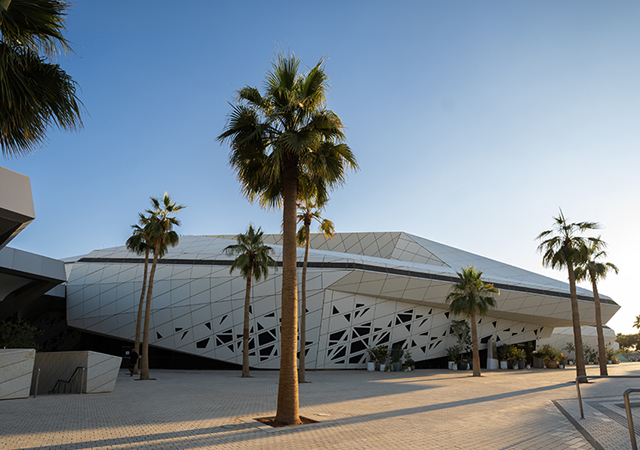
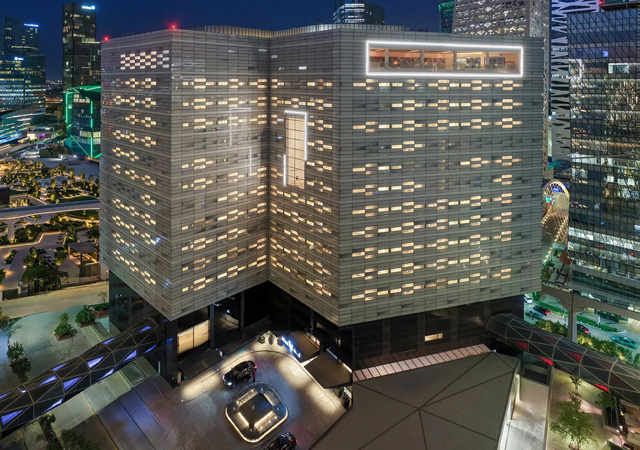
The Black Gold Museum preserves the building’s existing facades and structural frame.
Material palette and cultural reference
The material language of the interiors draws deeply from Saudi Arabia’s natural and geological heritage. Wadis, canyons, and sedimentary formations provide the primary palette reference, while subtle visual allusions to hydrocarbon molecular structures inform surface patterns and spatial rhythms throughout.
Hexagonal geometries, referencing both natural crystalline formations and KAPSARC’s own architectural language, create a connective thread between the building’s scientific origins and its new cultural identity.
Together, these material and spatial choices anchor the museum firmly in local identity while simultaneously speaking to the global conversations around energy, culture, and society that the museum exists to promote.
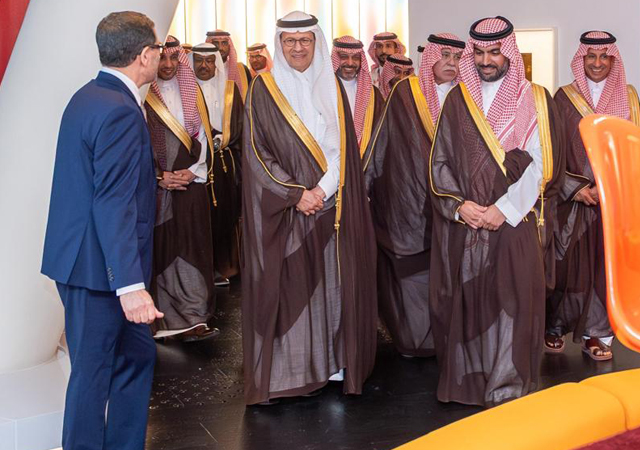
The museum was inaugurated by Prince Abdulaziz and Prince Bader.
Curatorial integration and scenography
DaeWha Kang Design worked in close collaboration with the museum’s museography and scenography teams throughout the design process. The result is an interior architecture that does not merely provide a neutral backdrop for art but also actively reinforces curatorial storytelling at every turn.
The museum is organised into four thematic sections, each given a distinct spatial identity:
Encounter: Focused on the discovery of oil and its early uses in the mid-19th century, this section illustrates the dramatic acceleration of industrialisation, the rise of machines, and automation brought about by the emergence of oil as a global commodity.
Dreams: Traces how oil became a defining resource of the 20th century, charting how it reshaped societies, fuelled economic development ambitions, and underpinned the modern world order.
Doubts: Addresses the growing critical awareness of oil’s consequences, environmental crises, consumer culture, and the deep paradoxes of global dependency on a finite resource.
Visions: Looks toward the future through a dynamic and evolving programme, reflecting current challenges and anticipating the solutions that will shape tomorrow. The gallery functions as an ongoing space for dialogue, discovery, and speculative thought.
The Collection
The permanent collection comprises more than 350 artworks from over 30 countries, created by more than 170 leading Saudi and international artists. The breadth of artistic voices engaged – spanning painting, sculpture, photography, installation, and film – reflects the museum’s ambition to approach its subject from multiple cultural perspectives simultaneously.
Notable artists represented include Manal AlDowayan, Ahmed Mater, Muhannad Shono, Mohammad Alfaraj, Ayman Zedani, Doug Aitken, Jimmie Durham, Dennis Hopper, Alfredo Jaar, Renaud Layrac, George Sabra, Pascale Marthine Tayou, and Andy Wauman, among many others.
In addition to the permanent collection, the museum presents major installations, photographs, and historical documentation that trace oil’s pervasive influence across societies, economies, and everyday life throughout the past two centuries.