








































As the GCC construction sector pushes the boundaries of scale, speed and complexity, the industry is rapidly transitioning from fragmented workflows to integrated, data-driven ecosystems. For Trimble, this shift marks the emergence of “connected construction”, a model that redefines how projects are designed, managed and delivered.
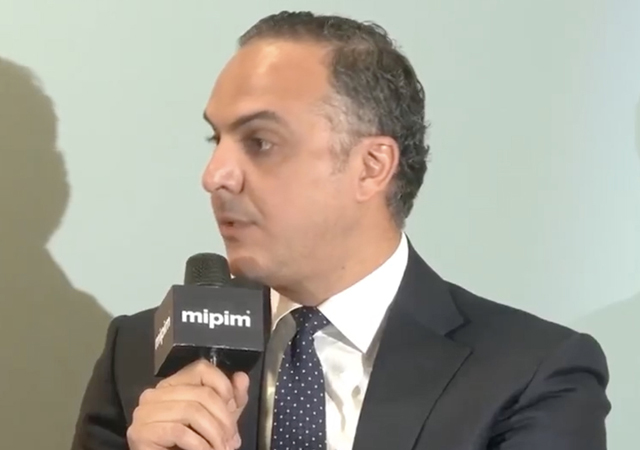
In an exclusive interview with Gulf Construction, Sabari Krishnan, Regional Head – Connected Construction at Trimble Middle East, highlights how the concept has moved beyond standalone digitisation toward continuous data integration across the entire lifecycle.
“Connected Construction is not just about digitising workflows – it’s about creating connected, constructible, and actionable data across the lifecycle,” he says. “The real shift is from static information to living data that flows seamlessly from design to execution, enabling faster, more confident decisions.”
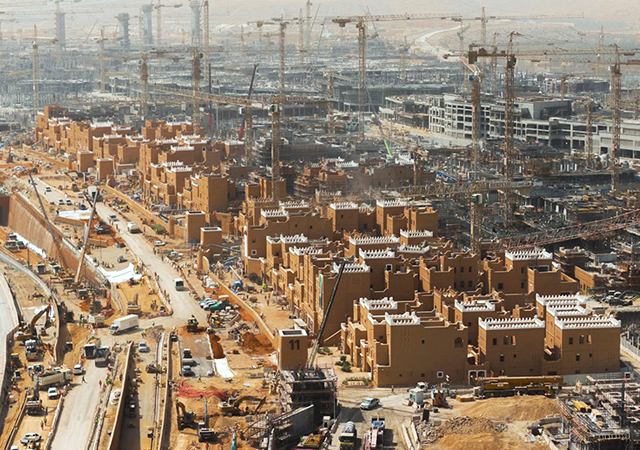
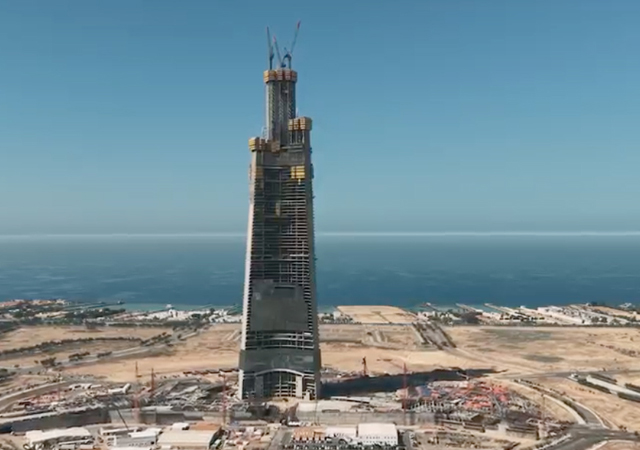
This evolution is particularly critical in the GCC, where mega- and giga-projects demand unprecedented levels of coordination, precision and speed.
Closing the data gap
Despite advances in technology, one of the region’s most persistent challenges remains disconnected data across project phases. When design, engineering, construction and operations function in silos, inefficiencies multiply, leading to delays, rework and cost overruns.
Connected construction addresses this by ensuring that data is created once and reused throughout the lifecycle, improving accuracy and reducing duplication. The goal is to establish a single, reliable “source of truth” accessible to all stakeholders, Krishnan points out.
By closing the gaps between people, processes and technology, connected workflows enable faster decision-making and better outcomes across projects.
From field to office – instantly
A key differentiator of connected construction is real-time field-to-office integration. Trimble combines advanced hardware with cloud-based platforms to create a continuous feedback loop between site teams and project managers.
Accurate field data can be captured, shared and analysed instantly, enabling rapid decision-making and immediate corrective action. This eliminates delays caused by outdated information and significantly reduces ambiguity on site.
Cloud platforms such as Trimble Connect serve as a common data environment, ensuring that all stakeholders can access, share and review up-to-date project information in real time, Krishnan says.
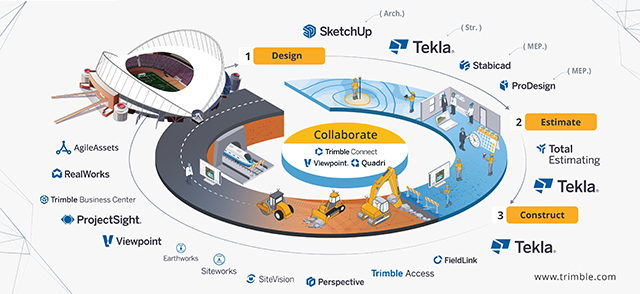
Cloud platforms such as Trimble Connect serve as a common data environment, ensuring that all stakeholders can access, share and review up-to-date project information in real time.
Model-driven execution
Connected construction is underpinned by model-driven execution, where digital models actively guide construction rather than simply documenting design intent.
By integrating design, coordination and execution, contractors can achieve greater accuracy and predictability while minimising rework. This approach is particularly valuable in high-value projects where even minor discrepancies can escalate into major issues. The result is improved alignment across teams and more efficient project delivery, he stresses.
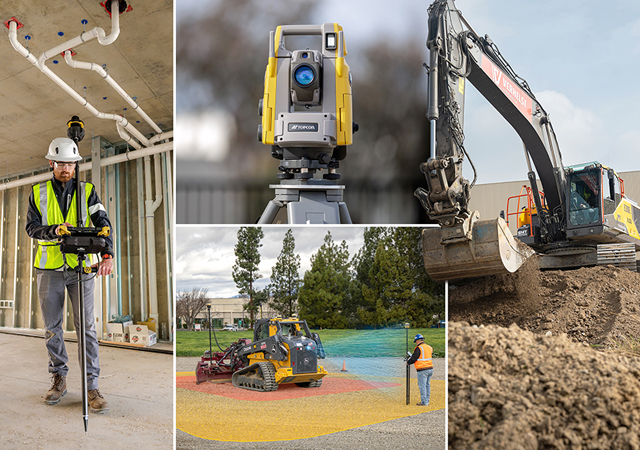
Field technologies, including scanning, positioning systems and machine control, are playing an increasingly vital role in bridging the gap between design and construction. These tools introduce precision and automation into site operations, enabling teams to validate work in real time and maintain tighter tolerances. They also contribute to higher productivity by reducing manual processes and accelerating workflows.
Enhancing predictability and control
For contractors operating in high-pressure environments, predictability is essential. Connected construction enables better planning and execution by aligning data across all project stages. This integrated approach allows teams to anticipate challenges earlier, reduce rework and maintain tighter control over schedules and budgets. It also enhances transparency, supporting stronger quality control and compliance.
Moreover, connected workflows improve collaboration and communication, helping teams stay aligned and avoid costly misunderstandings.
Labour shortages and skills gaps continue to impact construction markets globally, including the GCC. Connected construction helps mitigate these challenges by simplifying workflows and enabling model-based, guided execution. This reduces reliance on manual processes and ensures consistent quality, even with varying levels of workforce experience. At the same time, integrated asset and fleet management solutions provide greater visibility into equipment performance, enabling contractors to optimise utilisation, reduce downtime and improve overall efficiency, Krishnan adds.
Proven across landmark projects
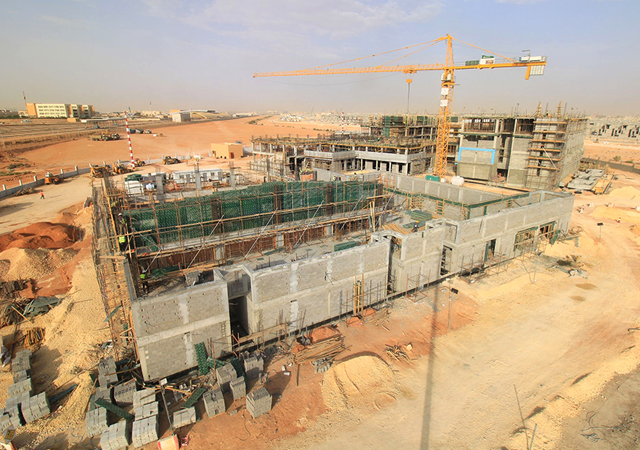
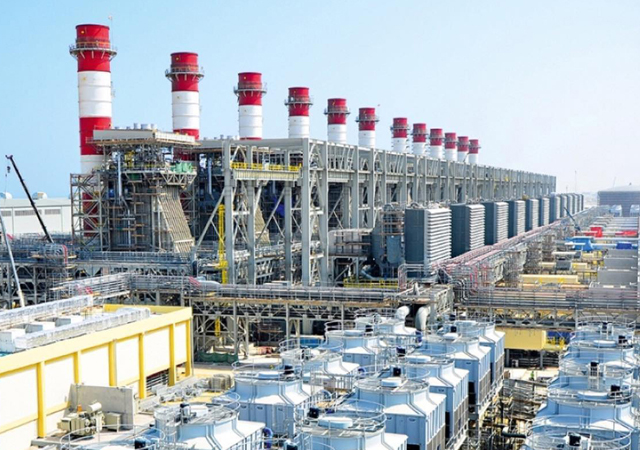
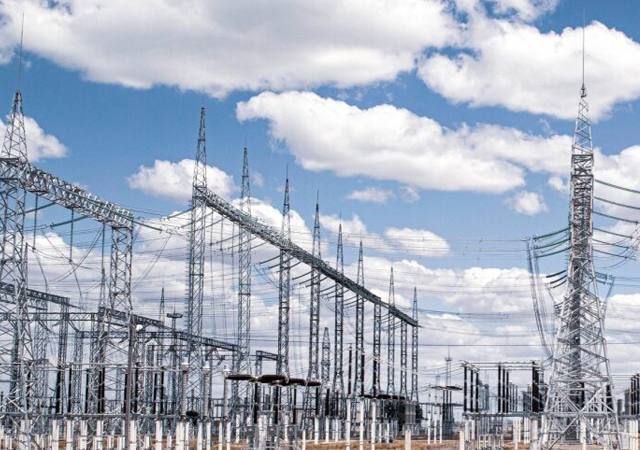
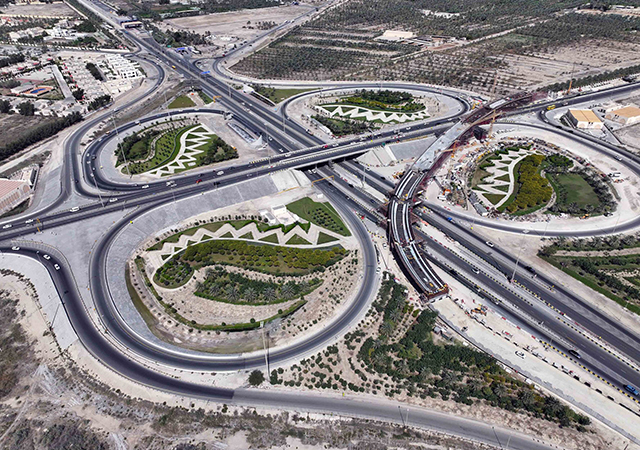
Across the Middle East, connected construction is already delivering tangible results on high-profile developments. From complex urban landmarks in the UAE to major infrastructure and energy projects in Saudi Arabia and Qatar, contractors are adopting model-driven, connected workflows to manage scale and complexity more effectively.
Trimble’s model-driven execution has been instrumental in delivering some of the region’s most iconic structures:
UAE: ALEC utilised these workflows for One Za’abeel and the Wynn Al Marjan Island resort, while Eversendai employed them for the Museum of the Future.
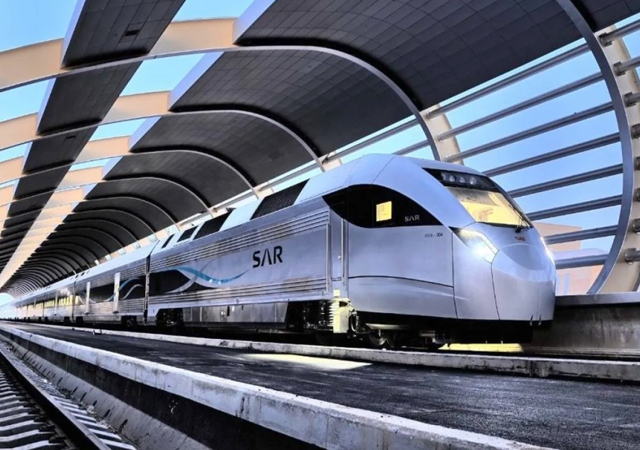
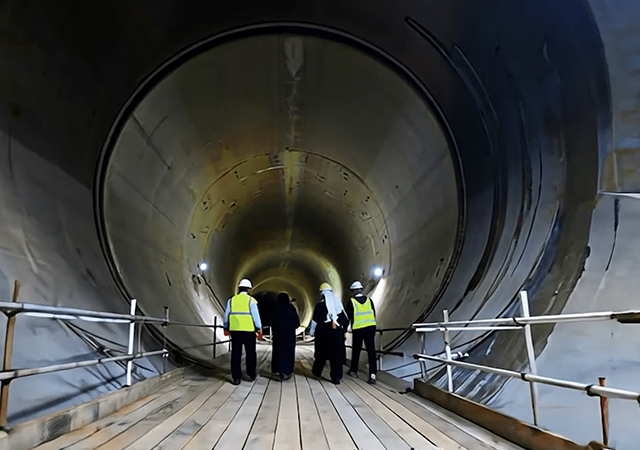
Saudi Arabia: Precision coordination was vital for the Riyadh Metro (AIC Steel) and massive Saudi Aramco EPC programmes executed by McDermott and Saipem.
Qatar: Data-driven approaches are currently managing complexity for the North Field gas expansion and Lusail developments.
The common outcome is improved coordination, reduced rework and greater confidence in delivery, Krishnan remarks.
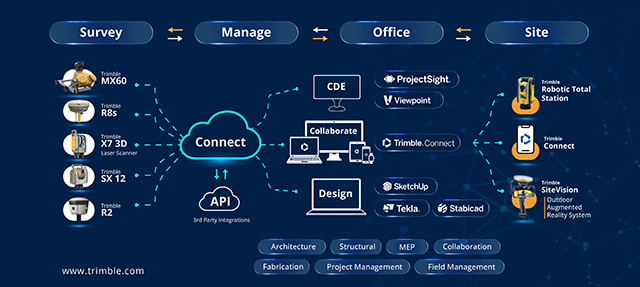
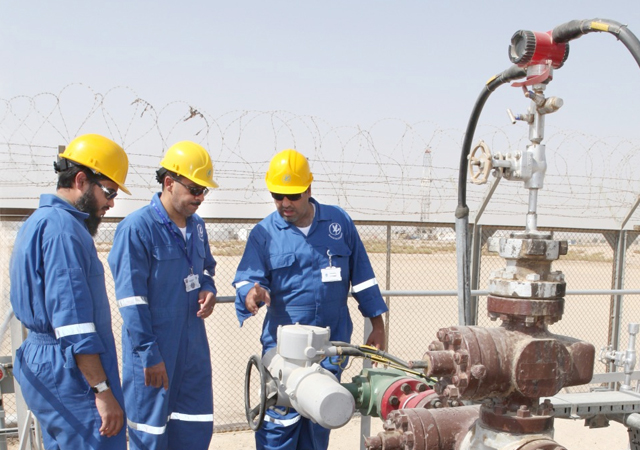
Real-time data loop is achieved by pairing advanced field hardware with a cloud-based common data environment.
Scaling digital transformation
Implementing connected construction at scale requires a strategic approach. Krishnan emphasises the importance of adopting a platform-based model – starting with targeted use cases and expanding gradually across projects.
Flexibility and interoperability are also critical. Open ecosystems that integrate with existing tools enable contractors to modernise without disrupting established workflows, accelerating adoption and maximising value.
“An open, connected ecosystem is critical,” he emphasises. “The ability to integrate across systems ensures that contractors can build scalable digital environments without being constrained by silos.”
The future is connected
Looking ahead, the industry is moving toward even more advanced capabilities, including digital twins, AI-driven insights and automation. However, the real value lies in how effectively these innovations are embedded into everyday workflows.
“The future of construction lies in the ability to connect data, align teams, and scale execution. Those who can turn data into action – consistently and at scale – will define the next phase of the industry,” he concludes.
Detailed guidance on design-to-delivery integration and construction efficiency strategies can be found through Trimble’s dedicated knowledge hubs, including https://cloud.pages.trimble.com/en-emea-aeco-mm-mofu-design-detail and https://cloud.pages.trimble.com/aeco-discover-construction-efficiency, which outline practical approaches to implementing connected workflows across projects.
Excerpts of the interview with Sabari Krishnan, Regional Head – Connected Construction at Trimble Middle East:
Elaborate on how Connected Construction goes beyond simple digitisation to create a fully integrated, data-driven ecosystem?
Connected Construction is not just about digitising workflows – it’s about creating connected, constructible, and actionable data across the lifecycle. The real shift is from static information to living data that flows seamlessly from design to execution, enabling faster, more confident decisions.
What are the key challenges facing contractors in the GCC that Trimble’s Connected Construction solutions aim to solve?
The GCC is delivering some of the world’s most ambitious projects – fast, complex, and highly coordinated. The biggest challenge isn’t technology availability – it’s the lack of continuity between teams, systems, and project phases, which directly impacts productivity and margins.
How does Trimble Construction One solve the “disconnected data” problem that historically plagues large-scale GCC infrastructure projects?
Disconnected data remains a major inefficiency. Leading contractors are now focusing on ensuring that information is created once and reused across the lifecycle, reducing duplication, errors, and rework while improving trust in project data.
Trimble is unique in offering both high-precision hardware and cloud software (Trimble Connect). How does the real-time data loop between a field surveyor and a project manager work in practice?
We’re seeing a clear shift toward real-time field-to-office continuity. When accurate site data flows instantly to decision-makers, and back to the field, it removes delays, reduces ambiguity, and accelerates execution.
In practice, this loop is achieved by pairing advanced field hardware with a cloud-based common data environment, such as Trimble Connect. Rather than relying on static, outdated documentation, a field surveyor captures accurate site data that flows instantly to project managers in the office. Because it is ‘living data’, project managers can analyse it in real time, make confident decisions, and immediately send corrective actions back to the field. This continuous field-to-office integration establishes a single “source of truth”, which eliminates the delays and ambiguity that normally happen when teams are disconnected.
How do your software, hardware, and cloud platforms work together across the project lifecycle?
True transformation comes from model-driven execution across the lifecycle. When design, coordination, and site execution are connected, teams can build with greater certainty and significantly less rework.
How do your solutions help with document control, design accuracy, and field-to-office coordination?
In high-value projects, even small misalignments can create major downstream issues. A controlled, centralised environment ensures that all stakeholders are aligned to a single source of truth, improving coordination and reducing risk.
What role do field technologies such as scanning, positioning, and machine control play in enhancing site accuracy and productivity?
Field technologies are playing a critical role in bridging the gap between what is designed and what is built. They bring precision, automation, and real-time validation to site operations – especially important in projects with complex geometries and tight tolerances.
How do Trimble’s solutions help contractors deliver projects on time, within budget and reduce rework?
Predictability is key. By connecting planning, design, and execution, contractors can anticipate challenges earlier, reduce rework, and maintain better control over timelines and costs.
What advantages do contractors gain in terms of risk mitigation, quality control, and compliance?
Digitised and connected workflows provide greater transparency and traceability. This enables proactive risk management, stronger quality control, and improved compliance across all project stages.
How do your tools help address labour shortages and skills gaps in the region?
With the GCC facing ongoing labour challenges, our solutions help mitigate these gaps by moving away from traditional manual processes and simplifying site execution. We do this through “model-based and guided workflows”, where digital models actively guide the construction process. By automating and standardising project delivery, contractors can maintain consistent, high-quality results even when relying on a workforce with varying levels of experience and skill.
What capabilities do your fleet and asset management systems offer in terms of tracking, maintenance, and utilisation?
Visibility into asset performance allows contractors to optimise utilisation, reduce downtime, and improve efficiency – which directly impacts project outcomes.
What role does predictive maintenance and AI-driven analytics play in fleet operations?
The move toward predictive operations is gaining momentum. Using data to anticipate issues before they occur enables more proactive and controlled project environments.
What are the key considerations when implementing a connected construction strategy across large organisations?
Successful organisations take a platform approach, starting with targeted use cases and scaling across projects. This ensures sustainable transformation rather than isolated digital adoption.
How easy is it for contractors in the Middle East to integrate Trimble solutions into existing workflows?
Flexibility is essential in this region. Solutions that integrate into existing workflows, without forcing disruption, enable faster adoption and quicker value realisation.
How does Trimble ensure interoperability with third-party systems and existing contractor workflows?
An open, connected ecosystem is critical. The ability to integrate across systems ensures that contractors can build scalable digital environments without being constrained by silos.
Trimble’s technology was instrumental in the Riyadh Metro and the Museum of the Future. What specific technical challenges did Connected Construction help overcome?
Delivering iconic structures and giga-developments like the Riyadh Metro and the Museum of the Future requires overcoming massive scale, tight timelines, and heavily siloed project phases. A specific technical challenge for structures like the Museum of the Future is their “complex geometries”, which require maintaining incredibly “tight tolerances”. Connected Construction helped overcome these challenges by using field technologies – such as scanning, positioning systems, and machine control – to validate work in real time. By utilising these highly coordinated, model-based workflows, contractors like Eversendai (Museum of the Future) and AIC Steel (Riyadh Metro) were able to achieve the precision engineering needed to execute at scale while significantly reducing rework and errors.
Are there particular project types in the GCC where your solutions are seeing the strongest demand?
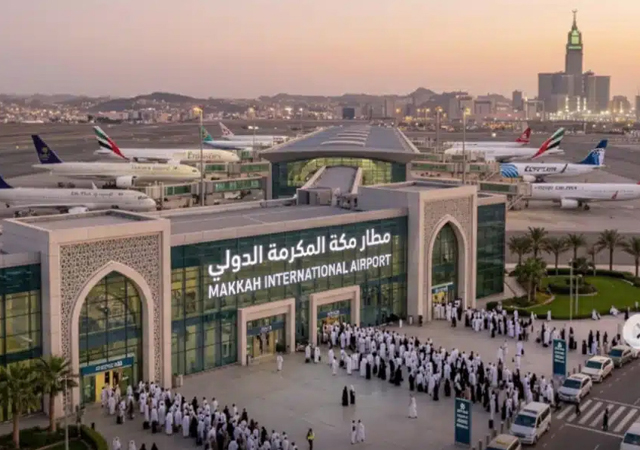
Demand is strongest in airports, stadiums, infrastructure, transportation, industrial, and large-scale developments, where complexity drives the need for connected workflows.
Can you share examples of key projects or clients in the Middle East that have successfully implemented Trimble’s connected construction solutions?
Across the Middle East, several landmark projects highlight how leading contractors are adopting connected, model-driven approaches to manage complexity and improve delivery outcomes.
In the UAE, ALEC on One Za’abeel and the Wynn Al Marjan Island resort, along with Eversendai on both One Za’abeel and the Museum of the Future, demonstrate how highly coordinated, model-based workflows enable delivery of complex geometries and large-scale developments with greater precision and reduced rework.
In Saudi Arabia, projects like the Riyadh Metro – with contractors such as AIC Steel – as well as large-scale Saudi Aramco EPC programmes executed by global players like McDermott and Saipem, highlight the importance of connected data and execution at scale in industrial and infrastructure environments.
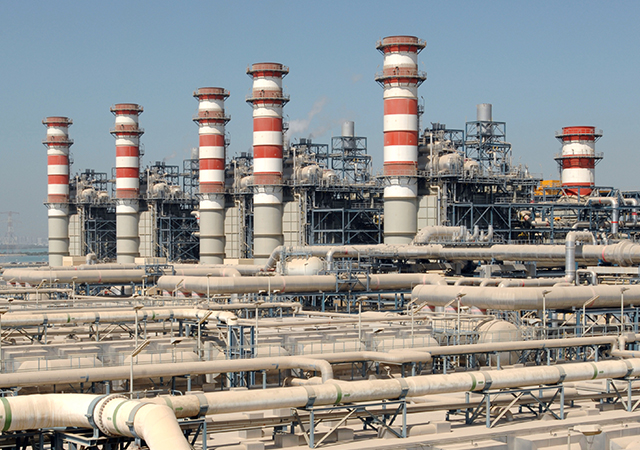
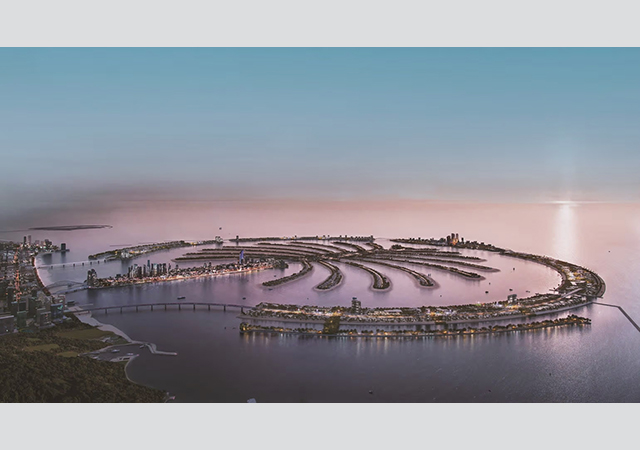
In Qatar, mega projects such as Lusail developments and the North Field gas expansion, involving contractors like McDermott and Saipem, further reinforce how integrated, data-driven approaches are critical for managing complexity across offshore, energy, and infrastructure projects.
Additionally, projects like the Al Qudra Velodrome, delivered by ASSENT in collaboration with Ramboll, showcase how precision engineering and coordinated workflows are essential even in highly specialized structures.
Across all these examples, the common thread is a shift toward connected, model-driven execution, enabling teams to manage complexity at scale, improve coordination, and deliver with greater predictability.
Looking ahead, what innovations or developments can we expect from Trimble in the connected construction space?
The industry is moving toward connected data environments, digital twins, AI-driven insights, and automation. The real value will come from how well these innovations are integrated into everyday workflows. Trimble’s innovation and development are focused exactly on these.
Anything else you would like to add about Trimble and its operations in the region.
The future of construction lies in the ability to connect data, align teams, and scale execution across projects. Those who can turn data into action – consistently and at scale – will define the next phase of the industry.