










































































How important is legal/contractual input prior to the signing of a contract? ANTONIOS DIMITRACOPOULOS, legal consultant at the Dubai-based Al Tamimi & Company, examines the issue under UAE construction law.
Parties to construction contracts invariably refer most aspects that require legal or consulting input only after major disputes have arisen and when both parties are contemplating arbitration or litigation procedure.
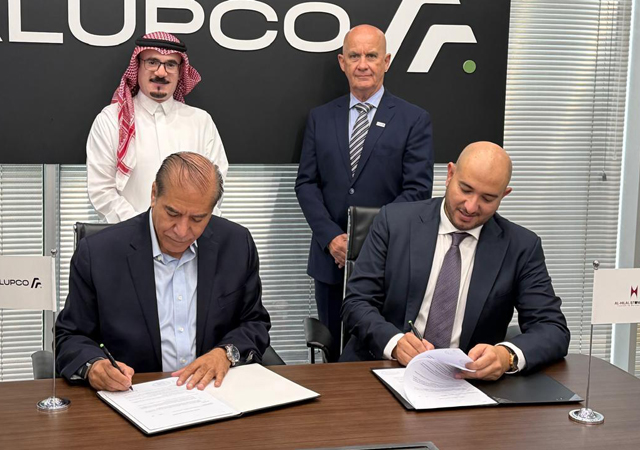
However, obtaining legal/contractual input prior to the signing of a construction contract is essential and can ensure that a number of issues which may transpire later and accentuate the difficulties of a dispute resolution process, are clarified and set out in a form that is understandable both to the contracting parties and to a future judge or panel of arbitrators. The main pitfalls in signing a contract without seeking prior legal consultation are highlighted below:
Unsigned Contracts
Very often construction proceeds before the contract has been signed and it is not unusual for the contract (often a voluminous document containing amendments and amplifications of various FIDIC-based or other formats of construction contracts) to remain unsigned throughout the duration of works. This can have substantial legal implications if a dispute arises thereafter and is brought before a panel of arbitrators or before the UAE courts. Local law and legislation pays great attention to form and procedure and absence of signatures in the main contract (including initialling each and every page of it) may present difficulties to either or both parties that may seek to rely on any specific clause.
Arbitration clauses
These are often drafted in either an incomplete manner or incorporated by reference only to the main body of a construction contract or more often of a sub-contract. Arbitration clauses included by reference only are not unenforceable or recognised by the UAE courts. Ensuring that a dispute resolution clause, whether arbitration, mediation or litigation, is drafted clearly is essential to any construction contract so that there can be no dispute as to the method and procedure that triggers dispute resolution mode as and when a dispute arises.
Overriding mandatory provisions
Clauses relating to limitation of liability (whether defects liability or other) may not be enforceable under UAE law as they may be overridden by mandatory law provisions. For example, including a defects liability clause for two years only for all defects will not be upheld under UAE law because Article 880 of the UAE Civil Law stipulates that the decennial defects liability period will apply to major defects affecting the stability or safety of any structure and such decennial liability cannot be decreased even by the consent of the parties (although the parties may agree to extend this liability period for major defects beyond the 10-year period provided in that Article).
Intention of the parties
On various issues, the intention of the parties may be unclear to a third party, bystander or an independent arbitrator/judge who will try to deduce the intentions of the parties after the event and on the basis of the surrounding factual evidence. This can lead both to a misinterpretation of the true intentions of the parties and also to an unfair award/judgment. Allowing a third party such as a construction lawyer or consultant to review the contractual documentation prior to its signing will ensure that the true intentions of both parties are reflected clearly in clauses that may have been drafted with a certain understanding in mind from both parties but not reflected as such in writing.
Local government legislation
Construction contracts drafted without independent consultation often ignore local government laws applicable in a specific emirate. This will be particularly relevant to circumstances where one party to the construction contract is a government entity.
UAE case law
In circumstances where either federal or local emirate law mandatorily overrides any contractual provisions, it may be useful to be aware of the general attitude courts take when various construction-related disputes are put before them for their resolution. Therefore, presenting the draft contract before a legal consultant/construction contract expert who is familiar with such recent case law may prove useful in fine-tuning various clauses to reflect the way with which they may be treated or dealt with by UAE courts if asked to review them. In this respect, a number of important rulings relevant to construction-related disputes that have been handed down by UAE courts recently include the following:
Delaying events
Often, the cause of various construction disputes is related to a delaying event, the responsibility for which has not been dealt with in the contract. Presenting the contract to a dispute resolution expert/legal consultant who is familiar with various causes of delay leading to disputes, may help in identifying such potential delaying events, placing the responsibility for each of them and setting out the true intentions of the parties with regard to apportionment of liability as far as predictable delaying factors are concerned.
Early involvement of an expert to fine-tune critcal wording can help avoid misinterpretation of contracts and related disputes.