























More than a third of the reclamation work has been completed on the first of the two world's largest man-made islands planned off the Dubai coast.
Work on The Palm, Jumeirah was launched in June last year by the land reclamation and dredging contractor Van Oord ACZ Marine Contractors Gulf. Reclamation is expected to take two years in total.
As many as 844 workers are involved in the project using seven dredgers, 12 barges, seven crane barges and 13 boats, said Saeed Ahmad Saeed, managing director of projects (engineering).
The sand is being dredged by a trailer suction hopper dredgers or cutter suction dredgers and transported to the location of the island. It is then dropped into place and piled at a 35-45 degree angle of refraction to hold it in place.
This process is carried out to a depth of -5 m, he said.
After the initial dumping of sand, a dredger pumps the sand to the surface using a process called 'rainbowing', which sprays the sand into the proper position.
Work on the second island, named "The Palm, Jebel Ali", has also started. The reclamation and dredging contractor is China Railway & Engineering Corporation.
 |
'Rainbowing' is used to spray the sand into proper position. |
This project currently has 253 men on the job.
Nearly 93 million cu m of sand has to be dredged for each island, each designed in the shape of palm tree with fronds.
This shape represents an enormous engineering challenge, Saeed said.
This is being addressed by using digital global positioning signals (GPS). Each vessel is equipped with a GPS and moves position based on the data generated from this to ensure the island takes the exact shape of the palm tree.
Each island will be made from 100 million cu m of rock and sand and eventually house about 50 luxury hotels, 2,500 exclusive residential beachside villas, 2,400 shoreline apartments, two marinas, water parks, restaurants and malls, among other facilities.
The entire project will increase Dubai's coastline from 72 km to 120 km.
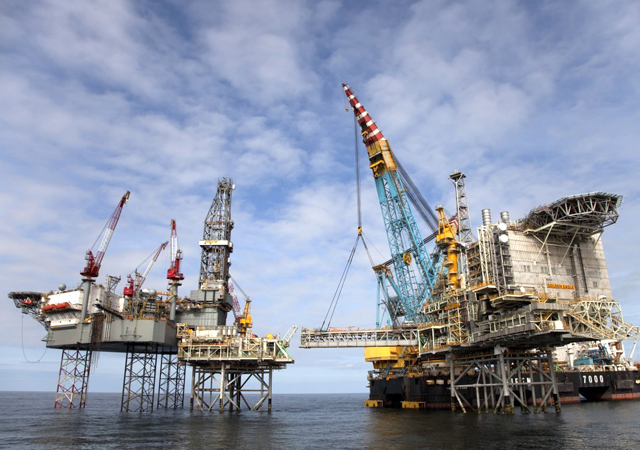
Dredging under way at the Palm Jumeirah.