






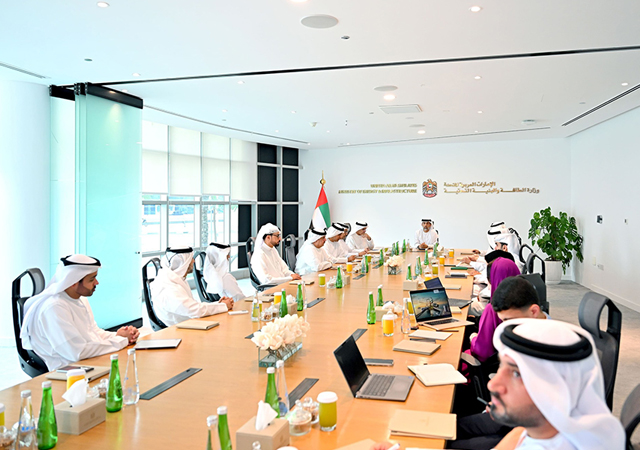









The Emirates Real Estate Corporation (EREC) has decided to accord top priority for the Federal Ministries Compound Project in Abu Dhabi.
Discussions were initiated by reviewing the project which aims at securing an ideal environment for government work, avoiding duplication through the provision of common facilities to be used by all ministries, increasing the efficiency level of governmental communication, service provision and deployment pubic funds.
Commenting on the discussion, Abdallah Khalifa Al Huraiz, EREC's general manager, said: 'Our main objective is to guarantee the application of the highest international standards when designing, constructing and managing government buildings. Henceforth, EREC's board of directors had placed the ministries compound project on our top priority list.'
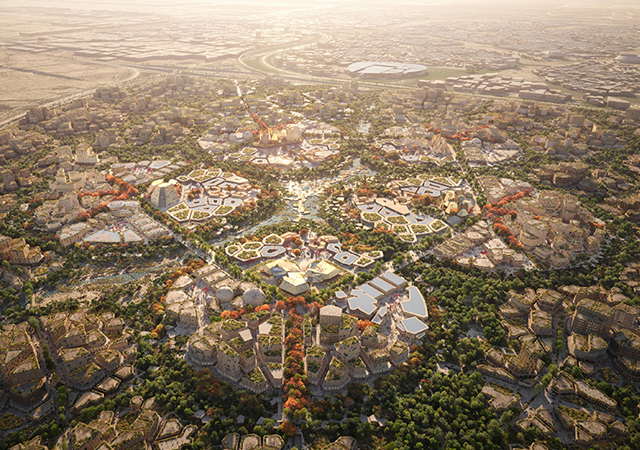
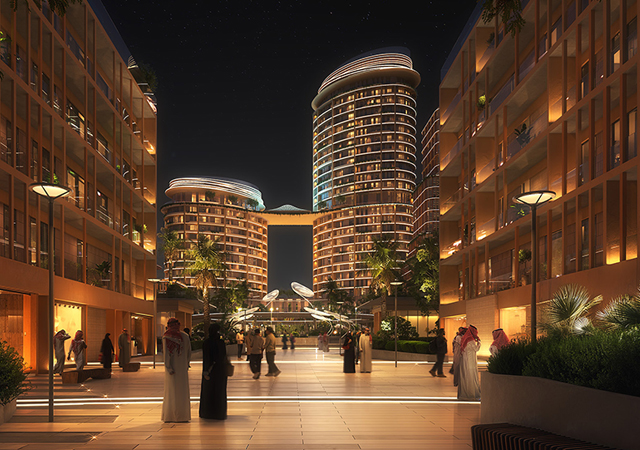
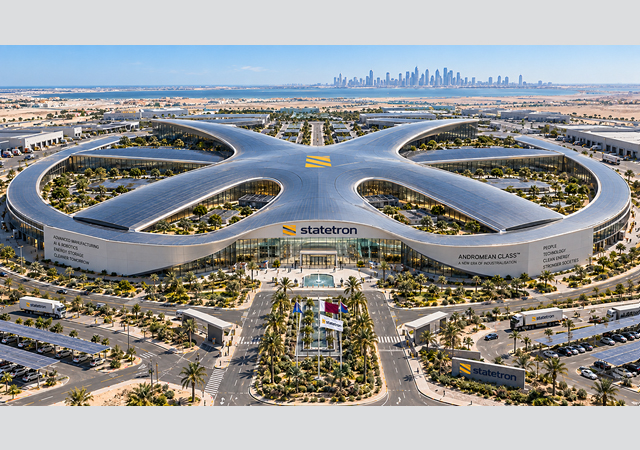
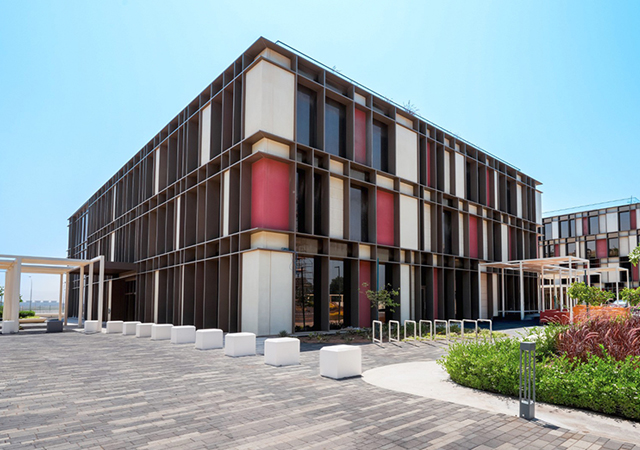
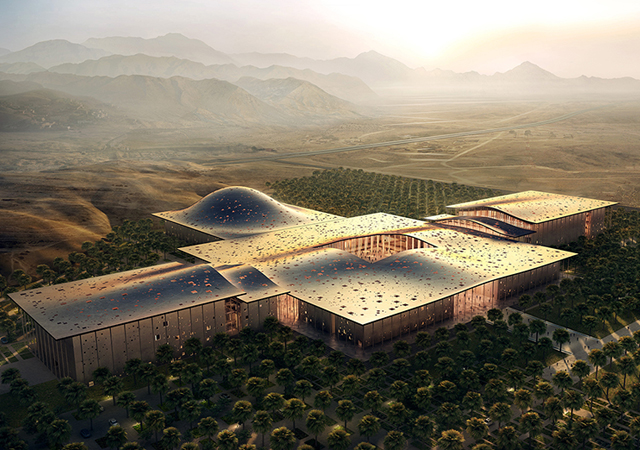
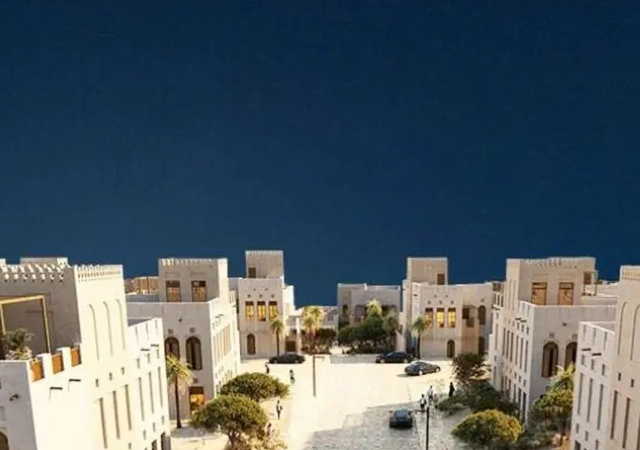
He indicated that the project is characterised by Arab Islamic architecture as the buildings of the compound are placed on three axes overlooking an internal courtyard, which in turn forms a visual and environmental aperture of the internal facade of the buildings. The compound contains 11 government buildings that will house 16 ministries and 20 government agencies and institutions. 'This is in line with the principal drive to increase the efficiency and effectiveness of government ministries and federal entities,' he added.
The project will be built in Al Butain in Abu Dhabi on an approximate land area of 97,000 sqm, and an approximate construction area of 73,000 sq m. The design of the compound was finalised after examining the needs of all ministries and government departments.
Huraiz explained that the design of the project takes into consideration many requirements, most important of which are functional requirements and the linkages between the various ministries; cultural requirements as the design was inspired from the elements of local environment; and environmental requirements that take into consideration the movement of the sun with a view to energy conservation.
He also added: 'The design took into consideration the political requirements and the symbolic aspects of the compound and what it represents for the country and its capital city. Finally, quality requirements were taken into consideration during the selection of construction material and equipment that will be used in the compound.'
Huraiz advised that the board had also approved the purchase of buildings dedicated for the housing of UAE female students in the cities of Amman and Irbid in Jordan and in Cairo in Egypt in collaboration with the Ministry of Higher Education and Scientific Research.
He pointed that the board reviewed a total of 35 of EREC's ongoing projects. They include design, construction, and fitting out of buildings for ministries and other government institutions inside and outside the country. There were also discussions about implementation mechanisms, work progress and expected completion dates.