


















In a remarkable engineering feat made possible and entirely orchestrated by Dubai Aluminum Company’s (Dubal) highly skilled in-house specialists, three massive 400 m underwater sea pipes were finally refurbished and made operational.
Each individual pipe measures 400 m in length and 2 m in diameter. These pipes will flush seawater to cool Dubal’s power generation plant and also be used to produce approximately 30 million gallons of desalinated drinking water per day.
The issue that needed immediate attention was the fall in capacity of Dubal’s intake pipes, which after 25 years of constant use, had become internally encrusted with marine growth, such as mussels, barnacles and coral. This was creating critical problems, restricting vital water flow to the plant. After initial consultations with foreign firms, the aluminum giant found the cost of replacement of the pipes to be tremendous, more than double what was paid for the eventual refurbishment.
“Dubal’s Engineering Services Department was requested to investigate the issue and finally determined that it would cost less and be less disruptive to the critical operations at the plant by refurbishing the pipes, instead of replacing them with new ones,” Mohammed Al Ghurair, chief executive of Dubal said.
“Moreover, projected additional power generation capacity at Dubal estimated that by September 2004, nearly 100 per cent seawater capacity increase was required from these same underwater pipes.”
“Our own in-house specialists were able to draw up plans that staggeringly reduced the costs of all previous estimates. From an initial evaluation of Dh30 million, the final cost was as low as Dh 15 million – exactly one half of the initial proposed fee,” explained Al Ghurair.
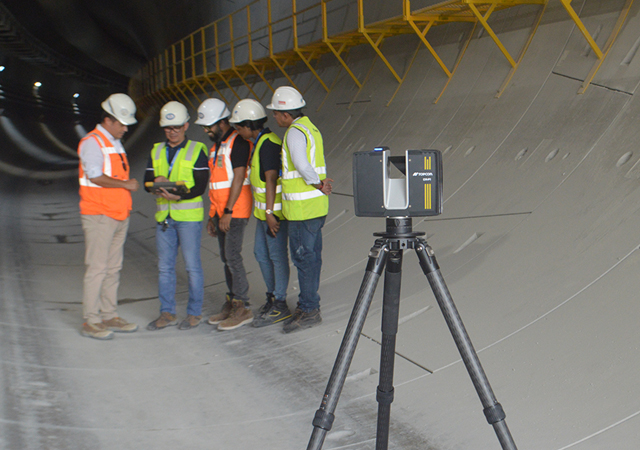
Dubal’s novel plan was to inspect the pipes from the inside, whilst they were full of water. Once it was determined that it was safe for work to continue, one end of each pipe was blocked in turn. Then a riser pipe extension was installed at the sea intake end. At this stage, each pipe was then dewatered and desalinated, in order that repair work could be carried out in dry conditions.
“Once the pipes were cleaned a special coating was applied to improve the water flow, noted Rob Howell, head of Dubal’s Mechanical Engineering Department and team leader. “Then, over 13 tonnes of low profile aluminum sacrificial anodes were installed to prevent the corrosion of the steel. Modern vortex breakers also were fitted not only to increase the water flow and temperature in the pipes, but more importantly to reduce the visual environmental impact. The dredging of the areas around the intake heads are still ongoing, where 70,000 tonnes of sand remains to be sifted.”
“It was critical that the work be carried out safely and remarkably, no time loss accidents were recorded. We were committed to avoiding, at all costs, any accidental injuries to the workers, which would not only be devastating to the injured party, but would also dramatically increase the costs of the operation,” stated Howell.