






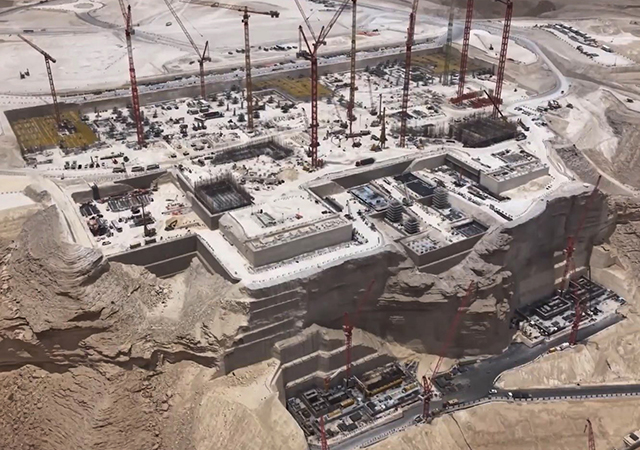


















A PRESTIGIOUS museum project currently under construction in Abu Dhabi is counting on a high-performance sealing system to overcome a challenging phase of construction while ensuring its water-tightness.
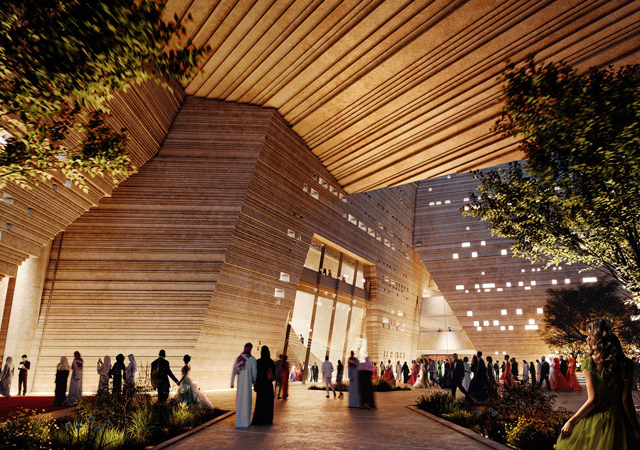
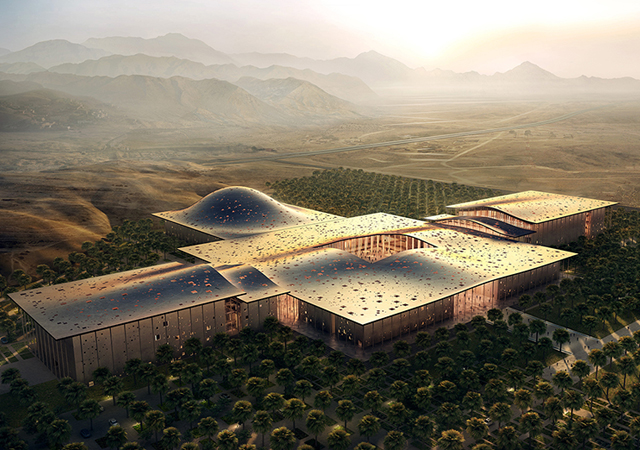
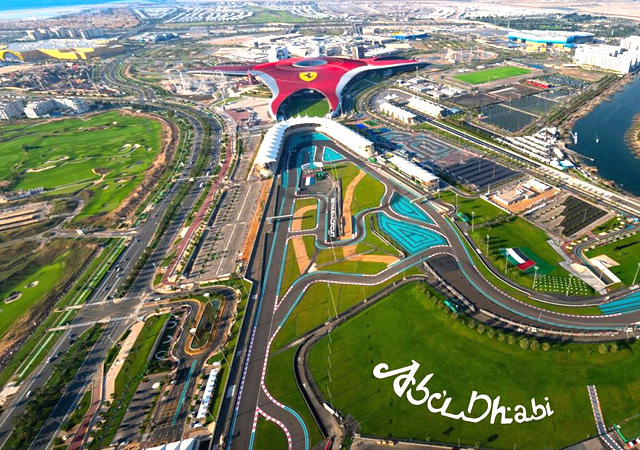
The Abu Dhabi Louvre will be the first of several museums to be built on the island of Saadiyat off the coast of Abu Dhabi by 2015. The ambitious project designed by the French architect Jean Nouvel will have a large white dome with a diameter of 180 m that covers the building like a canopy of foliage.
The sealing system in the subsoil will be of the highest priority to the museum structure which will be entirely surrounded by water. The grounds will not be flooded until after the completion of the construction. Therefore, protecting the cement foundation is a top priority.
To ensure water-tightness, a two-layered system was selected. A 1.6-mm-thick Sikaplan on a TPO (thermoplastic olefin) basis is being used as the lower geomembrane. The 2-m-wide geomembrane is connected with a Twinny S welder from Leister Technologies of Switzerland.
“This machine welds a double seam with its special nozzle. This way, after the welding process, the water-tightness can be tested in the groove created between the seams using a testing needle and compressed air,” explained Fabian Beermann, division manager for the UAE-based BMC Gulf, the sales and service centre for Leister Technologies.
The upper layer of the system consists of 2.5-mm-thick Sikaplan TPO. As with the lower layer, it is first connected track-by-track and then welded to the lower layer at the edges sector-by-sector. This task is handled by the Varimat V2, a high-performance hot air welder from Leister that welds with a peak speed of up to 12 m per minute. With its “e-drive” control unit, all of the relevant welding parameters can be controlled and saved. The air between the two connected layers is removed, creating a vacuum. Later, installed sensors monitor the air-tightness of the system.
Waterstops are laid on the two installed layers as a third safety measure, thus enhancing the safety of the construction. They are welded on to the geomembranes in defined sectors and prevent additional dispersion of water that may get in.
 |
All details are welded with Triac AT hot air hand tools. |
“The more sectors that are planned and thus the more waterstops are used, the smaller the surface that will need repair if water gets in,” Beermann pointed out.
The waterstops are processed using the Triac Drive AT from Leister. The easy-to-handle semi-automatic welder is equipped with hard steel rollers especially for this application. This way, the relatively rigid tapes can be welded on with enough pressure on the geomembranes below.
“With these three measures – connecting the geomembranes with a double welding seam, vacuum between the two system layers and the use of waterstops – absolute water-tightness is achieved,” he stressed. “Without a clean seam preparation, perfectly welded seams are not possible. Under such conditions as those here in Abu Dhabi, the seam areas absolutely must be cleaned prior to welding. All of the seams are cleaned meticulously with T-Prep, a specialised cleaning agent from the membrane manufacturer.”
In addition to the dust, the unstable power supply at the construction site leads to problems. To prevent voltage fluctuations and be able to weld continuously, a power supply that is not connected to the grid is used.
The cement beams that jut from the foundation are encased with 1.6-mm and 2.5-mm-thick Sikaplan TPO and connected with the sealing system.
“The laying crews use the reliable hot air hand tool Triac AT from Leister for this task and the many details throughout the entire system. It is greatly suited for outdoor use. The set temperature reaches its level automatically and voltage fluctuations are compensated. In addition, the thermal probe installed upstream from the heating element guarantees precise, constant temperatures,” Beermann said.
In total, the laying crew is processing 250,000 sq m of geomembranes involving a welding seam length of 150,000 m.
“In such a large project, the laying crew must be able to trust the reliability of the welding machines, especially since very harsh outdoor conditions prevail here in Abu Dhabi. By using Leister equipment, the laying crew not only has a guarantee of working with the most reliable tools – it also has partner in the Leister sales and service office, BMC Gulf, which can provide immediate assistance at any time in crucial cases,” he added.
Based in Switzerland, Leister is an international leader in the development, production and sale of tools for welding plastic. Its core business comprises hand tools, welding machines and hand extruders for trade, as well as hot-air systems for industrial applications. Leister has a dense network of well-trained specialists with more than 120 branch offices worldwide.