







The projects from Saudi Arabia and UAE secured first-place honours in three categories at the 2026 American Concrete Institute (ACI) Excellence in Concrete Construction Awards, highlighting the Gulf innovation in sustainable concrete technology, infrastructure and high-rise construction.
Saudi Arabia’s NovusCrete seawater-concrete initiative won the flatwork category, while the King Salman International Complex for Maritime Industries and Services took first place in infrastructure sector and Aramco Stadium in Al Khobar topped the mid-rise structures category. The UAE’s Wasl Tower in Dubai won the high-rise structures category.
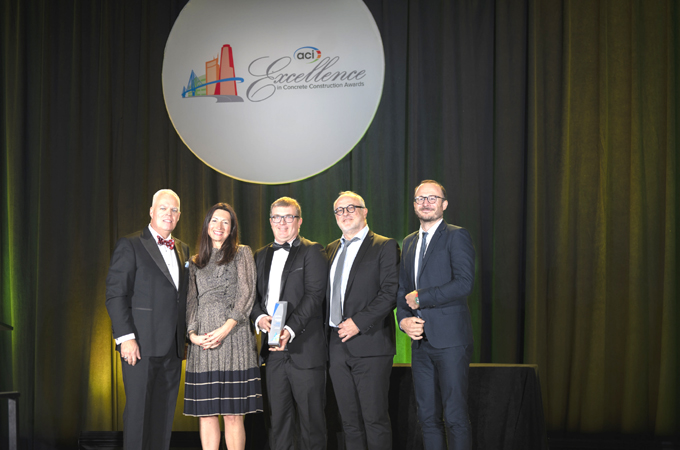
The awards were announced during ACI’s Fall 2026 Concrete Convention in Atlanta. The annual program, now in its 12th year, recognises innovative concrete construction projects and advances in design, engineering, technology and sustainability.
A panel of more than 30 industry experts selected 18 winners across eight categories: bridges, low-rise structures, mid-rise structures, high-rise structures, decorative concrete, flatwork, repair and restoration, and infrastructure.
The overall excellence award went to the Grand Paris Express Line 18 Viaduct in Saclay, France, which also won first place in the bridges category.
Lower-carbon concrete mixtures
The Grand Paris Express Line 18 Viaduct received both the overall excellence award and first place in the bridges category. The project was recognized for its use of lower-carbon concrete mixtures, self-consolidating concrete and precast segments to improve durability, construction efficiency and site safety.
The viaduct’s concrete mixtures incorporated supplementary cementitious materials, including ground granulated blast-furnace slag and limestone filler, to reduce carbon dioxide emissions while addressing durability risks, said ACI in its review.
Self-consolidating concrete enabled the construction of foundations and 12-meter-high piers in single lifts, while precast match-cast segments improved quality control and reduced construction-site traffic.
The Gordie Howe International Bridge, linking Windsor, Ontario, and Detroit, Michigan, received second place in the bridges category.
The 2.5-km crossing features six traffic lanes and a toll-free path for pedestrians and cyclists. The Post Street Bridge Replacement in Spokane, Washington, received an honorable mention for rehabilitating a historic concrete arch bridge and extending its service life.
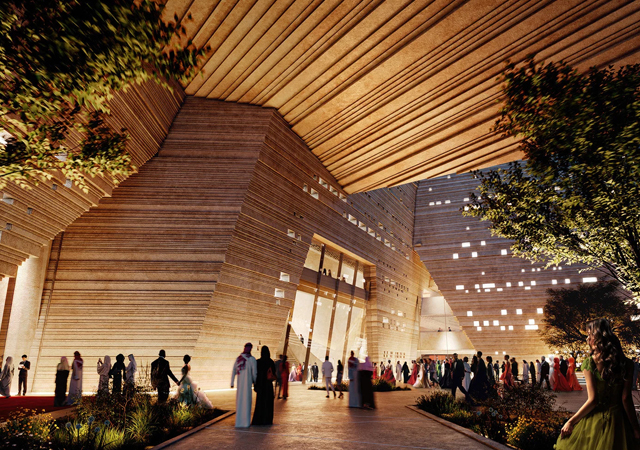
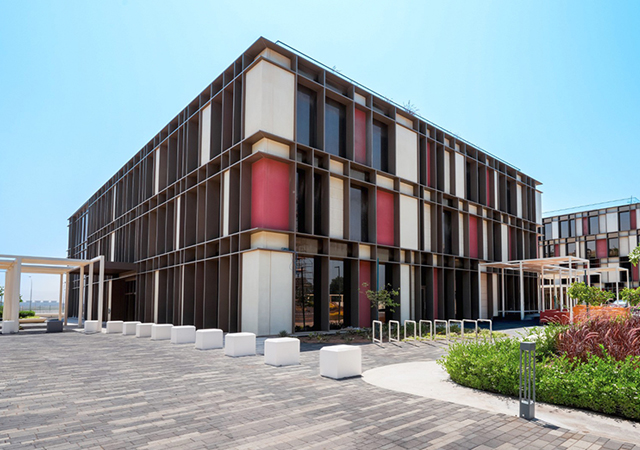
In the low-rise structures category, first place went to Smart Innovation Ecosystem NOVARE in Tokyo, which incorporates low-carbon concrete, 3D-printed concrete structures and hybrid precast concrete-steel systems. The Aramco Corporate Academy in Dhahran, Saudi Arabia, bagged the second place, while the Gran Acuario Mazatlán “Mar de Cortés” in Mexico received an honorable mention.
On the Aramco academy, ACI report said it is a state-of-the-art learning and training facility designed to support workforce development through collaborative, technology-enabled education.
The reinforced concrete complex integrates sustainable design with high-performance construction, incorporating green concrete technology, post-tensioned structural systems, and energy-efficient building features to reduce material use and lower CO₂ emissions.
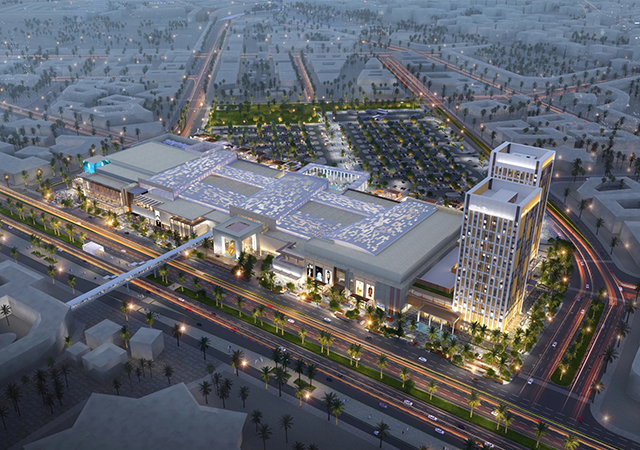
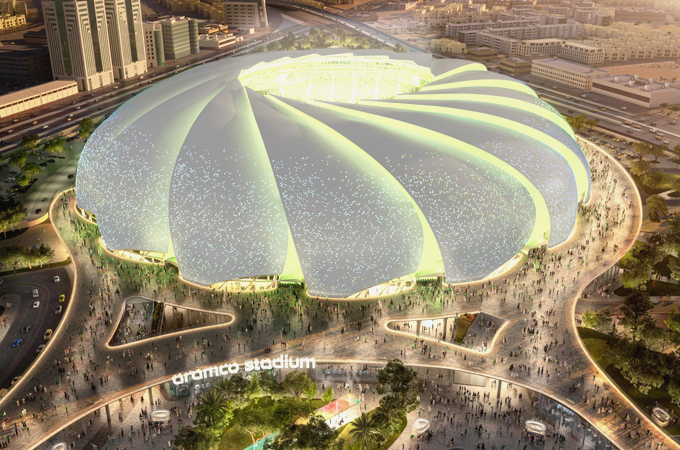
The other big accolade for the kingdom came with Saudi Aramco Stadium in Al Khobar which clinched the first place in the mid-rise structures category. The 47,000-seat football venue combines 167,000 cu m of cast-in-place concrete with more than 10,900 precast elements.
The second spot was bagged by Shri Ram Janmabhoomi Temple project at Ayodhya in Uttar Pradesh, India, which won plaudits from the judges panel for its steel-free foundation designed for a 1,000-year service life.
On the Shri Ram Janmabhoomi Temple project, the jury said the India engineering marvel had set a new benchmark in concrete innovation, featuring a steel-free foundation engineered for a 1,000-year design life.
More than 300,000 cu m of concrete, including a 1.5 m thick, unreinforced, temperature-controlled self-consolidating raft, was optimised with triple-blended binders, up to 70% supplementary cementitious materials, and manufactured sand to maximise durability while reducing embodied carbon.
Twisting form and ceramic facade
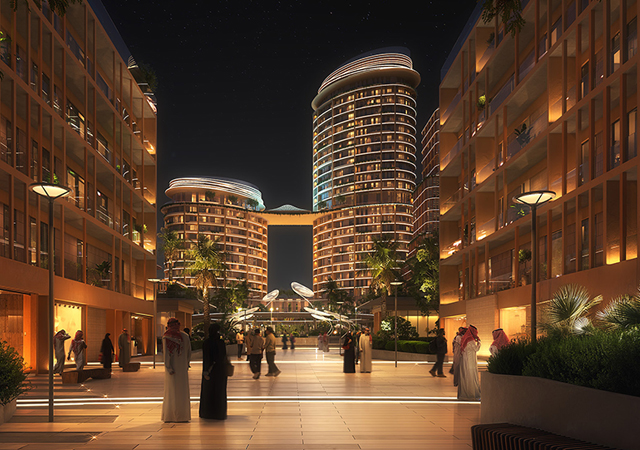
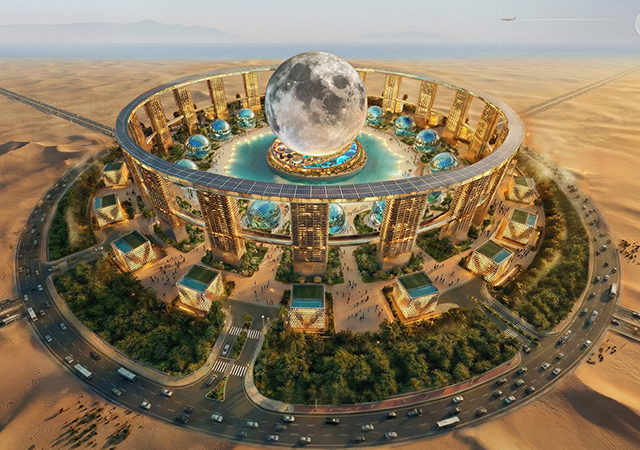
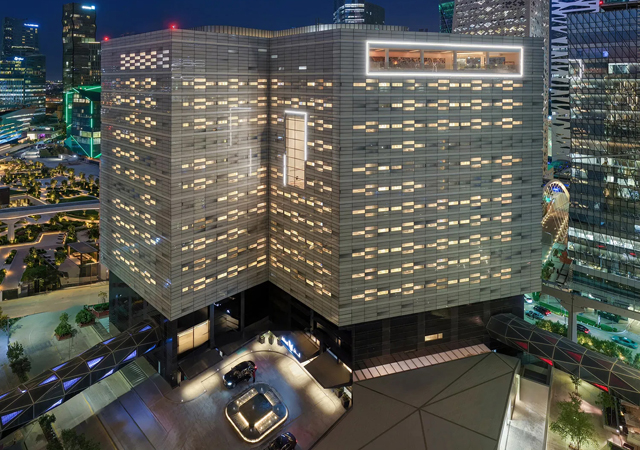
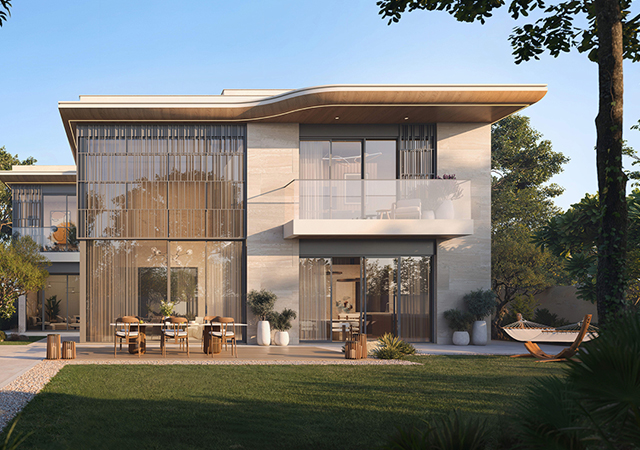
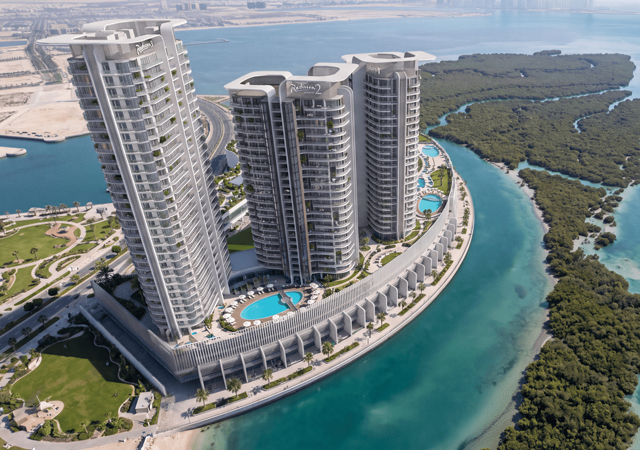
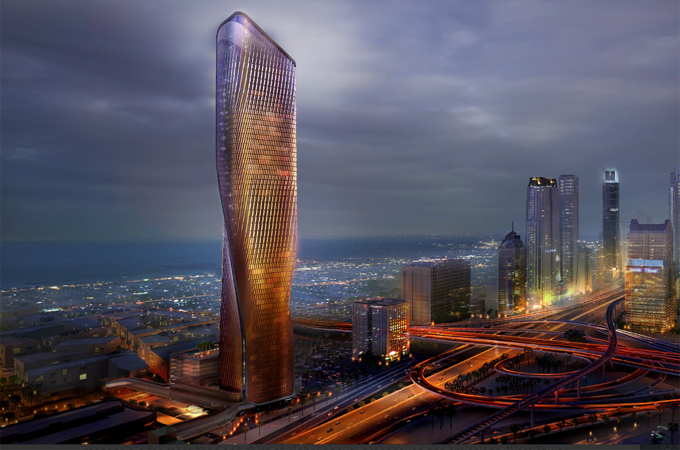
In the high-rise structures category, first place went to Wasl Tower in Dubai, a 302-m building distinguished by its twisting form and ceramic facade, while Houston Methodist Hospital’s Brockman Centennial Tower in Texas received second place.
On the Wasl Tower, ACI said it rises to an impressive height of 1000 ft, and its distinctive twisting form offers some of the most spectacular views of the dynamic city.
Adjacent to the tower is an 11-level multi-story parking structure that also houses ballrooms and a rooftop infinity swimming pool and is connected to the main tower at two levels by three pedestrian bridges, each measuring 75 ft in length. Wasl Tower’s signature feature is the world’s tallest ceramic façade, covering a surface area of approximately 376,600 sq ft.
The Ocean Sentinels, an underwater art installation forming part of Australia’s Museum of Underwater Art near Townsville, Queensland, won first place in decorative concrete. Place des Montréalaises in Montreal, Canada, received second place.
In the flatwork category, NovusCrete: Pioneering Seawater Concrete Construction in Saudi Arabia took first place for its use of seawater-based concrete in a wastewater treatment project designed for an arid coastal environment. The LAX/Metro Transit Connector in Los Angeles placed second for its architectural concrete paving, which incorporates recycled mirror, glass and mother-of-pearl aggregates.
Kunstsilo, a former industrial building converted into a modern art museum in Kristiansand, Norway, won first place in repair and restoration. The Low Battery Seawall Reconstruction in Charleston, South Carolina, placed second for strengthening historic coastal infrastructure with corrosion-resistant reinforcement and other concrete rehabilitation techniques.
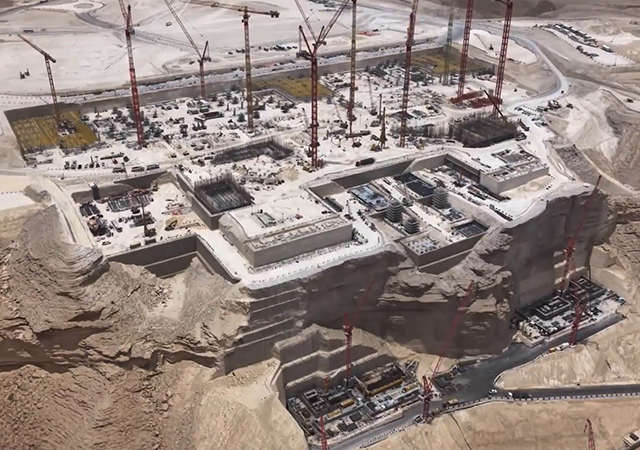
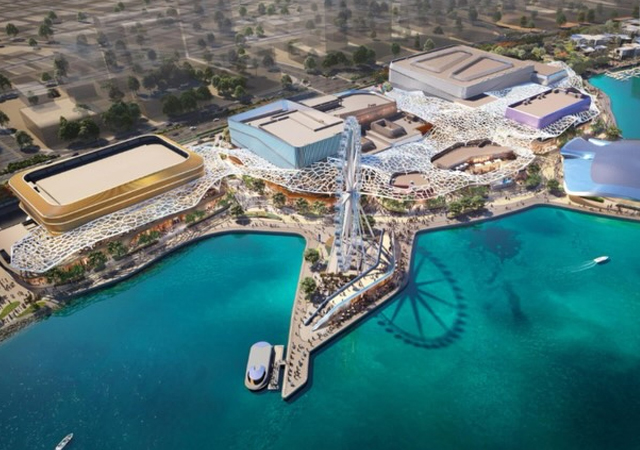
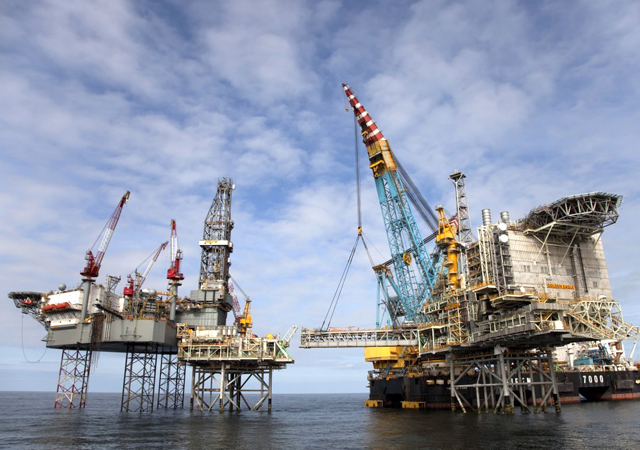
In the infrastructure category, first place went to the King Salman International Complex for Maritime Industries and Services in Ras Al-Khair, Saudi Arabia. The 1,125-hectare facility supports shipbuilding, ship repair and offshore fabrication, said ACI in its report.
The Sydney Metro Martin Place Integrated Station Development in Australia, which combines an underground metro station with commercial towers and retail space, received second place.
ACI said the awards aim to showcase advances in concrete construction and encourage innovation in projects worldwide. The deadline for 2027 entries is April 1, 2027.-TradeArabia News Service