









 Dubai office space (generic)
Prime office rents have risen 13.7% in Dubai since January, while Grade B+ rents have stabilised. A growing development pipeline could bring more choice for businesses from 2027.
Dubai’s office squeeze is changing what businesses can afford. An annual rental budget of AED500,000 ($136,147) now covers around 1,320 sq ft of Grade A space, compared with 2,080 sq ft at the end of 2023. That is 37% less space for the same outlay.
With just 3.9% of office space vacant, companies still face limited choice. But the market is beginning to diverge: prime rents continue to climb, rents in the next tier have stabilised, and developers are planning a substantial increase in supply.
These are the findings of the Q3 2026 office market report from Bright Rich | CORFAC International, a commercial real estate consultancy operating in Dubai and Abu Dhabi, the UAE’s two key office markets.
Prime rents pull ahead
Weighted average asking rents for Grade A offices reached AED380 per sq ft a year at the end of September, up 13.7% since January. Grade B+ offices, which offer good-quality space below the prime tier, stabilised at AED260 per sq ft, 1.5% below their level at the start of 2026.
The gap follows several years in which Grade B+ rents had been catching up with Grade A. Since the end of 2023, prime rents have risen by 58%, from AED240 per sq ft, while Grade B+ rents have increased by 44%, from AED180. The strongest gains came in 2025 and the first nine months of 2026.
The effect on budgets extends beyond prime buildings. In Grade B+, AED500,000 a year now rents approximately 1,920 sq ft, down from 2,780 sq ft at the end of 2023, a reduction of 31%.
Central districts remain tightly occupied
Overall vacancy fell by 1.1 percentage points from the end of 2025 to 3.9%, the lowest reading in Bright Rich’s series, which began at 20% in 2020.
Availability is even more limited in the central business districts. Vacancy stands at around 1.1% in Dubai International Financial Centre (DIFC), 1.9% in Downtown Dubai, 2.2% in Business Bay and 2.7% in Dubai World Trade Centre (DWTC).
Small and medium-sized businesses continue to dominate demand. Units below 1,500 sq ft accounted for 68% of leasing transactions in the first nine months of 2026, with financial services and consulting firms leading activity.
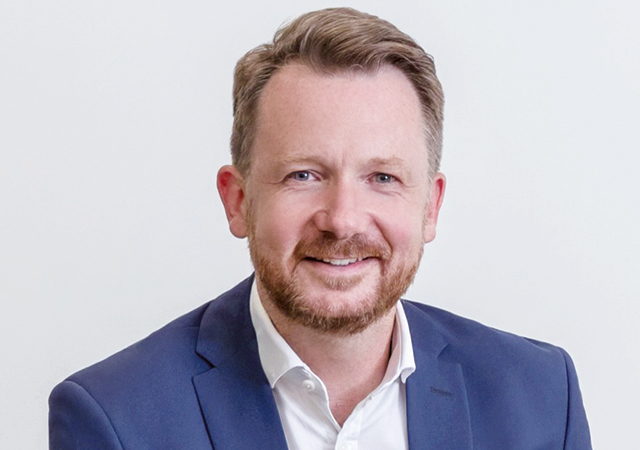
“Demand for quality office space is being driven by the inflow of international companies and the expansion of businesses already here,” said Georgii Martyanov, Director of Bright Rich | CORFAC International in the UAE.
“Several years of low construction volumes have left very little available in the central districts. Companies are responding by signing leases while buildings are still under construction, and increasingly by buying offices off-plan to secure premises that meet their requirements.”
A larger pipeline from 2027
New supply remains modest for now. Four buildings delivered approximately 748,000 sq ft in the first nine months of 2026. DIFC Square accounted for 57% of that space and was almost fully pre-leased before handover.
Another 536,000 sq ft is expected in the fourth quarter, including Sweid One in Jumeirah Lakes Towers (JLT) and Atria Square in Al Barsha. This would bring annual completions to around 1.3 million sq ft, the highest since 2021, although still below the 1.7 million sq ft delivered in 2020.
The scale changes from 2027. Announced projects scheduled for delivery between 2027 and 2030 now total more than 18.9 million sq ft, compared with the 7.65 million sq ft estimated at the end of 2025. Development is concentrated in Business Bay and along Sheikh Zayed Road, with a substantial share coming from developers previously focused exclusively on residential projects.
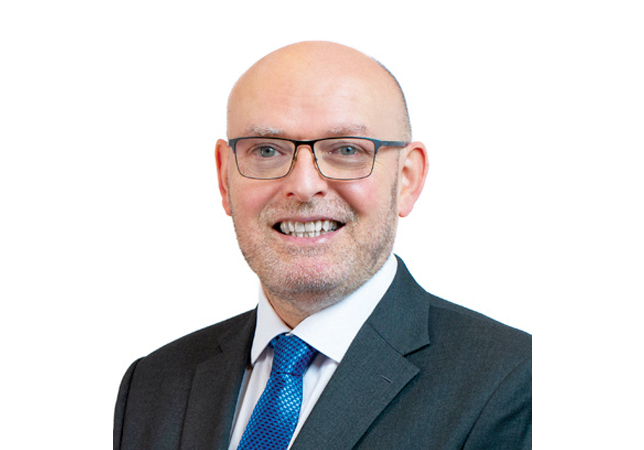
“Rising rents and near-full occupancy in existing business centres have made offices attractive to developers who previously focused on residential,” said Victor Zaglumin, Co-founder and Partner of Bright Rich | CORFAC International. “The first effect is already visible: vacancy in Grade A buildings has edged up to 4.8% as new towers enter lease-up, even though the best space in the central districts remains almost fully let. As the 2027–2030 pipeline is delivered, higher vacancy and pressure on rents in some locations and segments are a realistic scenario. The market is moving from scarcity towards balance, though not, on current evidence, towards oversupply in the prime segment.”
Flexible workspace expands
Alongside conventional leasing, Dubai’s serviced office market continues to grow. The city now has around 98 operational serviced office centres, up from 81 at the end of 2025, with a median rate of AED2,650 per workstation per month.
For businesses, the market presents two different horizons. Available space remains scarce today, particularly in central locations. From 2027, the announced pipeline points to greater choice, although the timing and location of deliveries will shape how much conditions change.—TradeArabia News Service