












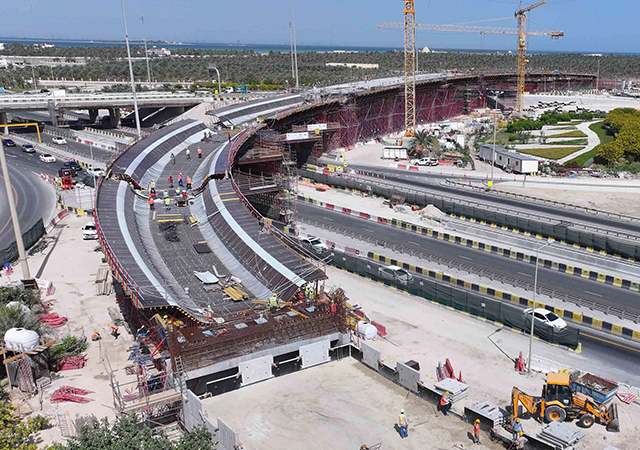
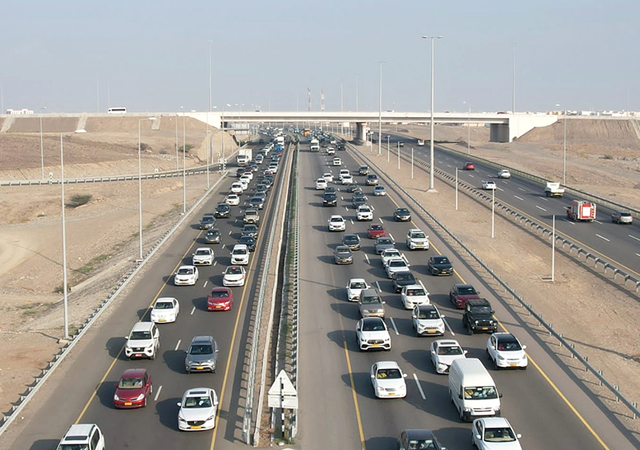



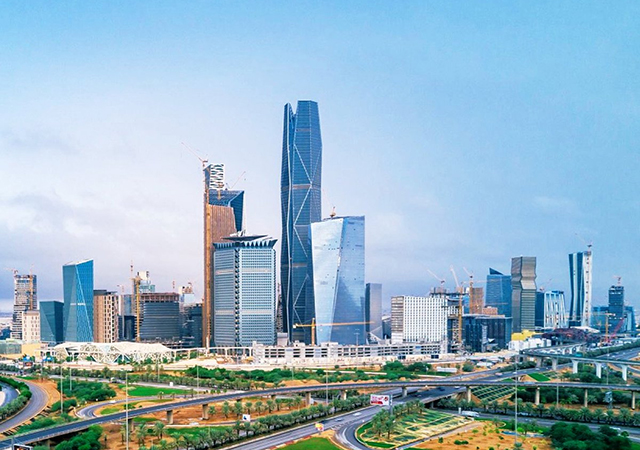












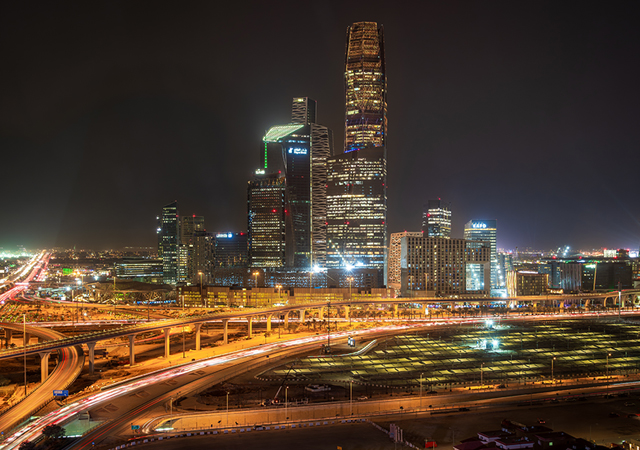
Riyadh is currently undergoing one of the most ambitious urban transformations in the world, as the Royal Commission for Riyadh City (RCRC) accelerates a SAR29 billion ($7.73 billion) overhaul of the capital’s arterial grid.
The Riyadh Main and Ring Road Axes Development Program, which will extend the city’s road network by more than 500 km, seeks to enhance mobility and accommodate ongoing demographic and economic growth. This strategic multi-phase rollout, culminating in the recent SAR8.1 billion award of Package Three, aims to increase road capacity by a staggering 85 per cent, ensuring that the capital not only moves faster but cements its newly earned status as a global leader in infrastructure connectivity.
The programme is being executed in strategic "packages" with each phase targeting critical corridors to ensure a balanced distribution of infrastructure across the city.
Package Three calls for the construction of a total of 61 km of roads, 32 bridges, and six tunnels to enhance the capital’s connectivity and traffic capacity. It comprises six projects that focus on key northern and western axes. Scheduled for completion within four years, this package includes the following projects:
• The 29-km Jeddah Road Development Project: With its 14 bridges and five main lanes, this project will enhance overall road performance and expand corridors to accommodate increasing daily traffic, with a capacity of up to 353,000 vehicles per day.
• The 15-km Taif Road Development Project: It will improve traffic flow and enhance connectivity between the southern and western districts and the city centre. It features four bridges, four main lanes, and two tunnels, with a capacity of up to 200,000 vehicles per day.
• The 8-km eastern section of the Thumamah Road Development Project: It will include three bridges and three tunnels, linking major mobility axes across northern and eastern Riyadh, with a capacity of up to 200,000 vehicles per day.
• The 4.7-km northern section of King Abdulaziz Road Development Project: It will expand network capacity and improve traffic efficiency, with its four bridges, four main lanes, and one tunnel, with a capacity of up to 450,000 vehicles per day.
• The 4.3-km northern section of Othman bin Affan Road Development Project: Its seven bridges and significant upgraded areas will enhance traffic flow across Northern Riyadh, with a capacity of up to 500,000 vehicles per day.
Beyond new construction, the programme includes a significant focus on engineering enhancements for congested areas. Phase Two of this initiative targets eight high-traffic locations across Riyadh, applying advanced engineering solutions to improve intersection performance by 40 to 60 per cent.
To ensure the city remains functional during these massive works, the RCRC has implemented a comprehensive traffic diversion plan. Developed in coordination with local authorities, this plan utilises managed diversions to minimise the impact on residents and maintain uninterrupted mobility throughout the construction cycle.
The other phases of the Riyadh Main and Ring Road Axes Development Program that have already been launched include:
Package One (August 2024): Launched with a budget of SAR13 billion, this foundational phase included four major projects, such as the 56-km Second Southern Ring Road, construction of two new bridges parallel to Wadi Laban Bridge, the 6-km Thumamah Road Axis (Western Part) and the 16-km.
Package Two (February 2025): Valued at over SAR8 billion, this phase introduced eight projects and focuses on improving the internal flow of traffic and connect key commercial and residential districts, with an expected implementation timeline of three years. One of the primary components is the development of the northern part of Prince Turki bin Abdulaziz Al-Awwal Road, covering over 5 km and featuring three bridges and a tunnel to reach a capacity of 200,000 vehicles per day. Similarly, the middle section of Al-Thumama Road is undergoing a 10-km transformation that includes the construction of 11 bridges and five tunnels to manage a similar daily traffic volume.
Significant work is also being carried out on Imam Abdullah bin Saud Road, where a 9-km stretch is being upgraded with three bridges and two tunnels. Meanwhile, Dirab Road is receiving a substantial capacity boost to 340,000 vehicles per day through 9 km of improvements and the addition of nine new bridges. Another key artery, Imam Muslim Road, is being developed over 12 km as a southern extension of the Prince Turki axis, incorporating four main intersections and four bridges.
To support the city’s economic centre, a comprehensive 20-km road network is being established around the King Abdullah Financial District (KAFD), involving 11 bridges to streamline access. Specific congestion points are also being addressed, such as the intersection of King Salman and Abu Bakr Al Siddiq Roads, where a new bridge will facilitate traffic flow from the east to the north. Finally, the package includes a series of targeted engineering enhancements at various high-traffic hotspots across the capital to provide immediate relief at complex intersections.
Ranking on the Global Stage
This urban transformation of the capital is a primary driver behind Saudi Arabia’s recent global accolades in infrastructure. The kingdom currently ranks first worldwide in the Road Network Connectivity Index and fourth among G20 nations in road quality, according to a report by the World Competitiveness Forum.
Aligned with the National Transport and Logistics Strategy, the Roads General Authority aims to help position the kingdom sixth globally in the Road Infrastructure Quality Index by 2030, while contributing to national efforts to reduce road traffic fatalities.
The kingdom boasts an extensive road network whose total length exceeds the Earth’s circumference of approximately 40,075 km, reaching more than 73,000 km.
This extensive network serves as a vital artery, facilitating domestic mobility and connecting the kingdom with eight neighbouring countries, including GCC states as well as Jordan, Iraq and Yemen, thus reinforcing its position as a global logistics hub and supporting key sectors such as Hajj and Umrah, tourism and trade.
On the key achievement, the Roads General Authority said this was mainly due to its global best practices aimed at ensuring the highest levels of safety, most notably through the launch of the Road Code as a unified technical reference for all entities responsible for roads, guaranteeing the highest standards of planning, design, implementation and maintenance.