




























For the GCC’s construction and real estate sectors, the Middle East conflict has moved well beyond a background geopolitical risk – it is actively repricing materials, disrupting logistics, challenging contractual assumptions, and placing pressure on the developer credit quality built up during years of sustained growth.
What follows is a sector-by-sector analysis of these impacts by Gulf Construction, paired with a strategic framework for how firms can protect themselves – drawing on various sources such as the supply chain guidance provided by global construction consultancy Linesight and contractual analysis by law firm Pinsent Masons.
Supply chain and materials: A multi-front disruption
The Strait of Hormuz is the single most important physical fact for GCC construction procurement. Linesight’s analysis makes clear that approximately 20 million barrels of crude oil per day (about 20 to 30 per cent of the global seaborne oil trade) transit this narrow chokepoint – and its disruption has not simply raised oil prices, it has cascaded through every energy-intensive construction material.
Steel: Steel is doubly exposed: it is both energy-intensive to produce and freight-sensitive to deliver. Steel prices reached their peak in 2022 in response to the surge in crude oil prices. As Linesight notes, the correlation is well-established – from May 2021 to May 2022, a 66 per cent rise in crude oil prices was accompanied by a roughly 75 per cent rise in steel prices. With crude futures jumping sharply as markets priced in Gulf risk in early 2026, the same transmission mechanism is in play. Higher electricity and gas costs lift production costs at blast furnaces and electric arc furnaces; simultaneously, shipowners avoiding the Strait have repriced insurance and bunker costs, raising delivered prices and extending lead times. The current situation is made worse by the prior Red Sea/Suez disruption of 2024-2025, which already tightened effective shipping capacity. Markets entered 2026 with less buffer than in 2021.
For GCC-based construction projects, the practical consequence is twofold: price offers from steel suppliers are shortening in validity, and programmes that assumed reliable delivery windows are now exposed.
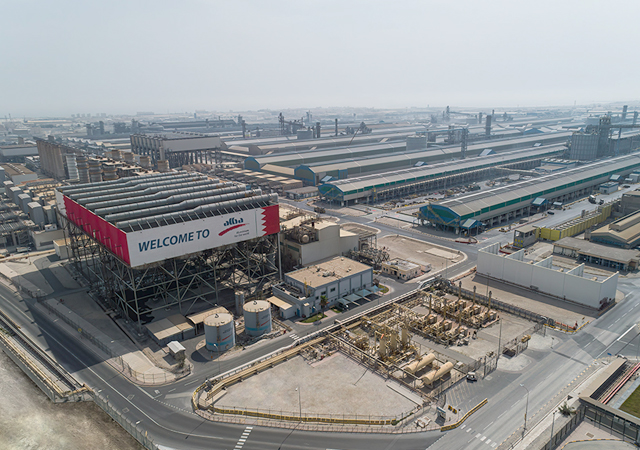
Alba facility was targeted by Iranian missiles and drones.
Aluminium: Aluminium is arguably the most acutely affected construction material. The Gulf produces around nine per cent of global primary aluminium – and the conflict has directly struck the sector’s major producers. Aluminium Bahrain (Alba), confirmed as a target of Iranian IRGC strikes, had already initiated a shutdown of three smelting lines in early March 2026, accounting for 19 per cent of its capacity. Qatar’s Qatalum facility has stabilised operations at approximately 60 per cent of nameplate capacity. At the end of last month, Emirates Global Aluminium (EGA) announced that the company’s Al Taweelah site sustained significant damage during the Iranian missile and drone attacks at Khalifa Economic Zone Abu Dhabi, which was being assessed.
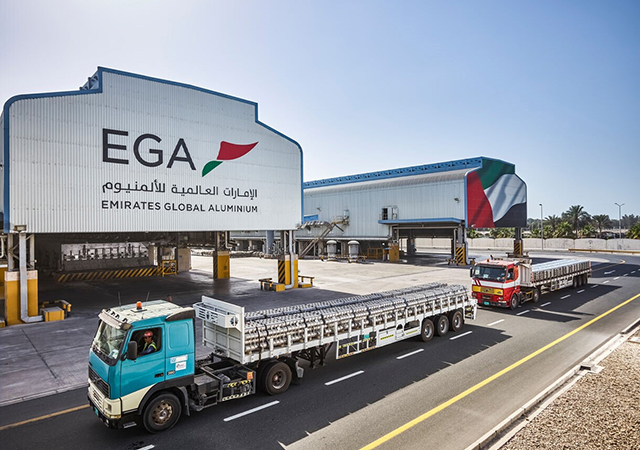
Emirates Global Aluminium facility was targeted by Iranian missiles and drones.
Critically, Linesight flags that Gulf smelters rely on imported alumina that also transits Hormuz, with inventories typically lasting only a few weeks. This means disruption to logistics – even without physical damage to plants – can rapidly threaten production continuity. London Metal Exchange aluminium prices reached a four-year high as a result, with physical premiums moving sharply higher. For construction project teams specifying aluminium curtain-walling, cladding, window systems, or structural profiles, the supply stress is near-term and real.
Cement: Cement’s exposure is primarily through energy costs. Calcination is fuel-intensive; transport is freight-intensive. The 2021–2022 experience – when cement prices rose sharply as oil climbed above $120 per barrel – provides the reference point. The current risk mirrors that period: longer shipping routes and higher bunker costs elevate landed prices for imported cement, ground granulated blast furnace slag, and fly ash. For GCC projects with major pours or precast schedules, this translates into budget volatility and the risk of short-notice price revisions from suppliers. Physical shortages are less likely than pricing instability in the near term – but the duration of conflict is the key variable.
Copper: Copper’s connection to the Middle East conflict is less obvious but structurally significant. The region is a major exporter of sulphur, which is essential for producing the sulphuric acid used in copper ore processing. With sulphur exports disrupted through Arabian Gulf ports, copper smelters face potential acid shortages. This compounds an already tight copper market. For MEP-intensive GCC construction, particularly high-specification commercial and data centre projects, copper cost pressure is a live risk.
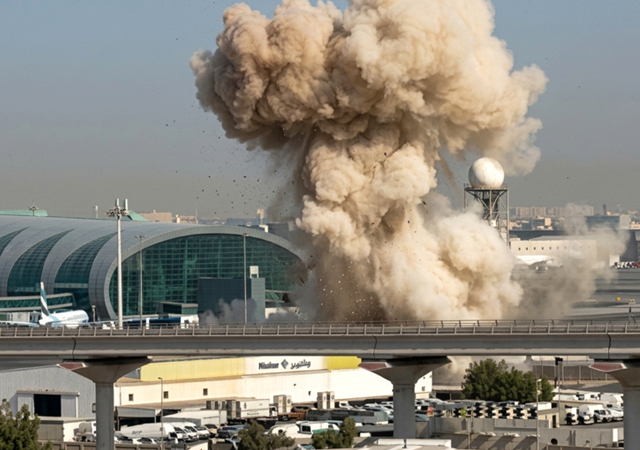
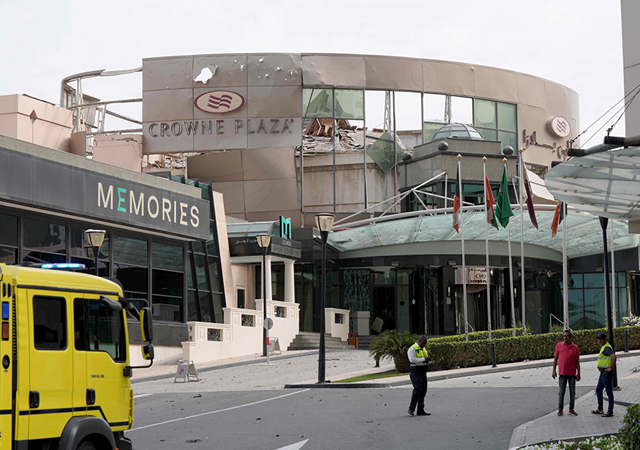
Dubai airport targeted ... travel has been disrupted with most airports in the region having announced temporary closures.
Real Estate: Sentiment, transactions, and developer credit
The S&P Global Ratings report published on March 16 provides an in-depth assessment of the real estate dimension. Its central finding: a 2008-style crash is not expected if the intense phase of conflict lasts up to four weeks, but a meaningful correction becomes possible if it extends beyond that threshold.
While direct strikes on Dubai’s civilian and business infrastructure was not part of the central scenario S&P initially expected, the current situation represents an escalation of those risks, the report states.
Official sources were already reporting lower transaction volumes since the start of the war. S&P expects a slowdown in Dubai real estate volumes and a decline in residential prices across all segments. The luxury and ultra-luxury tier is most immediately exposed – the ultra-high-net-worth individuals and foreign nationals who relocated to the UAE for tax or lifestyle reasons may reconsider, the report states. Apartment prices are expected to fall more sharply than villa prices, given the stronger supply pipeline in that segment.
Secondary market activity is expected to become more prevalent as investors attempt to offload properties. Presale momentum for developers – which had been exceptional over the previous three years – is expected to slow. For GCC construction firms whose workloads are heavily weighted toward residential delivery, this represents a direct pipeline risk.
The key rating sensitivity is not immediate liquidity but the medium-term cash collection trajectory: if presale rates fall and investor delinquencies rise, escrow releases slow, threatening the ability to service land payments and fund completions.
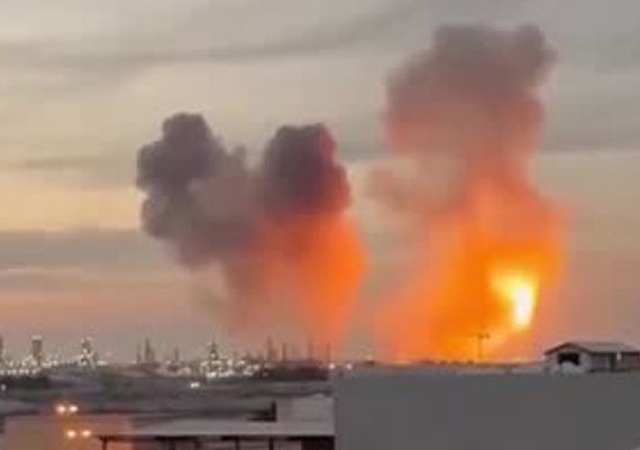
Bapco Energies declared force majeure after its facilities were hit.
Contractual risk: Force Majeure, hardship, and change in law
Pinsent Masons’ Pamela McDonald, who supports businesses in the energy and infrastructure sector in resolving disputes, says armed hostilities and accompanying state warnings, together with return-to-work directives, the evacuation of foreign nationals, and price escalation, have impacted on construction projects and could trigger rights to relief.
She provides a clear framework for how construction firms should be thinking about their contractual positions. The key conceptual distinction is between impossibility and hardship:
• Impossibility – which can engage force majeure clauses – arises where performance is literally impossible due to travel restrictions, mandatory shelter-in-place orders, and drone attacks preventing site access. Force majeure, depending on contract drafting, may excuse performance, grant extensions of time, or confer termination rights. Under FIDIC, it typically grants time relief but not additional cost, absent specific wording.
• Hardship – which falls short of impossibility – arises where performance remains technically possible but has become excessively onerous: severe material cost escalation, workforce disruption from embassy evacuation recommendations and productivity losses even after site access resumes. Civil code systems in the UAE, Qatar, and Saudi Arabia all recognise hardship, but the remedy is judicial rebalancing – typically compensation rather than termination.
The return-to-work dynamic is particularly important. As McDonald notes, the legal basis for impossibility claims weakens proportionally as conditions normalise. Contractors must maintain granular, date-stamped records demonstrating which activities remained impacted at each stage of phased reopening. Hardship arguments may remain viable longer, if cost and productivity metrics can be shown to have been materially affected even after physical access was restored.
Price adjustment mechanisms exist in some FIDIC contracts, but many Middle East public sector contracts delete or modify this clause. Where it is absent, escalation is generally treated as contractor’s risk unless the magnitude is so exceptional as to support a hardship argument. McDonald’s advice is to document baseline prices at tender, track increases with market evidence, and engage employers early – framing discussions around commercial sustainability rather than adversarial claims.
Strategic response: What construction and real estate firms should do
Taken together, the Linesight, Pinsent Masons, and S&P analyses suggest the following practical framework for firms operating in or with exposure to the GCC:
PROCUREMENT AND SUPPLY CHAIN
• Diversify sourcing now. Linesight is explicit: Prioritise suppliers with alternative port options and flexible routings for steel and critical aluminium profiles.
• Rebase logistics plans: Required-on-site dates and shipping calendars should be updated to reflect longer transits, higher cancellation risk, and extended lead times. Secure space early on affected shipping lanes before capacity tightens further.
• Track leading indicators: Crude and LNG benchmarks and IEA advisories function as early warning signals for material repricing. Firms that monitor these can act before repricing flows through to supplier quotations.
• Adjust contract terms proactively: Price-adjustment clauses linked to recognised energy and freight indices should be introduced or renegotiated wherever possible. The treatment of war-risk premia and diversion costs needs explicit contractual definition. For contracts where no price adjustment mechanism exists, document the absence as part of any future hardship claim.
• Increase contingencies: Heavy, import-dependent packages (structural steel, aluminium façade systems, mechanical plant) where freight is a large share of landed cost, should carry elevated contingencies. The Linesight guidance suggests this is a question of when, not if, repricing arrives.
CONTRACTUAL AND LEGAL POSITIONING
McDonald’s note that force majeure entitlement under FIDIC “subsists only for as long as the qualifying event persists”, implying that timely, ongoing notification is essential to preserve entitlement.
Most FIDIC forms and bespoke Middle East contracts have strict notification timeframes. Missing these windows forfeits entitlement regardless of the underlying merits.
• Maintain granular contemporaneous records. Every public announcement (shelter-in-place orders, border closures, aviation restrictions, return-to-work directives) should be logged with timestamps and cross-referenced with on-site records. In terms of personnel, contractors should document the specific roles affected, the causal impact on programme and cost, and any steps taken to source alternative personnel. This is the documentary foundation for any future impossibility or hardship claim.
Mitigation planning should be documented in writing to rebut any later allegation that the contractor failed to resume reasonable progress.
• Engage employers early and constructively. Adversarial escalation tends to produce slower, more expensive outcomes than early commercial dialogue. Framing discussions around project viability and mutual interest in completion – while documenting all positions in writing – is both strategically sound and legally protective.
Real estate developer positioning
The S&P analysis makes clear that financial policy conservatism – low leverage, careful cash management – is the primary credit differentiator in a prolonged conflict scenario. Discretionary land acquisitions and new launches should be deferred.
For firms with GCC exposure, the practical implication is to maintain liquidity, limit leverage, delay nonessential capex, and preserve flexibility in dividends and land buying. S&P’s message is that companies with stronger cash positions, better diversification, and more conservative financial policies are better positioned to withstand prolonged regional stress.
Conclusion
The Middle East conflict has presented the GCC construction and real estate sectors with a stress test that is simultaneously operational, financial, and legal. The supply chain disruption is real and multi-material; the real estate correction has begun; and the contractual landscape is contested. The firms best placed to navigate this period are those that act with speed on procurement diversification, comprehensiveness on contractual documentation, conservatism on financial positioning, and constructiveness in stakeholder engagement. The duration of the conflict remains the pivotal unknown – S&P’s four-week threshold for a manageable versus severe outcome applies as much to construction workloads and developer credit as it does to residential prices.