









As Saudi Arabia’s construction sector continues to evolve at unprecedented speed, the conversation around sustainability is becoming increasingly sophisticated. Energy efficiency, carbon reduction and environmental performance remain essential considerations, but architects, developers and designers are beginning to ask a more fundamental question: how can buildings actively contribute to the health and wellbeing of the people who occupy them?
For Conmarble, that question sits at the heart of everything it does.
Founded just five years ago out of its founder’s deep passion for natural materials, the Qatari-origin specialist manufacturer and applicator of premium natural finishes has grown rapidly across the region, catching the interest of major industry players. In 2025, the Saudi-based building solutions provider Aluminium Products Company (ALUPCO) acquired a 60 per cent stake in the firm, a landmark investment that significantly accelerated Conmarble’s regional ambitions and cemented its position within the broader construction supply chain.
Its latest move in line with that ambition is the opening of a new showroom in Riyadh, which is anticipated to further reinforce Conmarble’s entry into the heart of the Saudi market. This 230-sq-m outlet in Al Olaya, which opened last month, is far more than a showcase for products. It is a physical expression of a philosophy that challenges conventional thinking about materials, interiors and the role they play in shaping human experience; it reflects the company’s ethos that the built environment should be designed to heal, balance and rejuvenate the people who inhabit it.
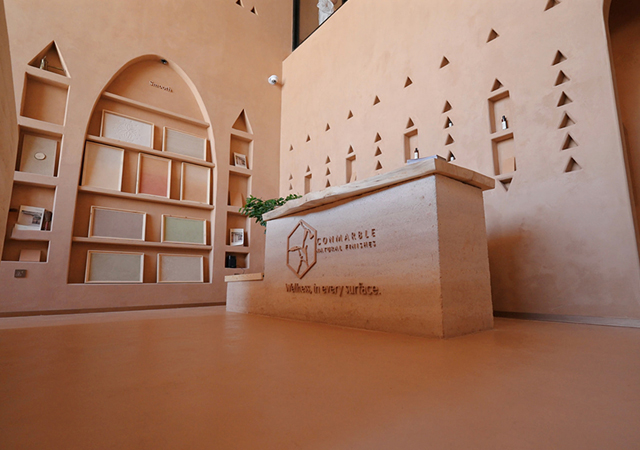
The elegant Riyadh showroom has been designed as an immersive environment that showcases a curated collection of earthy, textured wall treatments.
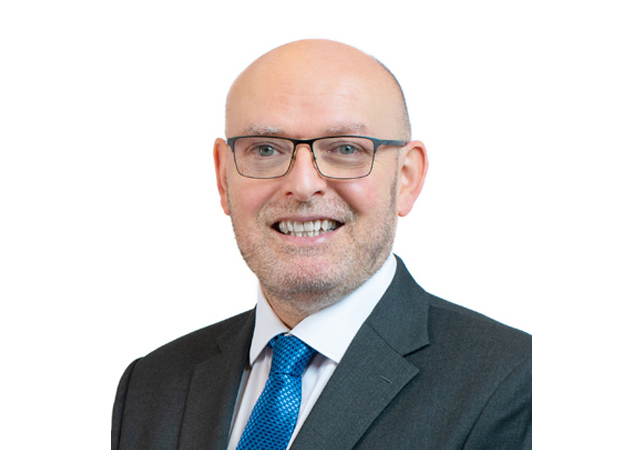
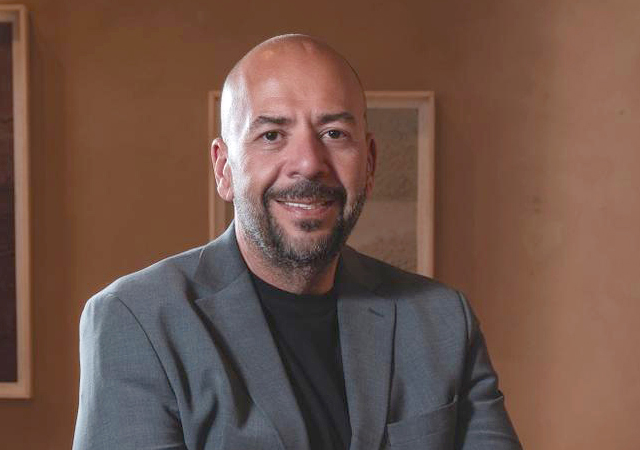
Speaking exclusively to Gulf Construction’s BINA GOVEAS, Ahmad Abdel Majeed, Founder and CEO of Conmarble, says: “What is lacking in the market is a genuine focus on wellness-centred architectural design. At the heart of everything we do is the wellbeing of the people who will occupy the buildings we finish. That gap in wellness materiality is one we are uniquely positioned to fill.”
That philosophy comes to life in the company’s new Riyadh showroom.
Showroom concept
“We have designed the showroom as an experiential space rather than a regular showroom,” says Abdel Majeed.
The elegant Riyadh showroom has been designed as an immersive environment that showcases a curated collection of earthy, textured wall treatments. Rather than displaying products as static samples, the showroom has been conceived as an immersive journey through natural materiality. The space is defined by a warm, monochromatic terracotta colour palette, featuring arched alcoves that beautifully frame various decorative panels. These displays highlight artistic techniques, including intricate geometric carvings, smooth finishes, and gradient “ombre” effects.
The tactile nature of the craftsmanship is emphasised through the displays, highlighting a focus on sensory experience and natural materials. Visitors are encouraged to experience materials physically and understand how they perform within architectural environments.
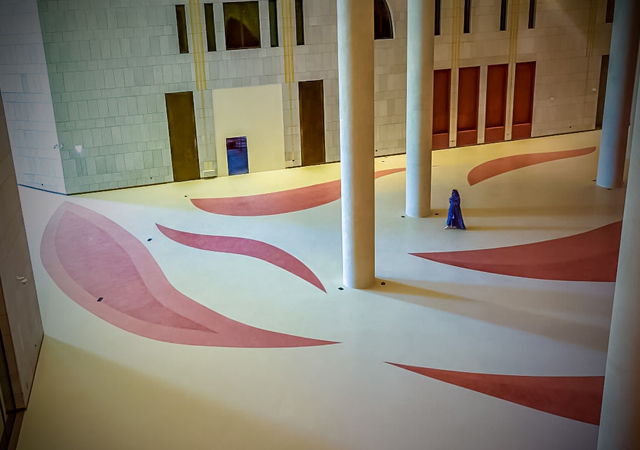
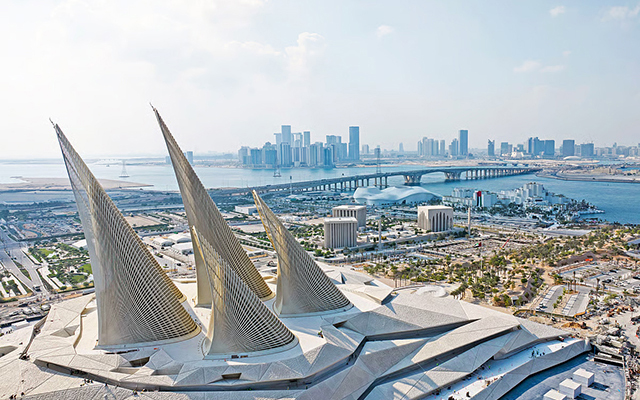
King Fahd Cultural Centre in Riyadh ... a key project carried out by Conmarble.
“Our showroom is unique. When you enter it, you will face the rammed earth maze, which is the centrepiece of the showroom. And on the sides, there are samples of our clay plasters and lime plasters. Beyond that is another maze, which we call the ‘plaster maze’, where you have art pieces done with clay plaster and lime plaster.”
The experience culminates in a dedicated studio and training space where architects, designers and contractors can learn first-hand about natural materials and their application.
The educational component is central to Conmarble’s ambitions. While natural materials such as clay, lime and rammed earth have been part of regional architecture for centuries, many contemporary construction professionals have limited exposure to their performance characteristics or installation requirements.
For Abdel Majeed, increasing awareness of these materials is just as important as selling them.
The decision to establish the showroom in Riyadh reflects the city’s growing influence over construction trends throughout the region.
“Riyadh is now the central decision-making hub for construction and design trends. As the city evolves into a major hub for sustainability and green building initiatives, it was the natural choice for our new location,” he remarks.
Sustainable finishes
Yet sustainability, as Conmarble defines it, goes beyond environmental metrics.
Abdel Majeed believes the industry has historically overlooked the impact that materials can have on human health. Modern buildings often rely on synthetic finishes, acrylic coatings and chemical-based products that may continue releasing volatile organic compounds (VOCs) long after installation. Conmarble’s natural finishes offer an alternative. A major physical property of these finishes is true breathability, which plays an essential role in passive climate control and health preservation.
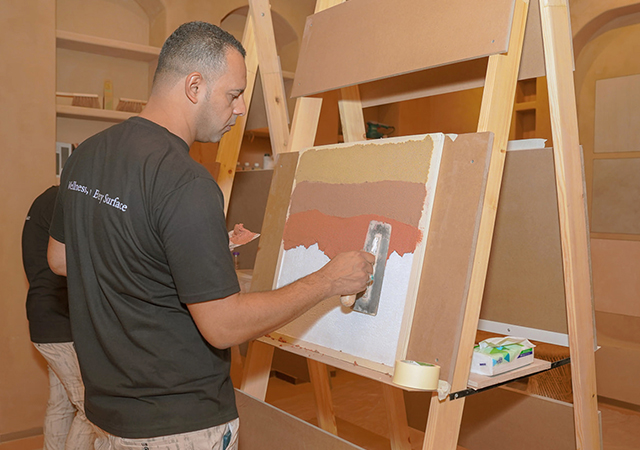
The showroom features a dedicated studio and training space where architects, designers and contractors can learn about natural materials and their application.
“All our materials are breathable. They are free of VOCs and regulate the humidity,” he points out.
That breathability allows moisture to move naturally through walls and surfaces, helping to stabilise humidity levels and create more comfortable indoor environments. In the Gulf, where buildings remain sealed and air-conditioned for much of the year, this characteristic can play a significant role in maintaining indoor comfort.
The benefits extend beyond comfort. According to Abdel Majeed, the alkaline nature of lime and clay plasters helps prevent the growth of mould and fungi.
“Because it is a breathable material that regulates humidity, black mould never grows into lime plasters and clay plasters. Black mould is one of the main reasons of asthma in children,” he adds.
Indoor air quality has become an increasingly important issue globally, particularly as research continues to highlight the relationship between indoor environments and human health. Conmarble sees natural materials as an important part of that conversation.
Lime plaster, for example, continues to interact with the environment long after installation through a process known as carbonation.
“Lime plaster hardens through carbonation, a natural process that begins immediately after application and can continue up to 15 years or more. As it absorbs CO2 from the air, it calcifies, meaning it literally gets stronger and tougher over time,” Abdel Majeed says, adding, “This reduces the CO2 content of a closed room by around five to 10 per cent, which makes a big difference.”
Beyond the chemistry, he argues that indoor CO2 and air circulation affect how people feel in air-conditioned spaces in Riyadh’s climate. This is where Conmarble connects environmental performance with occupant comfort and wellbeing.
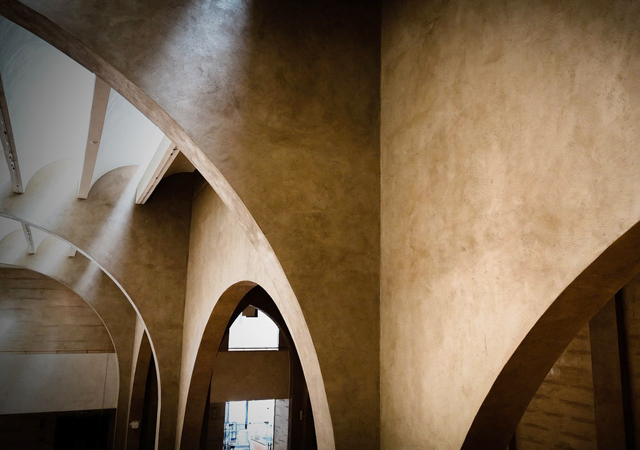
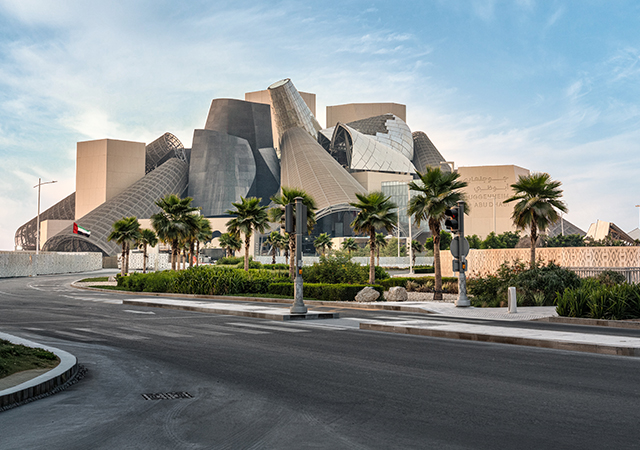
Conmarble completed 35,000 sq m of limestone plaster at the Prince Mohammed bin Salman Calligraphy Museum within eight weeks.
For Conmarble, these characteristics reinforce the concept that materials should actively contribute to building performance rather than merely provide decoration. This philosophy is closely linked to another core principle of the company: authenticity.
In a market awash with faux textures, Abdel Majeed insists on complete authenticity. This “honesty” is verified at the raw sourcing stage. Conmarble’s clay finishes, developed through its exclusive Mena partnership with premium brand Clayworks, emphasise material purity and honesty.
The company works with genuine clay, natural lime and carefully selected aggregates rather than synthetic substitutes designed to replicate their appearance. Its clay finishes contain real clay without acrylic binders, while its lime plasters are produced using high-purity hydrated lime combined with marble dust and natural aggregates. The result is a collection of finishes that are seamless and remain true to their origins while delivering the performance demanded by modern projects.
The approach also reflects the region’s architectural heritage.
“Actually, the materials which we work with are not alien to the region. Our materials are a recreation of traditional ones used in this region for thousands of years,” he explains, pointing specifically to the long history of clay construction across central Saudi Arabia.
“So, when we speak about clay plaster, clay plaster was utilised in Najd for the last 2,000 to 3,000 years,” he stresses.
Conmarble’s challenge has been to adapt those traditional materials to contemporary construction requirements. Through extensive engineering, processing and testing, the company has succeeded in reducing the thickness of traditional clay applications while maintaining their visual and environmental benefits.
What once required a 50-mm mud plaster layer can now be achieved with engineered systems measuring approximately 5 mm, significantly reducing installation times and material consumption while preserving the desired aesthetic.
Landmark portfolio
The company’s ability to apply these systems at scale is demonstrated by its growing portfolio of projects.
Among the most notable was the UAE Pavilion at the Qatar Agricultural Expo 2023, designed by BIG – Bjarke Ingels Group. Built using natural materials and site-sourced rammed earth, the pavilion received the Gold Award for the most sustainable self-built booth at the exhibition.
In Saudi Arabia, Conmarble completed approximately 35,000 sq m of limestone plaster at the Prince Mohammed bin Salman Calligraphy Museum in Madinah within just eight weeks. The company has also contributed to the King Fahd Cultural Centre in Riyadh and is actively involved in several projects within Diriyah, including the House of Al Saud, Capella Hotel, King Salman Library and the Journey of 100 Stories exhibition.
Along the Red Sea coast, its work extends to luxury hospitality developments including Six Senses, Rosewood and the HC1 Amala Hotel.
These projects illustrate how natural finishes are moving beyond niche applications to become integral components of large-scale developments.
In his view, however, these natural materials should be part of mainstream architectural decision-making, including in ordinary buildings, not only in landmark projects.
Abdel Majeed points out that the company’s materials are tested against nine different specifications, including BREEAM, LEED, Mostadam, and French greenhouse-related standards.
The company’s craftsmanship is supported by a substantial application team and training structure. Abdel Majeed says Conmarble has around 200 applicators, and that he personally supervises training, with regular input from specialist Tom Hertz. The company is re-engineering natural materials so they can perform at modern scales, citing the example where a traditional 5-cm mud-plaster was reduced to a 5-mm engineered finish.
That same versatility is what makes the system suitable for both new-build and renovation projects, especially where a traditional look is required without major structural intervention. Conmarble’s products can be installed over existing ACP (aluminium composite panels), concrete, or painted surfaces using a special primer.
ALUPCO partnership
A key part of Conmarble’s recent growth story is its relationship with ALUPCO.
“Since ALUPCO partnered with us, our expansion has exceeded even my expectations,” Abdel Majeed emphasises. “They helped us investigate and navigate new verticals in the market and supported us in setting up our new showroom in Riyadh. Under their guidance, we are now bidding on projects that are tenfold the size of what we could handle last year.”
Beyond financial backing, the partnership is enabling the development of a broader wellness-centred construction ecosystem. Through complementary businesses within the ALUPCO group, Conmarble is helping to explore how materials, glazing technologies, aluminium systems and carpentry solutions can work together to create healthier environments. The company is now working on a broader wellness real estate concept that brings together several ALUPCO-linked companies into one integrated construction methodology.
Future direction
Conmarble’s next phase is likely to focus on education, affordability, and product development. Abdel Majeed says the company wants to educate the market on wellness in design and is working to bring affordable eco-friendly materials into circulation. He also mentions a new clay wash product, which was unveiled during the opening of the showroom, that offers a zero-VOC alternative to conventional paint in less than 0.5 mm thickness.
Looking ahead, the company plans to localise manufacturing within Saudi Arabia, reducing transportation-related emissions while supporting local content objectives and green building programmes. Abdel Majeed says the company currently represents brands from Spain and the UK but plans to move all production into the kingdom within six months, which would reduce cradle-to-gate CO2 emissions. That localisation push strengthens the company’s sustainability narrative while also supporting supply-chain resilience.
Conmarble is also investing in research and development, including a new rammed-earth solution reinforced with fibres extracted from palm trees, which he expects to bring to market within a year.
When giving his final message to developers and architects, Abdel Majeed emphasises why Conmarble stands apart for luxury eco-conscious projects.
“I believe that we are unique in integrating several materials into a wellness-centered architectural concept and we are very true to our ethos which is seamless, eco-friendly, honest. So, we provide the architects with a new canvas to navigate and to work with,” he concludes.
Through this balance of corporate backing, material honesty, and an unwavering commitment to human health, Conmarble is setting a new standard for wellness in the region’s built environment.
Its new Riyadh showroom is, therefore, more than a showroom. It is a statement of intent. By combining traditional materials, modern engineering and a commitment to human wellbeing, Conmarble is helping to redefine the role of finishes in the built environment.