

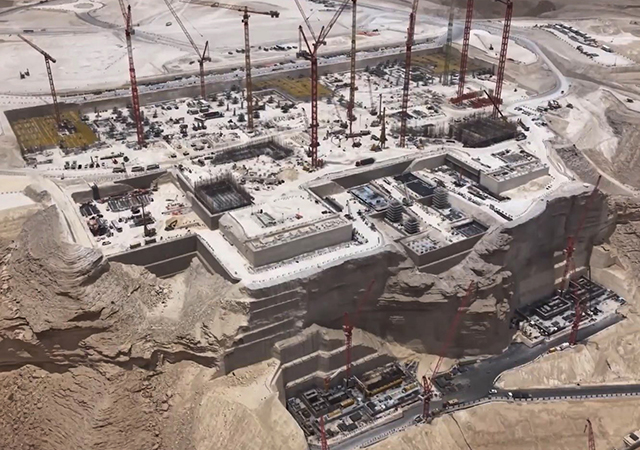




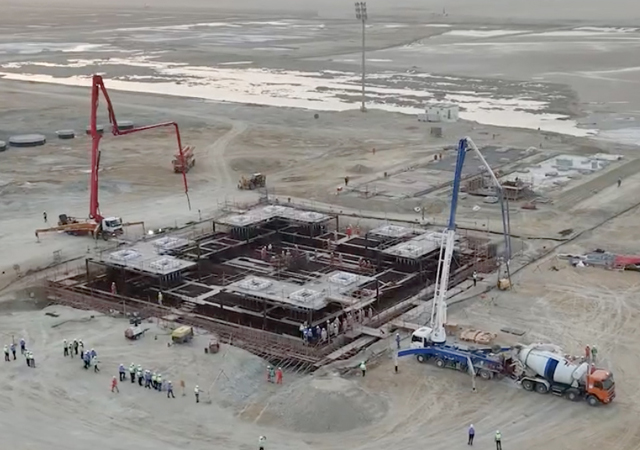
Construction on Jindal Steel’s massive $3-billion green steel complex in the Special Economic Zone at Duqm (SEZAD) has entered its critical equipment installation phase, moving the hydrogen-ready facility closer to its projected early 2027 operational target.
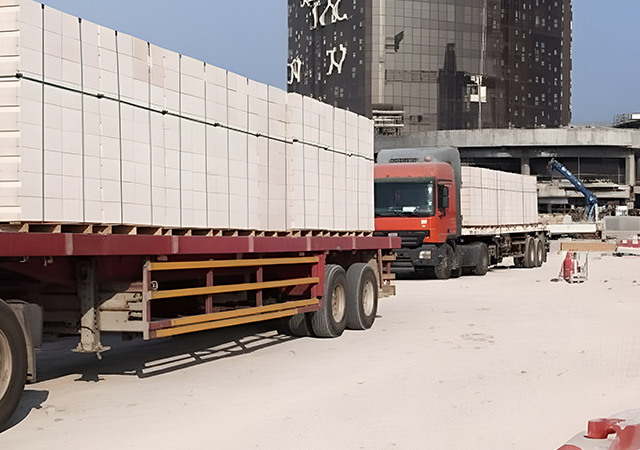
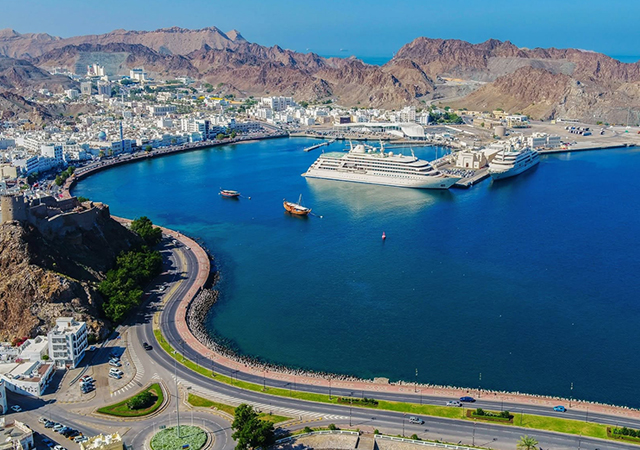
The field milestone was reached with the recent arrival and installation of a massive 935-tonne reactor at the Port of Duqm, a major logistics breakthrough for the greenfield project.
The low-carbon steel complex being built by Jindal Steel Duqm, a unit of India’s Naveen Jindal Group, will have an annual production capacity of 5 million tonnes per annum (MTPA). The project is designed around two direct reduced iron (DRI) plants, each capable of producing 2.5 million tonnes a year, using gas-based technology aimed at reducing carbon emissions compared with conventional blast furnace steelmaking.
The DRI units will deploy Energiron technology developed by Italian engineering groups Tenova and Danieli Group, which uses natural gas or hydrogen to convert iron ore into high-purity metallic iron, eliminating the need for coal in the reduction process.
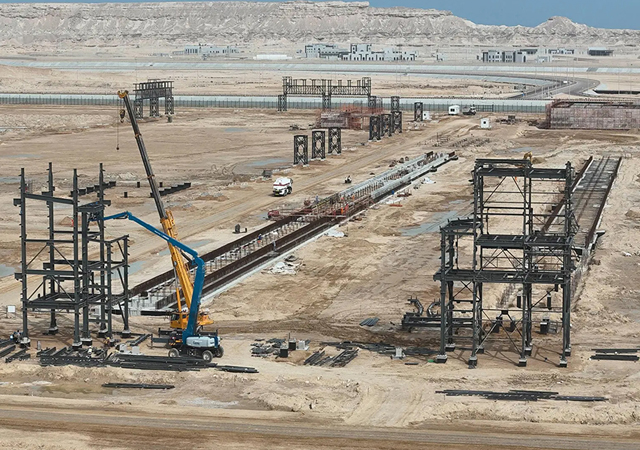
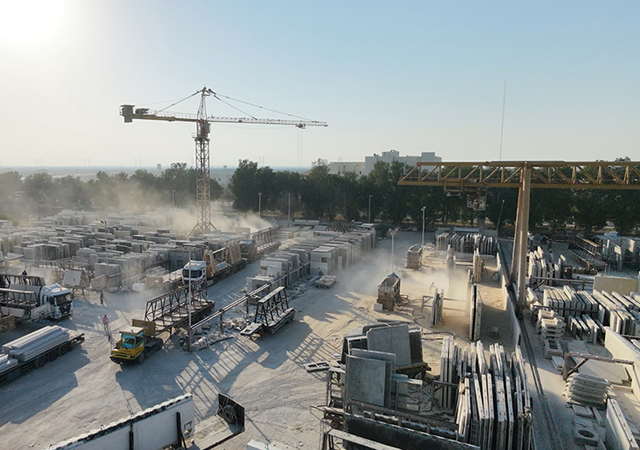
The low-carbon steel complex is being built at Duqm.
The technology package for the second DRI plant was confirmed last year, featuring zero-reformer Energiron design intended to achieve a metallisation rate of 94 per cent, while integrating carbon capture systems to support the project’s low-emission steel strategy.
To anchor the project’s massive regional footprint, Oman’s Public Authority for Special Economic Zones and Free Zones (OPAZ) recently finalised an agreement to construct a dedicated 460,000-sq-m residential city for 500 Jindal Steel employees.
To support operations for the full 5 MTPA capacity, Jindal Steel Duqm is developing a dedicated jetty at Duqm Port. The jetty is being developed under a build-own-operate-transfer (BOOT) framework with the Port of Duqm Company. To prepare the harbour for massive cargo vessels, engineers are utilising dry-land excavation to dig out the immediate berthing area before deploying heavy cutter suction dredgers to clear the deepwater access channel. The jetty will support bulk import of raw materials and export of finished steel products globally.
As physical infrastructure rises on the coast, Jindal Steel is simultaneously expanding its technical roadmap to target deeper carbon reduction. In a joint announcement issued in May, UK-based carbon recycling pioneer PeroCycle confirmed it has been awarded a comprehensive feasibility assessment to integrate its patented closed-loop carbon recycling technology directly into Jindal’s Duqm operations.
Originally developed at the University of Birmingham, PeroCycle’s technology captures industrial gas byproducts, or off-gas, and recycles them back into the production cycle as chemical feedstock. The process has the potential to reduce steelmaking carbon emissions by up to 90 per cent while significantly cutting reliance on fossil-based reducing agents such as natural gas, coal, and coke. Because the system can be retrofitted into existing operations or built into new plants, it offers a pathway to avoid stranded assets and the heavy capital expenditure typically associated with new-build green facilities.
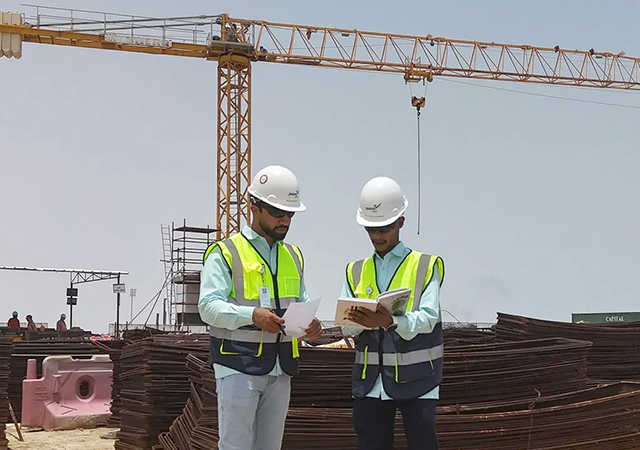
The $3 billion green steel complex is expected to be operational next year.
The current feasibility assessment study is designed to deliver a robust implementation roadmap by testing compatibility with existing gas recovery systems. The workstream will map out detailed process flow diagrams and mass-energy balances, alongside on-site profitability evaluations and a deployment schedule designed to prevent disruptions to Jindal’s broader construction phases.
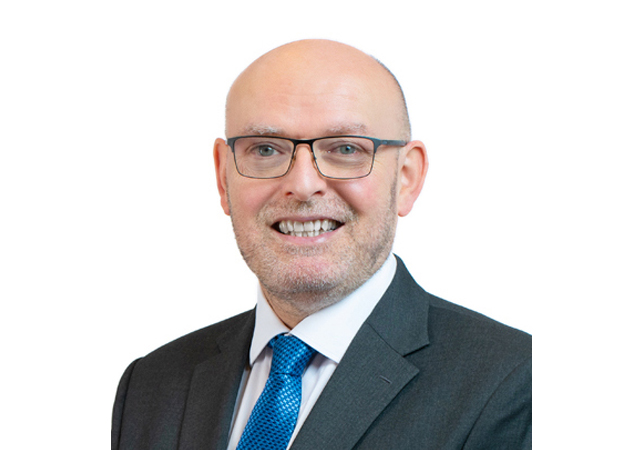
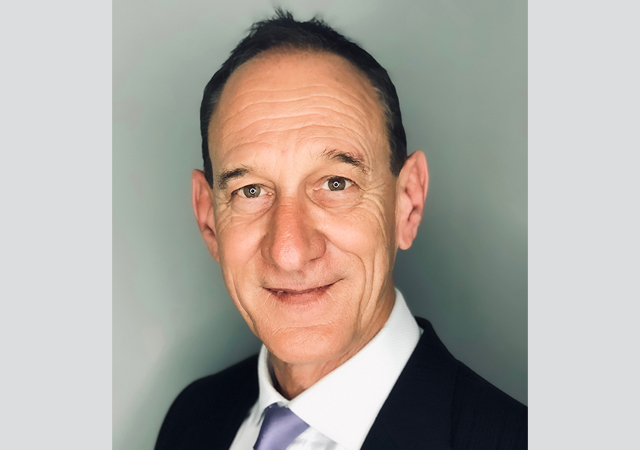
Grant Budge, CEO of PeroCycle said: “We are honoured to be working alongside Jindal Steel (Oman), a company that is clearly at the forefront of the global decarbonisation transition. The feasibility assessment is more than just a study; it could be a blueprint for the future of the industry. By combining PeroCycle’s ability to recycle CO2 with Jindal’s operational excellence, we look to prove that decarbonisation and industrial growth can go hand-in-hand.”
Harssha Shetty, CEO at Jindal Steel (Oman), commented: “Sustainability is a core pillar of our long-term strategy at Jindal Steel. Exploring innovative technologies like PeroCycle’s reflects our commitment to reducing our carbon footprint while maintaining our competitive edge in the global steel market. We look forward to seeing the technical and economic results of this study as we continue to lead the way in sustainable steelmaking.”
The strategic engagement has benefits for both parties. It provides Jindal Steel with a data-driven strategy to significantly reduce CO2 emissions from onsite activities (Scope 1 emissions) and indirect emissions from purchased electricity, steam, heating or cooling (Scope 2 emissions), and could lower long-term operating expenses through reduced reliance on external carbon sources.
For PeroCycle, it provides a high-profile platform to demonstrate technology readiness within a complex, large-scale industrial environment, and establishes a strong foothold in the Middle East, which is rapidly becoming a global hub for industrial decarbonisation. It will also serve as a vital precursor to engineering design, and engineering, production and construction stages for a demonstrator scale unit.