




























The Covid-19 pandemic forced the world to confront an uncomfortable reality: the air inside buildings can pose significant risks to health. While awareness of indoor air quality (IAQ) has grown substantially across the Gulf since then, translating that awareness into consistent action remains a challenge.
According to Markus Lattner, Managing Director of Eurovent Middle East, the region’s industry association representing manufacturers of HVAC, cooling, ventilation and building automation technologies, awareness alone will not deliver healthier buildings. What is needed is stronger regulation, greater accountability and, above all, a more skilled workforce.
In an exclusive interview with Gulf Construction’s Bina Goveas, he emphasises that the technologies needed to improve indoor air quality already exist. The bigger obstacles are fragmented regulations, inconsistent implementation and a shortage of skilled professionals throughout the HVAC value chain.
One of the most persistent misconceptions, he says, is the belief that better indoor air quality inevitably leads to higher energy consumption. In a region where cooling accounts for a substantial share of electricity use, many developers assume that bringing in more fresh air will increase operating costs. Lattner rejects this argument, pointing instead to inefficiencies within building systems.
“A well-balanced, airtight ducting system can reduce your energy consumption by around 20 per cent to 25 per cent,” he says.
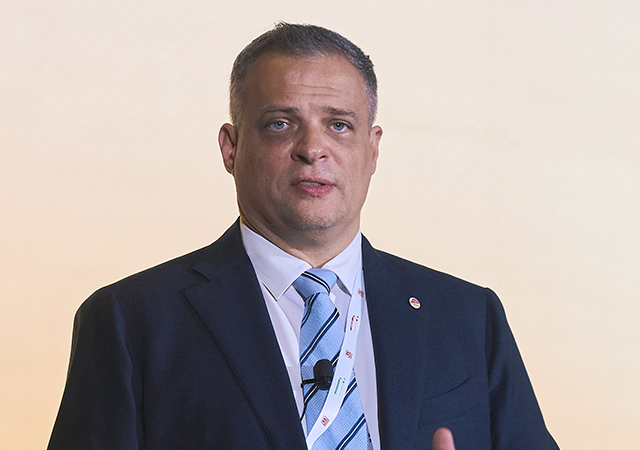
Lattner: “Improving indoor air quality requires a holistic approach that combines ventilation, filtration, air distribution and maintenance.
Too often, buildings lose energy through poorly designed or poorly maintained systems. Leaking ductwork, inadequate commissioning and neglected maintenance not only increase energy bills but also undermine indoor environmental quality.
“People need to be aware that the best chiller on the roof is pointless if you can’t manage to distribute the cooling load it generates effectively and efficiently into the building,” he says.
According to Lattner, improving indoor air quality requires a holistic approach that combines ventilation, filtration, air distribution and maintenance rather than focusing on individual pieces of equipment.
“Quality across the entire value chain, from design and specification to installation, operation, and maintenance, is essential,” he emphasises.
The challenge becomes even greater in GCC markets, where extreme heat, dust, sand and humidity place additional demands on building systems. While international standards such as ISO 16890 remain relevant, filtration strategies must be tailored to local environmental conditions.
“Outdoor air, especially in industrial and urban settings, varies heavily in the contamination it carries, based on local influences like industrial plants, airports, and traffic. It is first and foremost critical to understand the types and composition of these contaminants to know what substances the building and its occupants are up against and plan the air filtration system accordingly,” he points out.
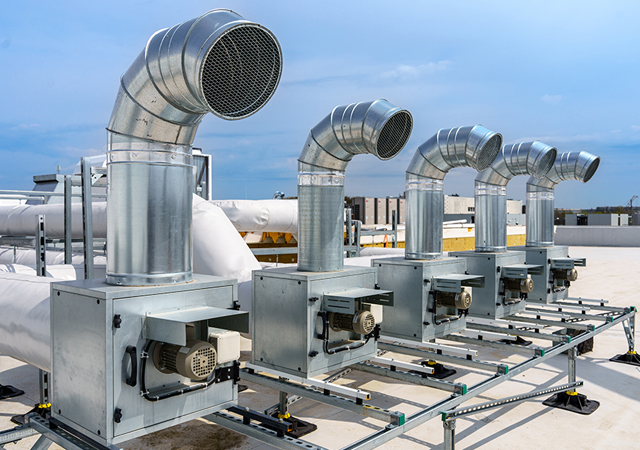
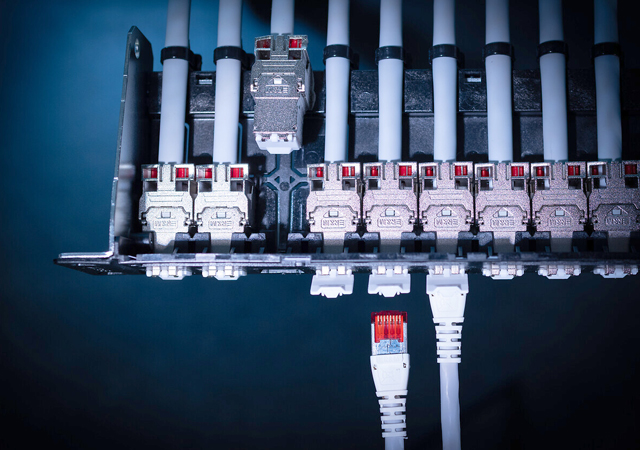
A well-balanced, airtight ducting system can reduce energy consumption by around 20 to 25 per cent.
Lattner also believes governments have an important role to play by introducing clearer requirements for dedicated fresh-air systems and guidance on monitoring indoor pollutants such as carbon dioxide and volatile organic compounds (VOCs). Greater alignment between building codes, product regulations and maintenance requirements would help create a more consistent approach to indoor environmental quality across the region.
However, he maintains that regulations and technology alone will not solve the problem.
As the industry prepares for the transition to lower-impact refrigerants and increasingly sophisticated HVAC systems, the need for qualified technicians, engineers and facilities management professionals is becoming more urgent.
For Lattner, the single most important step the industry can take is investing in people.
“Ultimately, better-qualified people create better-performing buildings. That leads to lower energy consumption, healthier indoor environments and more sustainable outcomes for everyone,” he concludes.
Excerpts of the interview with Markus Lattner, Managing Director, Eurovent Middle East:
Indoor air quality has gained greater prominence in recent years, but do you believe it is receiving sufficient attention across the GCC construction and facilities management sectors? Where do the biggest gaps still exist?
The Covid-19 pandemic was certainly one of the drivers that brought the importance of indoor air quality into the spotlight in recent years, but people tend to forget quickly and lapse back into old routines. While I have seen that awareness of IAQ has increased significantly since then, it has yet to translate into consistent action. We have also noticed that from the regulatory side, some requirements are stipulated, mostly on municipality levels. We hope that over time we see a more robust, clear, and practical legal environment, which places building and occupational health on a higher level.
For example, requirements for dedicated fresh air handling systems within federal or emirate-level building codes, alongside baseline guidance on CO₂ and VOC monitoring from authorities such as Dubai Municipality, would be important steps in the right direction.
What are the most significant technical and regulatory barriers preventing widespread adoption of IAQ-focused HVAC solutions in the region?
I do not see any technical barriers. From a regulatory perspective, one of the key challenges is ensuring effective coordination among governing bodies and relevant authorities to establish clear, consistent, and harmonised requirements across jurisdictions.
For instance, certain requirements can be stipulated through building codes, but they alone will not fully rectify the issue. It needs the involvement of certain technical regulations at the product level, as well as minimum requirements in terms of operation and maintenance protocols. All these are traditionally governed by different authorities.
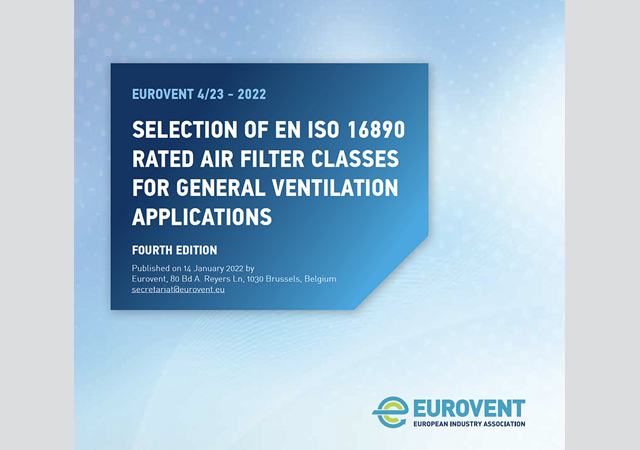
Eurovent recommendations, including guidance on the selection of EN ISO 16890-rated air filter classes for general ventilation applications, are freely available to support informed decision-making across the industry.
The GCC faces extreme cooling loads and water constraints. What practical strategies, system design, controls, or operational practices do you see as having the highest impact for simultaneously improving IAQ and reducing energy/water use?
Let me clear up one of the most common misconceptions right upfront. Better IAQ does not automatically correspond to higher energy costs, and operational costs should not be the only expenses we need to take into account. A well-balanced, airtight ducting system can reduce your energy consumption by around 20 to 25 per cent. It is also a key factor in providing better IAQ and preventing sick building syndrome as a result of condensation and moisture. Coupled with appropriate air filtration and the right level of circulation, it protects the building from damage and ensures that occupants can work and live in a healthy environment, significantly reducing costs from sickness and lack of productivity. We have ample technology at our hands to provide high performing, efficient, and cost-effective ventilation and air filtration systems. People need to be aware that the best chiller on the roof is pointless if you can’t manage to distribute the cooling load it generates effectively and efficiently into the building.
Building owners are often forced to balance energy efficiency targets with occupant health and comfort. How can developers and operators improve IAQ without significantly increasing energy consumption?
In reality, both objectives can be achieved simultaneously through proper system design and the use of high-performance, certified HVAC products. Organisations such as Eurovent provide independent performance certification for a wide range of HVAC equipment, including air filters, air handling units, and fans, enabling developers and consultants to make informed decisions based on verified performance data. This helps ensure that systems deliver both the required indoor air quality and optimal energy performance.
Achieving the best outcomes requires a holistic approach: investing in high-quality products, ensuring competent installation and commissioning, minimising air leakage through effective duct sealing, and maintaining systems properly throughout their lifecycle. Quality across the entire value chain, from design and specification to installation, operation, and maintenance, is essential. It is the norm that in retrofit projects, if the above is applied, the energy bill is significantly reduced while IAQ levels significantly increase. We lose too much energy due to leaks in pipes and ducts, poor maintenance, and not using the most efficient available products.
Building commissioning and O&M are often weak links for IAQ. What policy, contractual or market mechanisms would most effectively ensure ongoing IAQ performance after handover?
We urgently need a more qualified workforce across the HVAC sector. The best equipment is useless if not installed, operated, and maintained correctly. With the refrigerant transition incoming, governments will have to implement qualification requirements for technicians to handle F-Gases and their alternatives. This will have a very positive effect on the overall efficiency of HVAC systems. On a contractual level, I recommend stipulating requirements for facilities management (FM) providers to prove adequate qualification of their personnel. This eventually should also be extended to contractors and other service providers. No one without proper qualification should be allowed to operate and maintain HVAC equipment. There are discussions to stipulate KPIs for FM in terms of the energy performance of a building, in which case lower energy bills would be rewarded by building owners. This sounds great, but only if set in connection with consistent and measured IAQ levels. Otherwise, it would have the detrimental effect of sacrificing IAQ and comfort for the sake of lower energy consumption.
Smart controls, sensor networks, and real-time IAQ monitoring promise better outcomes. What are the biggest obstacles to their adoption in the GCC and how can stakeholders overcome them?
They indeed provide a great opportunity for automation, real-time reaction to changes in building occupancy and IAQ levels, as well as in fine-tuning the balance between demand and supply. I believe the largest obstacle here is knowledge and understanding. We need to build experience and trust among developers, consultants, and building owners so they understand how to plan, design, and ultimately utilise these technologies effectively. We need to be able to demonstrate on real projects the benefits and technical integration, and give people the opportunity to learn. Every new technology lags in its implementation because people are not familiar with it. The industry, therefore, has an important role to play in investing in training, education, and knowledge sharing to help accelerate adoption and unlock the full potential of these technologies.
The air in the region carries intense humidity, dust, and fine sand. How must regional filtration standards adapt to protect both human health and equipment longevity?
ISO 16890 is the reference standard for air filtration in general ventilation and remains fully applicable in the GCC region. The challenge is in ensuring filtration systems are selected and designed to address the region’s specific environmental conditions, including dust, sand, humidity, and local sources of pollution.
Outdoor air, especially in industrial and urban settings, varies heavily in the contamination it carries, based on local influences like industrial plants, airports, and traffic. It is first and foremost critical to understand the types and composition of these contaminants to know what substances the building and its occupants are up against and plan the air filtration system accordingly.
Eurovent provides valuable guidance documents for engineers to select air filters. They can be downloaded free of charge from our document archive on our website (www.eurovent.me).
How vital are independent, third-party certifications in eliminating ‘greenwashing’ and proving that a building actually delivers its promised energy savings?
Third-party certificates form an essential pillar in building trust and reliability in our industry. However, certification programmes also need to be properly understood and applied in the right way. Eurovent’s product performance certification, for example, is based on annual recertification through audits and testing, ensuring that products continue to perform as claimed throughout their lifecycle.
For building energy performance, the challenge is often maintaining and verifying performance over time. Schemes such as LEED, WELL, and others provide valuable frameworks for designing and delivering high-performance buildings. However, it has become increasingly clear that there is also a need for ongoing verification through recommissioning, recertification, and performance assessments.
Buildings evolve, equipment deteriorates, and a significant part of a building’s energy performance depends on operation and maintenance. Therefore, an initial certificate is an important starting point, but its value is maximised when accompanied by a long-term commitment to maintaining and verifying performance throughout the building’s lifecycle.
If you could implement one industry-wide change tomorrow that would most improve both sustainability and indoor air quality across the GCC, what would it be and why?
Mandatory qualification and continuous training across the HVACR value chain. No measure would have a greater impact on both energy efficiency and indoor air quality. The reality is that even the best technologies and most efficient systems will fail to deliver their intended performance if they are not properly designed, installed, commissioned, operated, and maintained. A highly qualified workforce is, therefore, the foundation upon which both sustainability and healthy indoor environments depend.
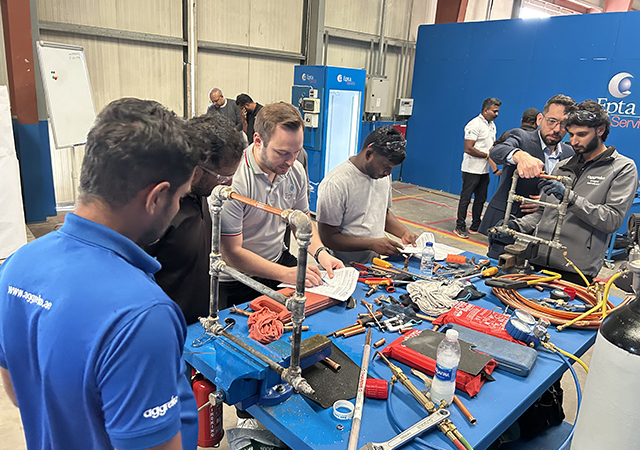
This is precisely why Eurovent Middle East established the HVACR Leadership Academy. Through dedicated training programmes for technicians, engineers, and industry professionals, the academy aims to strengthen technical competence, improve understanding of modern HVACR technologies, and help ensure that buildings perform as intended throughout their lifecycle.
Ultimately, better-qualified people lead to better-performing buildings, lower energy consumption, and healthier indoor environments.