







































ASHRAE (American Society of Heating, Refrigerating and Air-Conditioning Engineers), a global society of HVAC&R professionals, has published its 2025–2028 Strategic Plan to accelerate the transition to more sustainable, resilient and healthy buildings worldwide.
ASHRAE is an international society of more than 50,000 HVAC&R professionals in over 132 countries devoted to advancing a healthy and sustainable built environment. Its three-year strategic plan centres on three core goals:
• To lead globally on indoor environmental quality (IEQ), decarbonisation and resilience by driving widely adopted standards, member-driven technical resources and strategic alliances;
• To deliver impact‑focused engagement that targets key stakeholders, empowers HVAC&R professionals and builds partnerships to strengthen the HVAC&R and built‑environment workforce; and
• To expand access to ASHRAE’s knowledge and opportunities by removing structural, financial and communication barriers while positioning chapters and regions as local innovation hubs.
“Our 2025–2028 Strategic Plan is about advancing buildings that truly support human well-being,” says ASHRAE President Bill McQuade, PE, CDP, Fellow ASHRAE, LEED AP. “This plan ensures that ASHRAE’s work translates into real-world benefits which include cleaner air, safer indoor spaces, and communities that are better equipped to thrive in a changing climate.”
The society has also defined four strategic initiatives to deliver those goals.
The Healthy, Sustainable and Resilient Communities initiative will accelerate the development and adoption of standards, best practices and technical guidance that enhance indoor environmental quality, reduce greenhouse gas emissions and improve the resilience of buildings and communities in the face of climate-related and environmental challenges.

McQuade: “Our 2025–2028 Strategic Plan is about advancing buildings that truly support human well-being.”
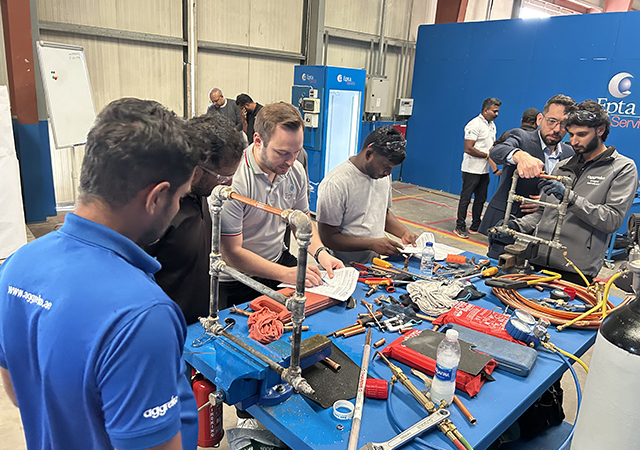
The Empowered Workforce initiative expands education and professional development to help close the global skills gap. ASHRAE aims to prepare engineers, technicians and decision-makers with the tools and knowledge needed to implement IEQ improvements, achieve decarbonisation goals and strengthen resilience across the built environment.
Under Organizational Agility, ASHRAE will invest in digital transformation and streamlined communications to improve the speed and clarity of information sharing between chapters, regions, technical committees and industry partners, ensuring the society remains responsive, collaborative and impactful.
The Emerging Technologies initiative will identify, evaluate and promote innovations, including AI‑driven controls and smart building technologies, that support integrated solutions for energy efficiency, occupant health and operational performance.
ASHRAE will support these initiatives with several key enablers. Its technical work will remain grounded in impartial, high‑quality research. The society plans to leverage automation and advanced analytics to improve decision‑making across the design, construction and operations lifecycle. And ASHRAE’s broad, diverse international membership will continue to foster cross‑discipline collaboration to ensure that its collective expertise drives meaningful solutions for global building challenges.
Implementation of the 2025–2028 Strategic Plan is already under way, with ASHRAE aligning programmes, standards development and outreach to reflect the plan’s priorities.
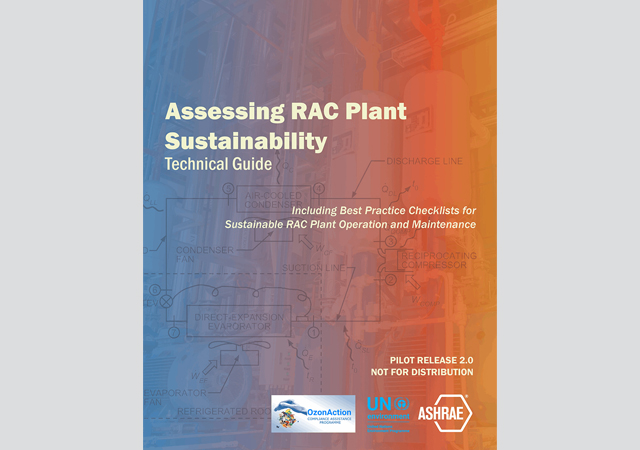
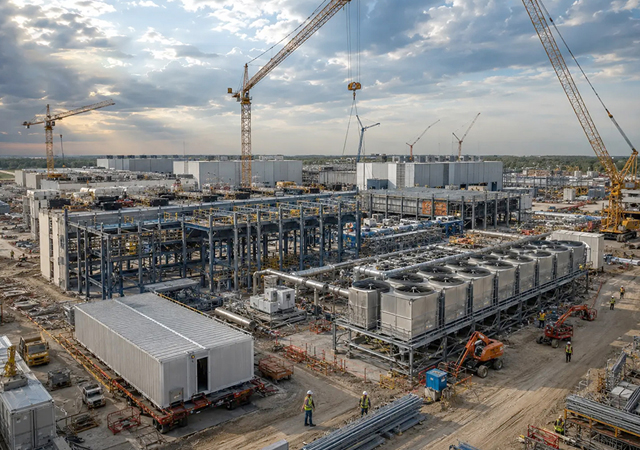
The technical guide is designed to help RAC plants improve performance, reduce emissions and promote energy‑efficient, sustainable operations.
Among other initiatives to improve IEQ, drive decarbonisation, strengthen the HVAC&R workforce and support more efficient, lower‑emissions cooling operations, last year ASHRAE, through a partnership with the United Nations Environment Programme (UNEP) OzonAction, had launched practical sustainability assessment tools for refrigeration and air‑conditioning (RAC) plants.
The Assessing RAC Plant Sustainability checklists and guidance sheets, released in July 2025, are free, downloadable tools designed to help RAC plants improve performance, reduce emissions and promote energy‑efficient, sustainable operations. They address a persistent challenge in the cooling sector: the proper maintenance and operation of increasingly complex RAC systems, evolving technologies and new refrigerants that require specialised knowledge and careful handling.
“These tools provide practical guidance that connects design intent with operational outcomes,” McQuade said. “By helping RAC professionals assess and improve sustainability across key performance areas, we’re empowering the industry to make data‑informed decisions that benefit the environment, their workforce and their bottom line.”
Originally designed for field technicians, the Assessing RAC Plant Sustainability tools also offer value to plant managers, equipment suppliers and consulting engineers. Plant managers can assess current operations across eight key dimensions, including refrigerant emissions, energy consumption and preventive maintenance, using the tools to make informed sustainability improvements and reduce operating costs. Suppliers can train customers in preventive maintenance strategies that increase equipment life, efficiency and compliance, while supporting life‑cycle cost savings and performance accountability. Engineers can incorporate the checklists into training documentation, strengthening the connection between design objectives and real‑world operations and closing knowledge gaps among stakeholders.
The guidance includes recommendations for energy‑efficient operation, life‑cycle investment considerations and key performance indicators to help determine when equipment upgrades are warranted. This resource is part of a broader portfolio of ASHRAE–UNEP tools developed to promote responsible, efficient cooling practices and support international efforts related to the Montreal Protocol. The full suite of resources is available through the ASHRAE UNEP Portal.