










As the GCC faces evolving challenges ranging from rising groundwater in cities to flash flooding, nature-based design must transition from an aesthetic afterthought to critical, front-end civil infrastructure.
The regional construction sector must pause and ask a fundamental question: Are we building a built environment that can genuinely sustain itself? The honest answer requires moving beyond the familiar language of corporate sustainability reports, green building certifications, and checkbox compliance. True sustainability, when executed effectively on a major project, must be biological. It can no longer be treated as a soft landscaping line item on a spreadsheet; it must function as critical infrastructure.
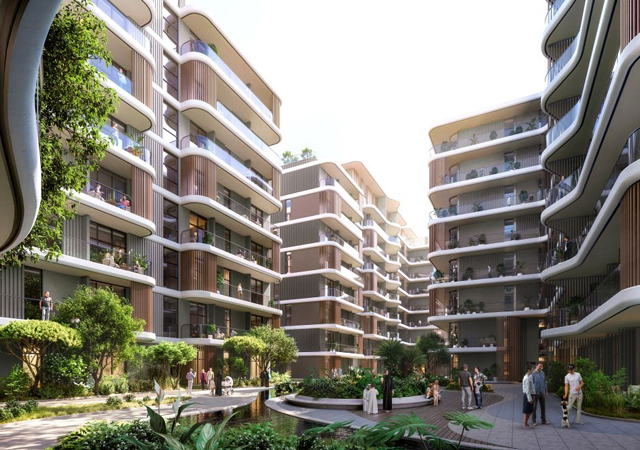
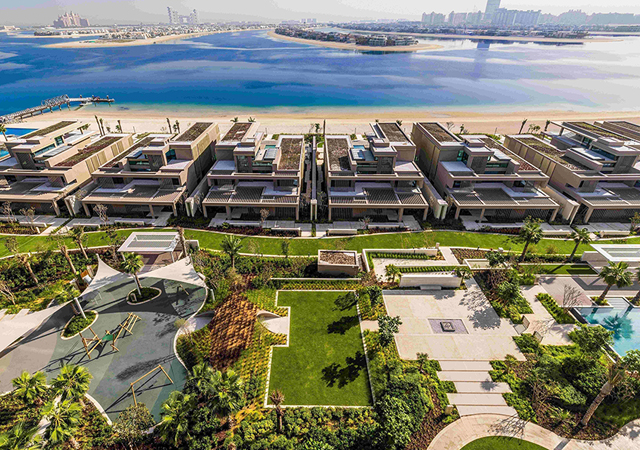
For too long, the regional construction industry has treated landscape architecture as a final flourish – something added to the scope once the heavy civil engineering is complete, brought in merely to soften the sharp edges of a concrete structure. This approach misses the broader systemic value. Landscape contextualises everything on a masterplan, including roads, buildings, public spaces, and utility networks.
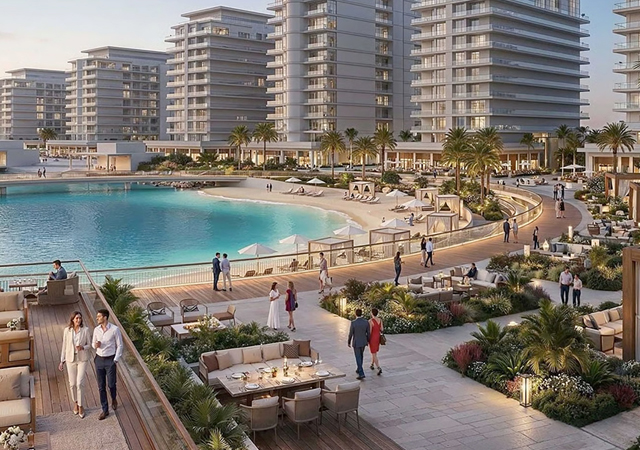
When a project integrates the landscape properly from day one, it directly optimises water cycles, manages fluctuating groundwater levels, mitigates the urban heat island effect, and improves soil stabilisation. Crucially for developers, it reduces the long-term asset operating costs (OpEx) that follow a project for decades. This shift in thinking changes the very DNA of project design, moving ecology from the tail end of the procurement process right to the absolute beginning of master planning.
Managing the water metabolism
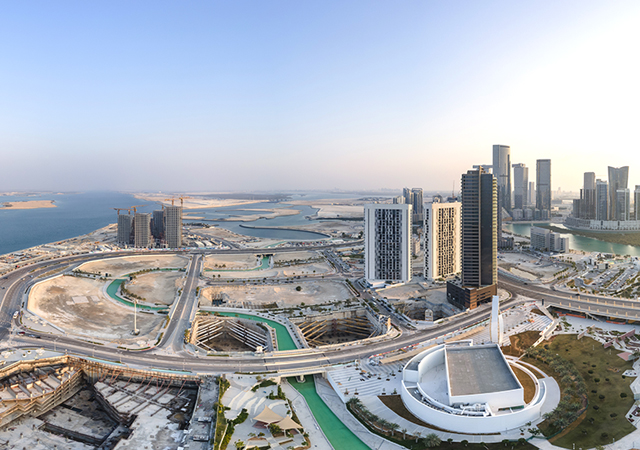
Few regions make the financial and structural need for this shift clearer than the GCC. While historically categorised as water-scarce, modern Gulf cities increasingly experience a complex hydrological paradox where intense flash rainfall events, rising urban groundwater tables, and coastal pressures occur simultaneously. In many rapidly developing districts, severe water deficit and water excess exist within the exact same district.
This is, at its core, a water infrastructure management challenge rather than a simple scarcity problem.
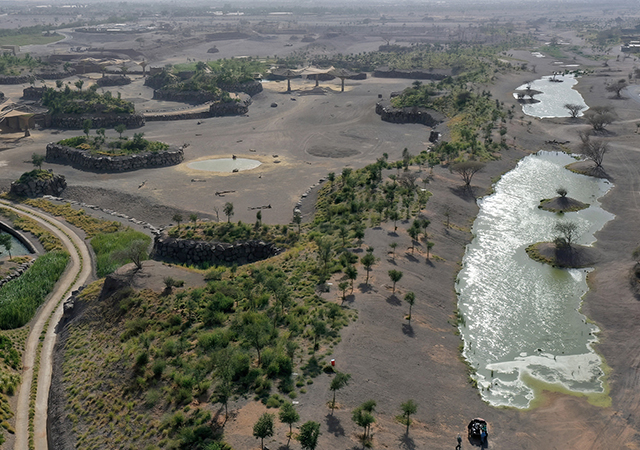
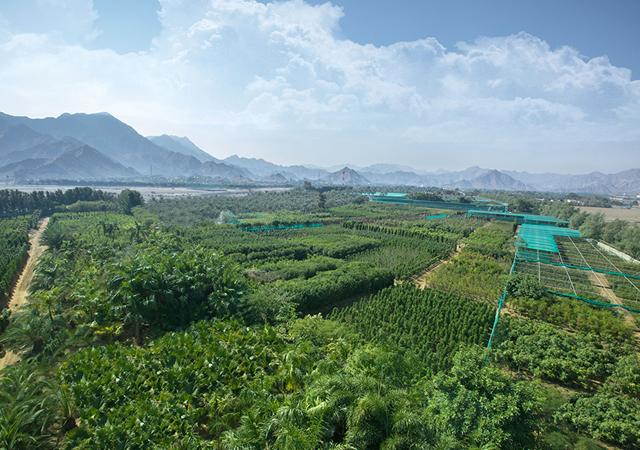
Swales slow water velocity and naturally increase ground infiltration.
Conventional flood management across the region routinely defaults to rigid, hard defences such as concrete channels, massive earthen berms, and underground stormwater culverts designed to evacuate run-off as quickly as possible. However, hardening more urban surfaces and accelerating runoff often amplifies vulnerability downstream, overloading municipal networks rather than resolving the root issue.
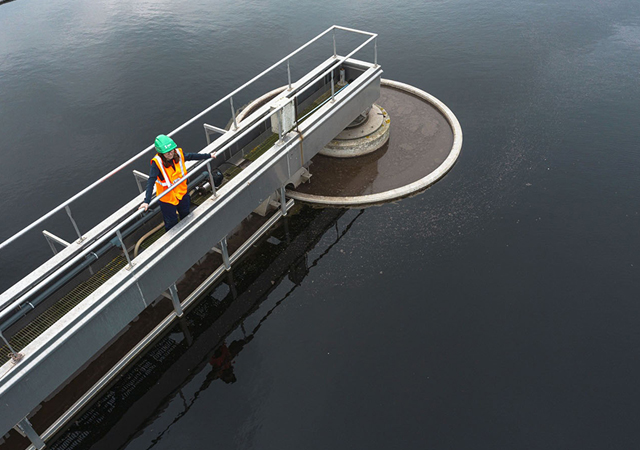
There is a more resilient, value-engineered path forward. Instead of expanding concrete channels, masterplans can incorporate engineered swales that slow water velocity and naturally increase ground infiltration. Rather than relying solely on energy-intensive mechanical water treatment plants, developers can utilise constructed wetlands and reed-bed systems. These biological installations process stormwater and greywater via sediment capture and natural nutrient cycling at a fraction of the power consumption.
Furthermore, permeable landscapes, distributed retention basins, and vegetated corridors act as dynamic urban buffers that adapt to fluctuating water volumes rather than trying to resist them. Nature adapts by integrating energy rather than fighting it. Treated correctly, unpredictable stormwater stops being a liability to civil infrastructure and becomes a resource for community irrigation and soil fertility. The opportunity for the Gulf construction sector is to move away from purely defensive engineering and toward an integrative, landscape-driven metabolism.
Overcoming Structural Barriers
If biological systems can perform so effectively at scale, why do so many regional project specs still default to mechanical, concrete-heavy solutions? The barriers are structural and cultural rather than technical.
First, there is a pervasive culture of risk aversion within procurement teams. Mechanical systems are deeply familiar, and when a pump fails, the contractual accountability feels clearer to a project manager than when a living biological system is establishing itself.
Second, traditional siloed delivery models isolate civil engineers, MEP consultants, and landscape architects into separate verticals. As a result, ecological expertise is almost always invited to the table too late to influence the core site grading or water management strategy.
Finally, established commercial dynamics and rigid estimation structures cause nature-based alternatives to be viewed as an economic displacement or an unproven variance, rather than a long-term cost saver.
It is important to note that ecological systems are not unpredictable; they simply operate on nature’s timeline. A constructed wetland needs time to mature, and biological soil-building takes consecutive seasons. However, once established, these living systems frequently outperform their mechanical equivalents in both sheer climate resilience and total life-cycle cost. The question is no longer whether nature-based solutions work; it is whether developers have the strategic leadership to integrate them early enough in the design process.
Human-centric systems
Real systems thinking must also account for social reality. Regulations, municipal policies, and master designs inevitably fail when they ignore how communities actually live and interact with their built environment. Sustainability imposed purely from the top down as an ideological mandate, without understanding cultural readiness, results in fragile systems.
Technical optimisation without genuine community buy-in produces urban white elephants – infrastructure that looks impressive on a sustainability submission but is ultimately underutilised or rejected in practice. True sustainability is a commercial and social balancing act. It requires the seamless integration of ecological science, community understanding, economic viability, and regional cultural maturity. Leave any single one of these pillars out of the masterplan, and the system will not hold under operational pressure.
Upstream Leadership
The Gulf construction landscape is evolving rapidly. Over the next decade, rising groundwater tables, coastal vulnerability, and escalating utility and energy costs will force a systemic reconsideration of how we design infrastructure, whether the industry plans for it or not.
The opportunity to lead that transition is happening now. This means ecological and landscape services can no longer wait to be treated as an aesthetic afterthought on a sub-contractor list. Landscape specialists must move upstream, engaging urban planners, master developers, and government decision-makers from day one of the concept design phase.
There will always be strong, articulate voices advocating for the traditional, predictable certainty of concrete and steel. Those of us who know that true project resilience can be engineered through living systems must be equally articulate, equally data-driven, and firmly grounded in real-world regional demonstration rather than vague marketing slogans.
Sustainability is not a performance. It is a practical, living engineering practice embedded in how we build, how we spec, and the procurement choices we make at scale. It is the ultimate measure of our industry’s maturity and our sovereignty over our regional natural resources.
The desert has always known exactly how to adapt. Our job as builders is to engineer masterplans that let it.
* Desert Group is a leading landscaping company based in Dubai, UAE.