







































As Saudi Arabia’s warehousing and logistics sector expands under Vision 2030, operators are under growing pressure to cut emissions without sacrificing productivity or uptime. Saudi Diesel Equipment Company (SDEC) is positioning its Bobcat partnership as a response to that pressure, offering a broad range of electric material handling equipment backed by nationwide after-sales support.
“Saudi Diesel Equipment Company is supporting Saudi Arabia’s Vision 2030 by offering Bobcat forklifts that combine productivity, operator safety, fuel efficiency and low-emission electric technology,” Mohammed Al Ansi, Director of Forklift, Lifting Equipment & Sales, told Gulf Construction in an exclusive interview. “Together with nationwide after-sales support, genuine spare parts and technical expertise, we help customers modernise their material handling operations while improving efficiency and sustainability.”
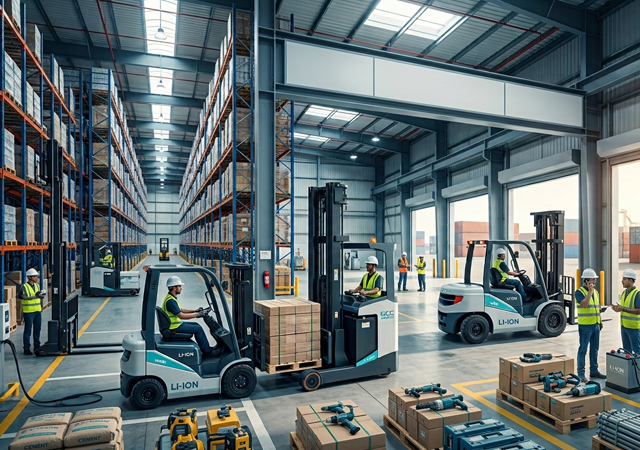
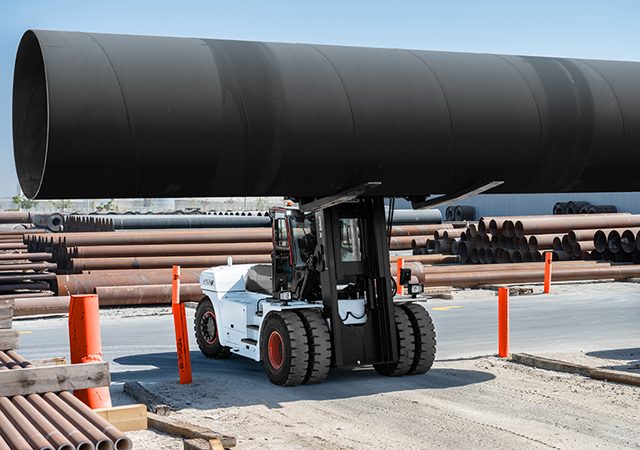
The strategy reflects growing demand for warehouse equipment capable of reducing emissions while maintaining operational performance. SDEC’s Bobcat portfolio covers electric counterbalance forklifts alongside diesel and LPG forklifts, as well as reach trucks, pallet trucks and pallet stackers, enabling customers to select equipment suited to a wide range of logistics and industrial applications. The brand draws on more than 60 years of material handling manufacturing experience – built on the heritage of the former Doosan Industrial Vehicle business – with products ranging from 1.2-ton warehouse equipment to 25-ton heavy-duty forklifts.
_action_015.jpg)
Bobcat offers platform ride-on stacker trucks designed for tight warehouse spaces.
The company believes electric forklifts are becoming increasingly attractive as operators focus on reducing operating costs while improving environmental performance. According to SDEC, Bobcat’s electric forklifts eliminate tailpipe emissions, consume less energy, generate lower noise levels and require less routine maintenance than conventional internal combustion models, allowing customers to maintain productivity and equipment availability while lowering lifecycle costs.
SDEC argues that product performance alone is insufficient to support customers making the transition to electrified fleets. The company, therefore, complements equipment sales with operator training, safe operating procedures, preventive maintenance guidance, commissioning support, technical documentation, technician training and ongoing technical assistance throughout the equipment lifecycle.
Recognising Saudi Arabia’s demanding climate, the company says Bobcat’s electric forklifts have been engineered with robust cooling systems and industrial-grade electrical components capable of operating reliably in high ambient temperatures, provided recommended maintenance and battery management practices are followed. To maximise uptime and battery life, SDEC advises customers to adopt opportunity charging during scheduled breaks, use approved chargers, monitor battery health, avoid deep discharge and carry out regular battery inspections.
The electric forklifts are being targeted primarily at warehousing, distribution centres, food and beverage facilities, pharmaceutical operations, retail logistics, manufacturing plants, cold storage facilities and other indoor material handling applications. Customers benefit from quieter operation, zero exhaust emissions and more precise handling, according to the company.
.jpg)
SDEC’s Bobcat portfolio covers electric forklifts alongside diesel and LPG forklifts, as well as reach trucks and pallet trucks.
While acknowledging that electric forklifts typically require a higher initial investment than diesel or LPG machines, SDEC maintains that lower energy consumption, reduced maintenance requirements, fewer wear components and longer service intervals result in lower overall operating costs over the equipment’s lifecycle.
The company also reassures customers concerned about fleet electrification by conducting application studies, recommending suitable battery technologies, advising on charging infrastructure, providing demonstrations and calculating total cost of ownership before investment decisions are made.
As competition intensifies from lower-cost electric forklift manufacturers, SDEC believes Bobcat differentiates itself through engineering quality, durability and long-term ownership economics rather than upfront purchase price. The company cites proven reliability, high engineering standards, longer equipment life, superior safety, strong residual values, comprehensive warranty coverage, dependable after-sales support and lower lifetime operating costs as key competitive advantages.
Supporting customers after delivery remains central to the company’s strategy. SDEC operates a nationwide service network supported by factory-trained technicians, genuine Bobcat spare parts, preventive maintenance programmes, emergency breakdown support, technical consultancy, warranty services and long-term maintenance agreements. The company adds that users of Bobcat electric forklifts have reported lower maintenance costs, improved equipment availability, reduced energy consumption, higher warehouse productivity and greater operator satisfaction after switching from conventional equipment.
Looking ahead, SDEC intends to expand the deployment of Bobcat electric material handling equipment across Saudi Arabia by strengthening customer support, increasing market awareness and growing the installed fleet.
“Saudi Diesel aims to expand the adoption of Bobcat electric material handling equipment throughout Saudi Arabia by strengthening customer support, increasing market awareness, growing the installed fleet and supporting customers’ transition toward more sustainable warehouse operations in line with Vision 2030,” Al Ansi concludes.