

































































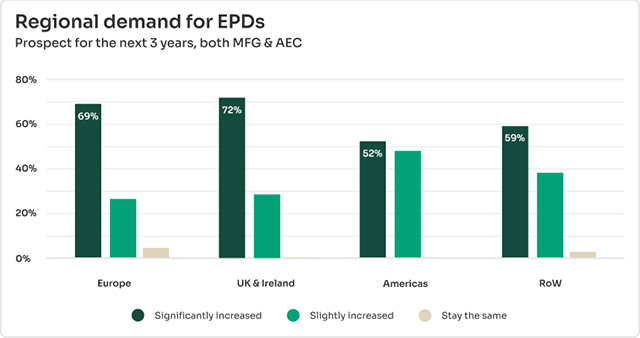
To cut carbon, we have to count it. According to a groundbreaking report from One Click LCA, the world’s largest life cycle assessment (LCA) platform, scaling reliable, transparent environmental data across the supply chain could slash a building’s embodied carbon by up to 30 per cent. Yet, despite this massive decarbonisation potential, a critical data shortage is stalling progress. While 97 per cent of construction professionals forecast a massive spike in demand for verified environmental data, many project teams – particularly in high-impact areas like mechanical, plumbing, and electrical systems – are still left guessing due to a severe supply gap from manufacturers.
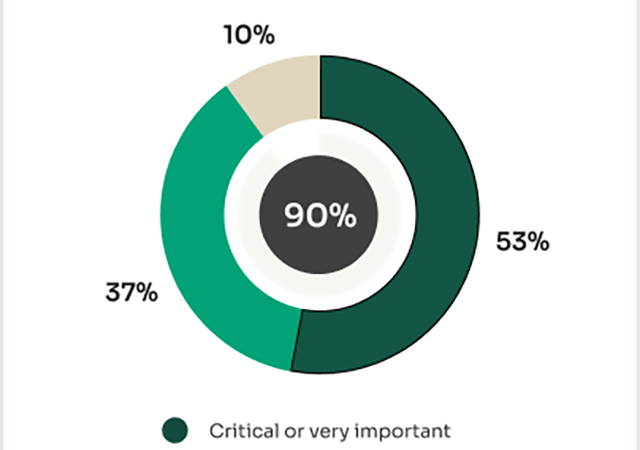
The Carbon Experts Report 2026 highlights a growing gap between demand from architects and engineers (AEC) and manufacturers’ supply of Environmental Product Declarations (EPDs) and reveals that 90 per cent of AEC professionals already prefer products with EPDs when specifying materials for projects.
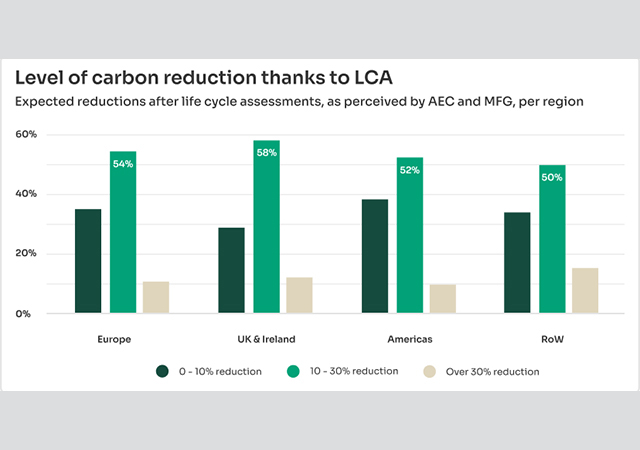
The findings suggest that the next phase of construction decarbonisation will depend on scaling reliable product data across the value chain. Both manufacturers and AEC professionals estimate that transparent product data could reduce embodied carbon in construction up to 30 per cent, demonstrating the significant climate impact of scaling environmental transparency across the supply chain. By expanding EPD coverage and improving digital data exchange, manufacturers can not only unlock new commercial opportunities but also enable meaningful emissions reductions across projects worldwide.
The report also highlights a growing opportunity gap between manufacturers and the AEC sector. While product-level environmental data is increasingly shaping design and procurement decisions, many project teams still lack access to verified data for key materials and product categories, with one-third of professionals reporting a lack of data in several categories. One of the biggest gaps lies in mechanical, electrical, and plumbing (MEP) products, which are critical to decarbonisation efforts, as MEP systems can make up 15 to 50 per cent of a building’s embodied carbon.
Environmental product data a competitive advantage
As embodied carbon becomes a central concern in construction, EPDs are increasingly shifting from being compliance tools to market assets. The study shows that 65 per cent of AEC professionals now require EPDs for all or most projects. In comparison, 90 per cent say they prefer products backed by EPDs because they help meet sustainability requirements and strengthen bids for environmentally driven projects.
Manufacturers recognise this shift. More than half view environmental product data as a competitive advantage and an important factor for market access, reflecting the growing role of carbon transparency in procurement decisions. However, the report highlights a persistent disconnect: demand from project teams is growing faster than manufacturers’ perceptions of that demand, particularly in MEP products, where verified environmental data remains limited.
Manufacturers hold the key to decarbonisation
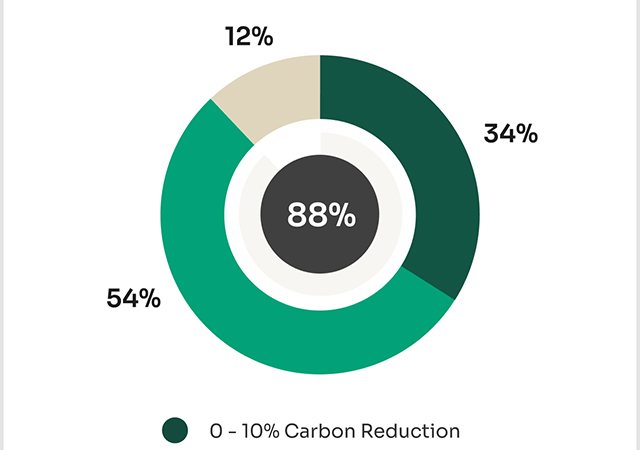
With buildings responsible for roughly 40 per cent of global carbon emissions, the construction supply chain represents one of the largest opportunities to accelerate climate action. Manufacturers sit at the foundation of this supply chain, and their ability to provide verified product data is crucial to enabling low-carbon design and procurement decisions. More than half of the manufacturers believe they can reduce carbon more than 10 per cent, even over 30 per cent.
Yet the report notes that the greatest carbon-reduction potential lies in the early design stages, when material choices are still flexible. Without reliable product data available early in the process, many of these opportunities remain unrealised.
As many as 56 per cent of manufacturers now see product-level EPDs as a competitive advantage, a marked change from the 40 per cent in the 2025 report. Yet the discrepancy between AEC demand and manufacturer sentiment persists, suggesting that suppliers with environmental data will have a competitive edge in the years to come.
The report highlights a regional case study of Saudi Readymix which is now performing LCA and, since early 2024, has published 54 EPDs in-house.
Technology and automation accelerate progress
Both manufacturers and AEC professionals expect automation and AI-assisted tools to play a major role in scaling environmental assessments across the industry. Respondents highlighted technologies such as automated data mapping, API (application programming interface) integrations between enterprise systems, and AI-assisted data matching as key approaches to reducing the time and complexity required to produce LCAs and EPDs. These technologies could help manufacturers scale environmental data creation across entire product portfolios while enabling project teams to integrate carbon analysis directly into design workflows.
Yet, despite growing awareness and increasing demand, the report identifies several barriers slowing progress toward net-zero construction. Manufacturers continue to cite cost, complexity, and verification requirements as major obstacles to producing EPDs at scale. At the same time, AEC professionals report that a lack of verified product data remains one of the most limiting factors when conducting whole-building carbon assessments.
Regulatory progress is helping drive change, particularly in Europe, where policies such as the recent Industrial Accelerator Act (IAA), revised Energy Performance of Buildings Directive (EPBD), the Construction Products Regulation (CPR), and the Carbon Border Adjustment Mechanism (CBAM) are strengthening demand for reliable product-level environmental data.
“For years, the construction industry has talked about regulatory requirements as the main driver for EPD adoption, but today, having this data has become a competitive requirement. Materials manufacturers who have EPD data for their portfolio are the ones who will continue to gain market share, and further carbon reductions depend on this product-level data,” says Panu Pasanen, Founder and CEO of One Click LCA.
With demand for verified environmental data accelerating, the report concludes that stronger collaboration between manufacturers, designers, regulators, and technology providers will be essential to transform rising market expectations into measurable carbon reductions in the built environment.