
.jpg)

.jpg)






.jpg)
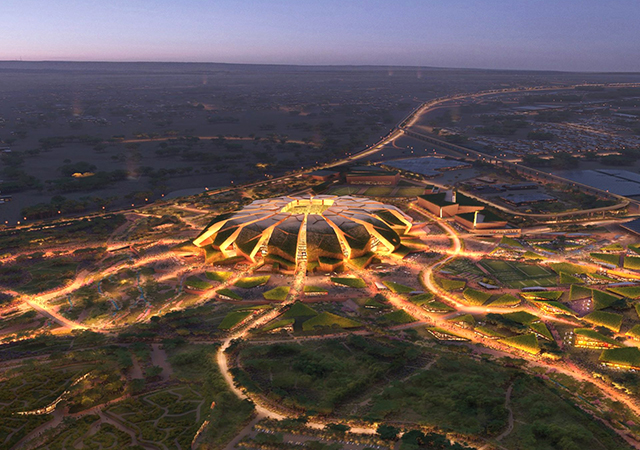
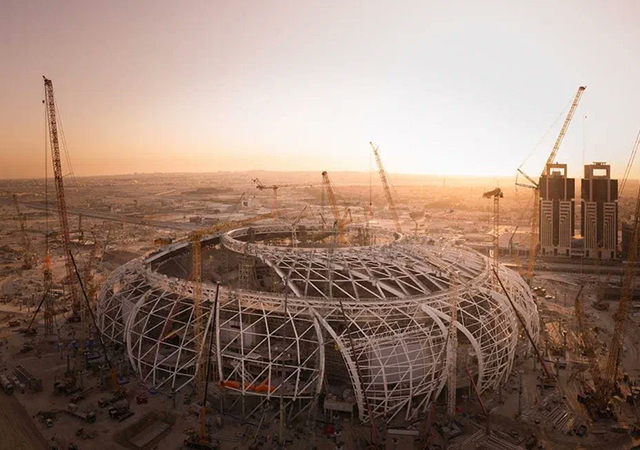




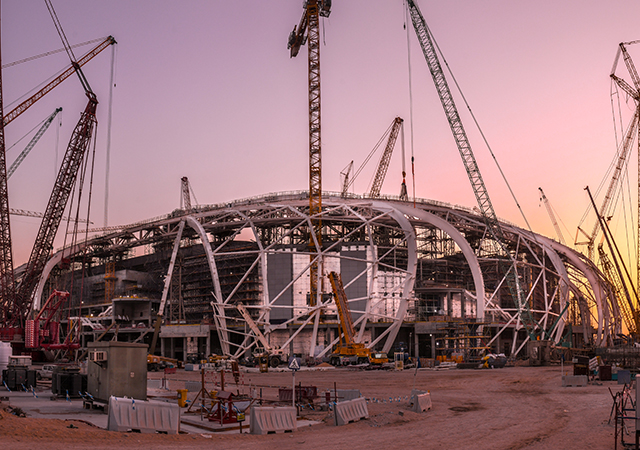
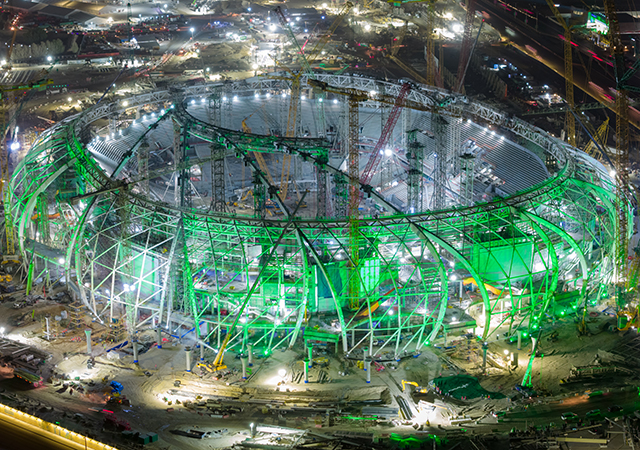
 The 47,000-seat Aramco Stadium is being built in Al Khobar by BESIX and Al Bawani under a SAR3.7 billion EPC contract.
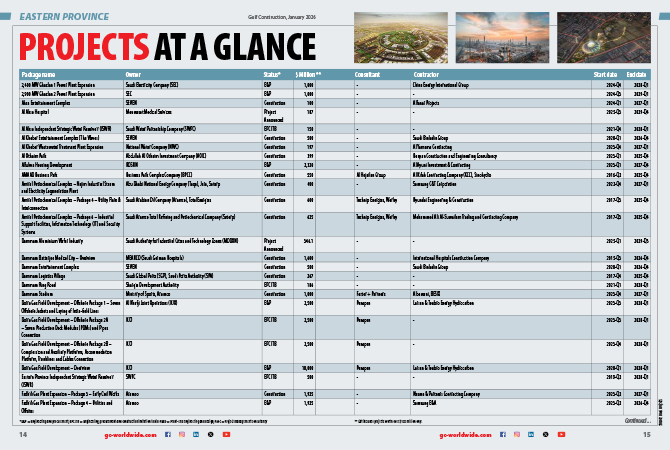
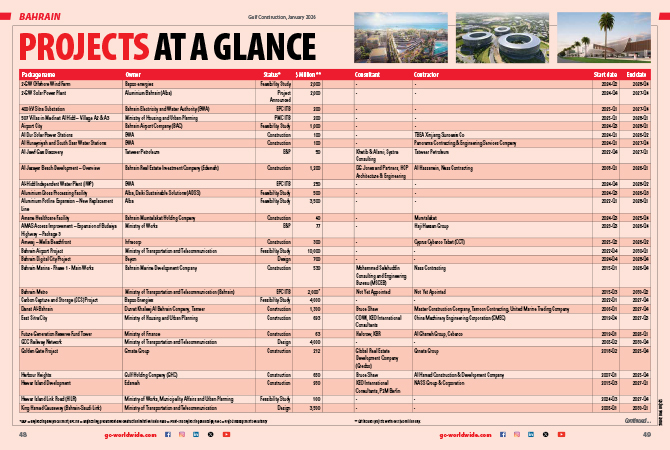
Saudi Arabia’s Eastern Province is entering a defining phase of growth, marked by a surge of construction activity across transport, tourism, industrial and real estate sectors. The scale and diversity of ongoing projects reflect not only the region’s strategic economic role, but also its accelerating transformation under Vision 2030.
From new logistics corridors and upgraded highways to expansive leisure destinations and mixed-use urban hubs, development in the region is unfolding at a pace unmatched in decades.
Among these projects is a landmark sports venue, Aramco Stadium in northern Al Khobar, being developed by a partnership of Saudi Aramco and ROSHN, a PIF company and a multi-asset real estate developer. This 47,000-seat multi-purpose facility, designed by Populous, will host 2027 AFC Asian Cup matches and 2034 FIFA World Cup fixtures (see Page 18).
 |
|
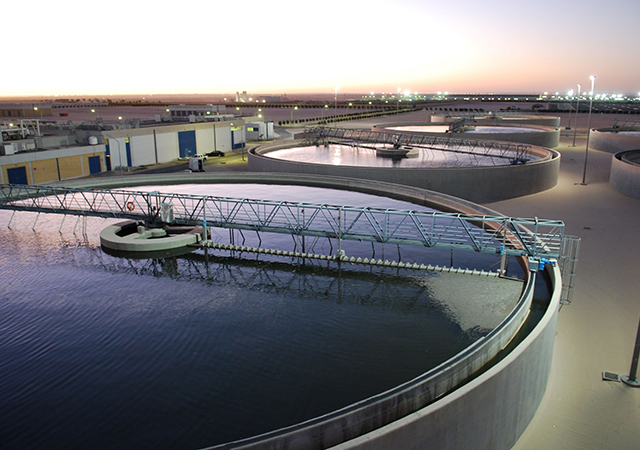
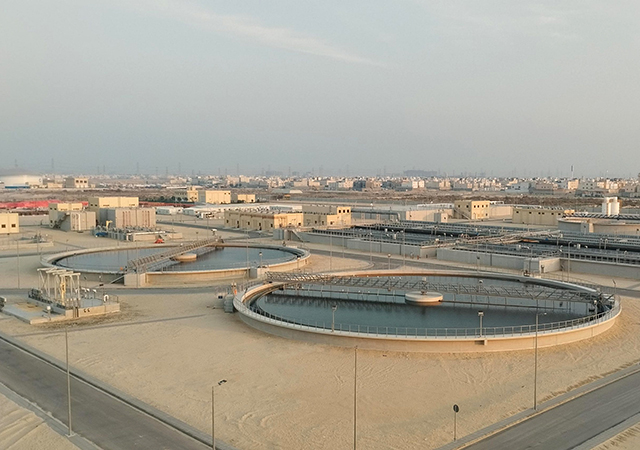
The Dammam Independent Sewage Treatment Plant was completed by a consortium comprising Metito Utilities, Mowah and Orascom. |
In the industrial and energy spheres, major investments in wastewater treatment, carbon capture, advanced manufacturing and housing for remote workforce communities underscore the Eastern Province’s position as the backbone of the kingdom’s energy economy. At the same time, rising demand for sustainable technologies and locally manufactured components is driving new industrial facilities in Jubail and Dammam as well as in the mega hub King Salman Energy Park (SPARK), further strengthening the region’s reputation as a centre for innovation and high-value production.
Complementing this industrial momentum is the rapid evolution of the built environment. Flagship tourism developments, large-scale residential schemes, and next-generation mixed-use districts in Dammam, Al Khobar and Jubail are reshaping the region’s urban profile and improving the overall quality of life. Together, these transformative projects signal a new era for the Eastern Province – one defined by diversified growth, global investment partnerships and a confident push toward a more connected, competitive and vibrant regional economy.
POWER & WATER
The Eastern is undergoing one of its most active phases of power and water infrastructure construction in more than a decade, as multi-billion-dollar generation, transmission and treatment projects advance in parallel. The momentum reflects both the kingdom’s Vision 2030 utilities strategy and the growing role of private-sector developers in delivering large-scale infrastructure across the energy and water sectors.
Renewable energy is increasingly becoming a central focus of the region’s energy strategy and one of the most defining projects in this sector was the announcement last month of plans to construct a large-scale solar power plant integrated with advanced battery storage technology in the Eastern Province that will transmit the electricity generated to neighbouring Bahrain.
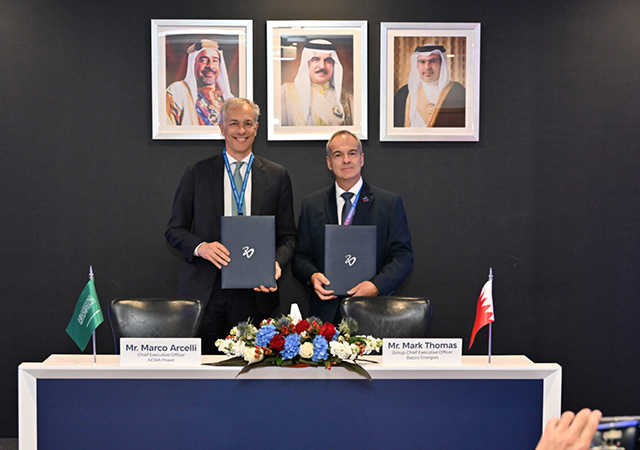
Acwa Power and Bapco Energies announced a Joint Development Agreement for the solar power plant with a planned generation capacity of up to 2.8 GW across several phases bolstering Bahrain’s national energy supply. The project represents a significant milestone in regional collaboration and energy diversification, aligning with Saudi Arabia’s Vision 2030 and Bahrain’s Economic Vision 2030, and reinforcing both countries’ ambitions to accelerate the transition to renewable power while enhancing regional energy security (see Regional News).
 |
|
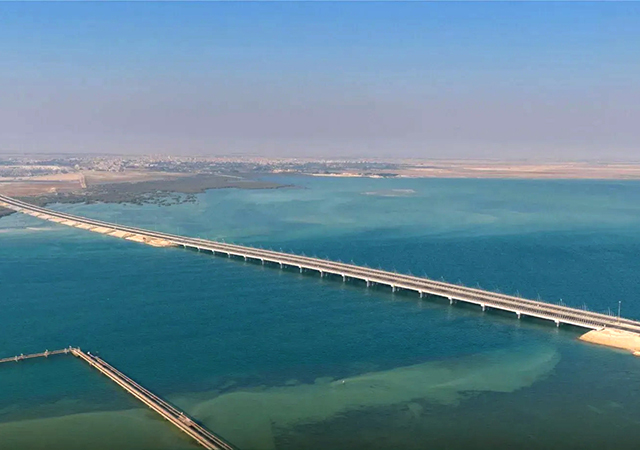
The Safwa–Rahima Road and its landmark 3.2-km marine bridge links Safwa in Qatif to the industrial centre of Ras Tanura. |
Another major milestone for the sector was Acwa Power’s announcement in October that its affiliate, Hajar Two Electricity Company, had achieved financial close for the Qurayyah Combined Cycle Gas Turbine (CCGT) Independent Power Plant expansion. The SAR10.8 billion ($2.9 billion) financing package – secured through a syndicate of local, regional and international lenders – clears the way for full construction mobilisation at the coastal site. Once completed, the 3,010-MW facility will be one of the largest combined-cycle installations in the kingdom and will strengthen the Eastern Province’s position as a central hub for high-efficiency gas-fired generation. Acwa Power holds a 40 per cent stake in the project and will oversee the development, construction, ownership and long-term operation of the plant under a 28-year funding structure.
Meanwhile, construction is under way at the Nairyah site in the Eastern Province on two major combined-cycle power plants – Nairyah 1 and Nairyah 2. This follows the award of a SAR1.52-billioncontract early last year to a consortium of South Korea’s Doosan Enerability and Sepco3 for the development of two large combined-cycle plants – Rumah 1 in the Riyadh region and Nairyah 1 – together totalling 3,600 MW.
The developer consortium, which comprises Acwa Power, Korea Electric Power Corporation and Saudi Electricity Company, previously finalised its power purchase agreement with the Saudi Power Procurement Company. Nairyah 1, located 50 km north of Al Nairyah, will introduce a new generation of gas-fired capacity to replace older oil-based units while supporting Saudi Arabia’s grid diversification plans.
A second wave of development is advancing in tandem, with Siemens Energy having received a $1.6-billion order to supply the turbine island and associated technologies for the Rumah 2 and Nairyah 2 power plants. These installations will add another 3.6 GW to the national grid and are designed to rank among the world’s largest combined-cycle facilities. Harbin Electric International has been appointed EPC contractor for the two sites, while Siemens Energy will supply six SGT6-9000HL gas turbines, four SST6-5000 steam turbines and a suite of generators and auxiliary systems. The components will be manufactured at the expanding Siemens Energy Dammam Hub, reinforcing the localisation of advanced power technologies within the Eastern Province. The plants are expected to enter simple-cycle service in 2027 before converting to full combined-cycle mode in 2028. Together, they will contribute up to a 60 per cent reduction in emissions compared to the oil-fired stations they are set to replace and have been engineered to accommodate future carbon capture technologies.
 |
|
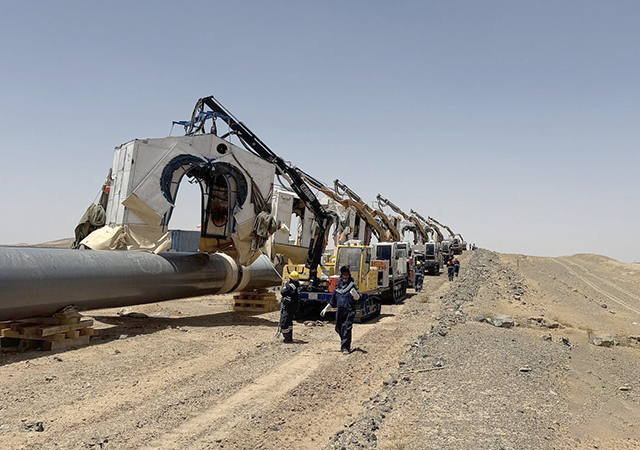
Automatic welding solutions supplied by Qapqa were deployed by L&T for the MGS Phase Three, Package Eight pipeline. |
The region is also seeing major progress in water transmission and treatment infrastructure. Saudi Water Partnership Company’s signing of SAR8.5 billion agreements for the Jubail–Buraydah Independent Water Transmission Pipeline marks one of the kingdom’s largest water-sector PPPs currently under development. A consortium led by Aljomaih Energy and Water Company, in partnership with Nesma and Buhur for Investment, will deliver the 587-km pipeline on a build-own-operate-transfer model.
The system will transport up to 650,000 cu m of water per day between the Eastern Province and Al Qassim, supported by nine strategic storage tanks with a combined capacity of 1.63 million cu m. The project is expected to begin commercial operations in the second quarter of 2029 at the start of its 35-year concession term.
In September, the Eastern Province witnessed the launch and inauguration of 122 water and environmental projects worth SAR28.8 billion. These include more than 60 completed initiatives valued at SAR20.8 billion and a further 59 projects worth SAR8 billion for which foundation stones were laid. Together, they benefit an estimated four million residents and underscore the scale of ongoing public-sector investment in water security and service quality.
Among the most significant of the projects that were completed is the Dammam Independent Sewage Treatment Plant. Delivered by a consortium comprising Metito Utilities, Mowah and Orascom Construction, the SAR690-million facility represents a major step forward for wastewater treatment in the western part of the city.
ROADS & BRIDGES
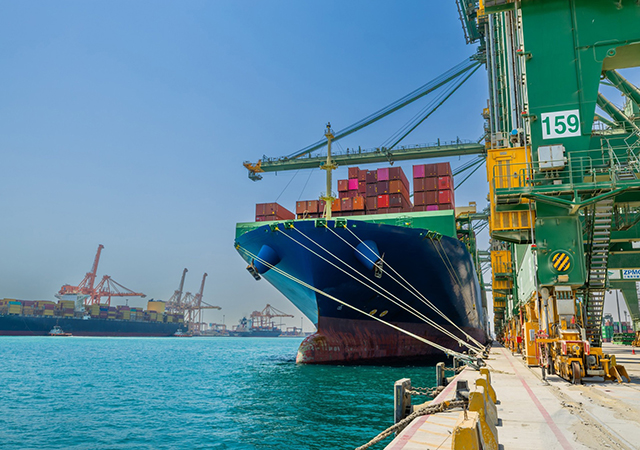
The transport network in the Eastern Province was boosted with the recent opening of the Safwa–Rahima Road and its landmark 3.2-km marine bridge, one of the longest in the kingdom. The 15-km route links Safwa in Qatif to the industrial centre of Ras Tanura, easing congestion, cutting travel times and improving daily access for thousands of employees at the Ras Tanura Oil Refinery. The bridge creates a new logistics corridor that supports supply chains linked to Ras Tanura Port and connects directly to major highways such as the Dammam–Jubail Expressway.
Alongside this project, the government has upgraded the Dhahran–Buqayq–Abu Hadriyah Road, including five new bridges, enhanced lighting and improved rainwater drainage. The General Authority for Roads notes that the new infrastructure provides an additional entry point to Ras Tanura, shortens travel distances to Dammam and Qatif and improves connectivity to King Fahd International Airport, further strengthening the region’s mobility and economic competitiveness.
OIL & GAS
The oil and gas construction sector marked a key milestone in September with the completion of a major portion of Saudi Aramco’s Master Gas System (MGS) expansion by Larsen & Toubro (L&T). The Indian engineering and construction giant finalised the EPC works for a critical segment of the MGS Phase Three, Package Eight pipeline, an essential element of the kingdom’s long-term gas infrastructure strategy. The completed scope covers a 120-km stretch of 56-inch pipeline, built using advanced automatic welding solutions supplied by Dutch technology provider Qapqa.
Aramco’s Master Gas System, one of the world’s most extensive hydrocarbon networks, is being expanded in phases to accommodate the kingdom’s push into non-associated gas and unconventional gas development. The broader MGS-3 initiative aims to increase gas throughput, unlock new reserves and reduce pressure on crude as a feedstock for domestic power generation. Within this framework, the Pipeline Package 8 works delivered by L&T form a strategic component of the upgraded network.
The expansion also supports Aramco’s Booster Gas Compression Station programme, which will increase the capacity of the East–West Pipeline system to deliver sales gas across the kingdom more efficiently. Construction momentum is now shifting to the next stage: Qapqa teams have mobilised on the EWG-04 segment, covering the second phase of the 241-km pipeline scope.
INDUSTRIAL FACILITIES
The industrial construction sector is accelerating across the Eastern Province, driven by major investments in wastewater treatment, clean energy, high-tech manufacturing and advanced power generation. Several landmark projects are now entering implementation or delivery, reinforcing the region’s position as a core hub for industrial transformation under Vision 2030.
 |
|
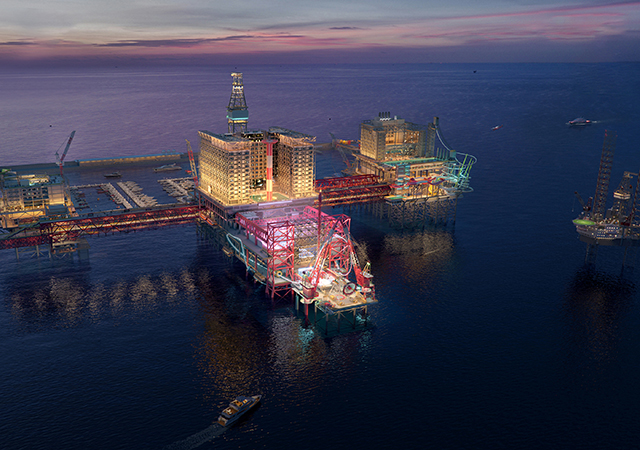
THE RIG., a one-of-a-kind adventure tourism destination, will feature three hotels, 11 restaurants, a marina, and over 70 attractions. |
In Jubail Industrial City, Marafiq has signed a 30-year concession agreement with Satorp (Saudi Aramco Total Refining and Petrochemical Company) to develop and operate a next-generation industrial wastewater treatment plant for the $11-billlion Amiral petrochemical complex. The $500-million facility, being spearheaded through a dedicated company owned by Marafiq, Veolia Middle East and Lamar Arabia for Energy, will deploy cutting-edge technologies to treat complex effluents, including spent caustic, and recycle them back into industrial processes. The closed-loop system will produce demineralised water for reuse within Amiral, significantly improving energy efficiency and reducing the plant’s environmental footprint. The project forms part of Aramco’s wider sustainability strategy and supports the expansion of the kingdom’s downstream and petrochemical capabilities.
Complementing this push toward cleaner industrial operations, Aramco has signed an agreement with Linde and SLB to establish what is set to become one of the world’s largest carbon capture and storage hubs. Phase One of the Jubail-based facility is expected to be completed by 2027 and will capture and permanently store up to nine million tonnes of CO₂ annually from Aramco gas plants and other emitters. Carbon will be transported through a dedicated pipeline network and injected into deep saline aquifers. With Aramco holding a 60 per cent stake, the project supports the company’s ambition to achieve net-zero Scope 1 and Scope 2 emissions by 2050 and strengthens the kingdom’s broader circular carbon economy programme.
Industrial localisation efforts are also gaining momentum. In Dammam’s Third Industrial City, the Toray Membrane Middle East Plant has officially opened, marking Toray Industries’ second membrane manufacturing facility outside Japan. Developed in partnership with Abunayyan Holding at a cost exceeding SAR1 billion, the plant will produce 300,000 reverse-osmosis membranes annually, supporting regional demand for desalination and advanced water technologies. The project reflects the national strategy to build domestic capability in specialised industries and enhance long-term water and industrial security.
Meanwhile, Mitsubishi Power has inaugurated its first locally assembled M501JAC gas turbine at its Dammam facility, a milestone for Saudi Arabia’s advanced energy manufacturing sector. The turbine, one of the world’s most efficient and reliable, will be deployed at the Amiral cogeneration plant in Jubail, supplying 475 MW of electricity and steam to the petrochemical complex. The achievement underscores Mitsubishi’s expanded localisation drive and highlights the Eastern Province’s evolution into a regional centre for high-efficiency power generation technologies.
TOURISM FACILITIES
The Eastern Province is witnessing a surge in the development of large-scale tourism and entertainment destinations, with several flagship projects entering advanced construction phases and new multi-billion-riyal agreements set to reshape the region’s leisure landscape. Among such projects was the recent launch of the first phase of the Global City Dammam project, an expansive cultural and entertainment complex.
 |
|
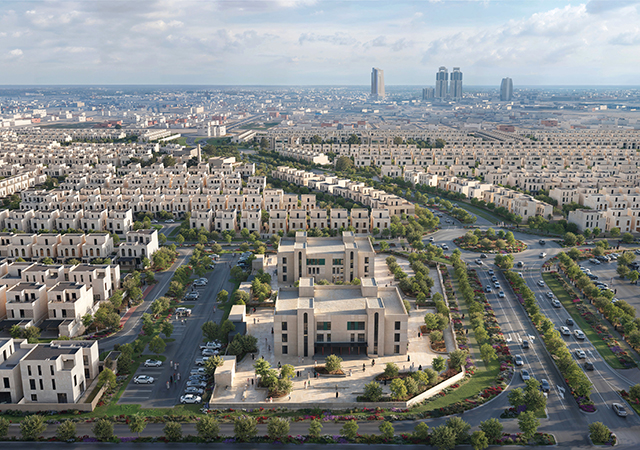
ROSHN’s ALDANAH community will deliver over 2,000 high-quality homes upon completion. |
Developed by the Eastern Province Mayoralty in partnership with a Thai investor, Global City Dammam is being positioned as a major tourism anchor combining culture, recreation, dining and commercial attractions (see Page 24).
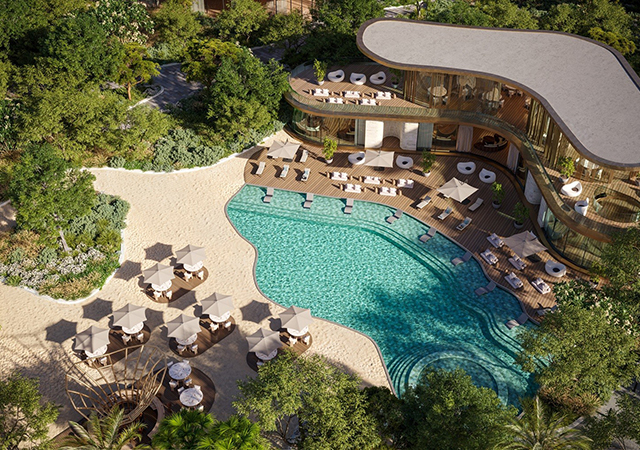
The region’s most high-profile project advancing offshore is THE RIG., a one-of-a-kind adventure tourism destination located 40 km from the coastline near Al Juraid Island. Owned by the Public Investment Fund (PIF) subsidiary Oil Park Development Company (OPDC), the project is inspired by offshore oil platforms, celebrating the kingdom’s heritage while redefining adventure tourism. The masterplan, which was unveiled recently, will span over 300,000 sq m and feature three hotels with 800 rooms, 11 restaurants, a 50-berth marina, and over 70 attractions. Recent media reports suggest that OPDC is tendering several key packages for the development, covering offshore rig refurbishment, a subsea cable network, and the construction of two onshore terminals in Dammam and Jubail Industrial City, setting the stage for construction mobilisation to begin.
Meanwhile, a series of high-value agreements were signed during the recent Cityscape Global 2025 in Riyadh, which are set to boost the province’s tourism construction pipeline. The Eastern Province Municipality concluded 14 investment and development deals worth more than SAR5 billion, covering entertainment, retail and hospitality assets across key coastal locations. These include new amusement parks in partnership with Kuwaiti investors, the province’s first outlet shopping complex, and a forthcoming flagship destination in Half Moon Bay that will bring together Saudi, Gulf and British partners. This major project will integrate more than 100 international brands, amusement zones, a themed “Last Exit” food park, art and fashion academies, multi-use halls and a mini-golf course, substantially enhancing the region’s draw for domestic and regional tourists. Additional agreements support the development of Blue Flag-certified coastal resorts, upgraded beaches, air-quality monitoring infrastructure and carbon-credit initiatives. New resort projects have also been approved for Al-Khafji, while the management and operation of the Marjan Island Resort on the Dammam Corniche has been awarded under a new investment deal.
This apart, agreements worth more than SAR7 billion were announced at the TOURISE 2025 Summit, overseen by Eastern Region Governor Prince Saud bin Naif bin Abdulaziz. Key among these is the establishment of the Al-Khobar pier project fund – in partnership with Ashraq Development Co, Ajdan Real Estate Development Co, and AlJazira Capital – which aims to transform the pier area into one of Saudi Arabia’s most vibrant waterfront destinations. The 671,000-sq-m masterplan features an 850-m waterfront and will introduce a range of upscale hotels and resorts offering more than 1,450 rooms and suites, alongside residential units in collaboration with leading international hospitality brands. Designed as a fully integrated leisure and tourism community, the pier redevelopment will expand accommodation capacity, drive tourism spending and attract both local and foreign investment.
REAL ESTATE
 |
|
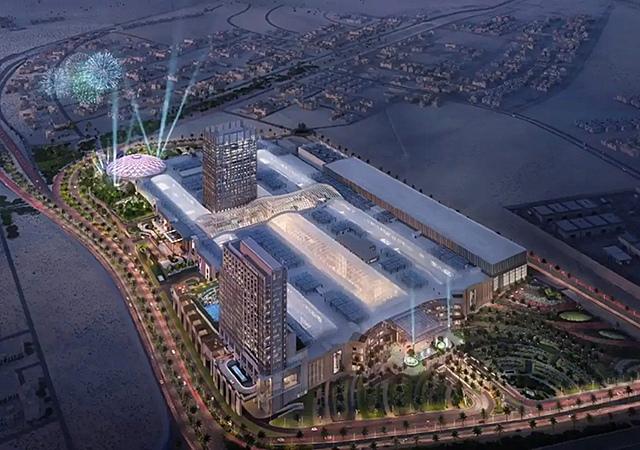
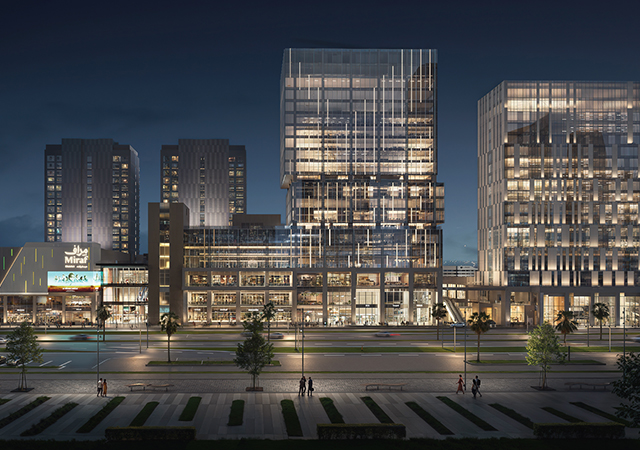
Miraf District, a 42,000-sq-m mixed-use development, in central Al Khobar. |
These tourism projects alongside a wave of major mixed-use, residential and hospitality developments advancing across Dammam, Al Khobar and Jubail are creating considerable momentum in the real estate sector. Several landmark projects have moved into design, construction or launch stages, reflecting strong investor confidence and sustained demand for modern, integrated urban destinations aligned with Vision 2030.
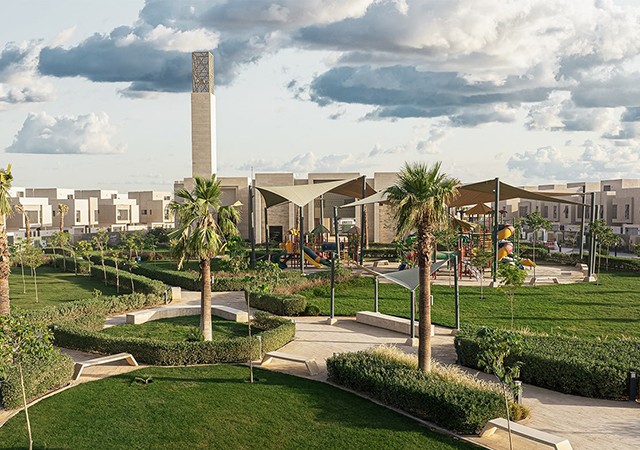
In May last year, ROSHN Group broke ground on ALDANAH, its first fully integrated residential community in Dhahran. The master-planned development is located at the strategic confluence of Dammam, Dhahran, and Al Khobar and spans 1.7 million sq m. The project will deliver over 2,000 high-quality homes upon completion, including the first phase of more than 1,000 units featuring standard and premium villas plus duplexes in diverse floor plans and regionally inspired designs. Close to 145,000 sq m of the project’s total footprint will be dedicated to urban green space, accompanied by naturally shaded and pedestrian-friendly living streets, connecting residents with nature.
In Dammam, Bahrain-based Seef Properties has entered the detailed design phase of a 78,000-sq-m mixed-use development – its first Saudi project –being delivered in partnership with Majd Investment Company. The scheme brings together residential, commercial, hospitality and entertainment components, supported by an international consortium of consultants. Benoy is leading the masterplanning and architectural work, while MSCEB oversees engineering design and site supervision.
The residential sector is also seeing growth, with Lamar Holding and Asyad Group breaking ground on Aramco’s Abu Ali Housing project north of Jubail. Developed under a long-term PPP structure, the scheme will deliver serviced compounds for 500 employees working on Abu Ali Island and builds on Lamar’s previous housing collaborations with Aramco. The project is scheduled to become operational in 2027 and aims to set new standards for high-quality, community-focused accommodation in remote industrial locations.
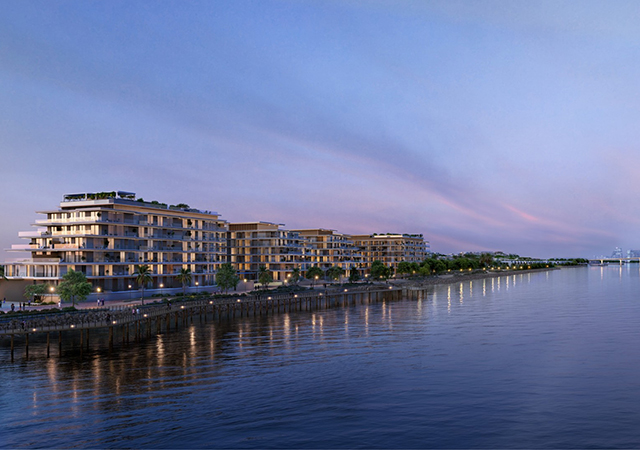
Al Khobar is emerging as a focal point for upscale mixed-use developments. Retal Urban Development has awarded SAR450 million in contracts for its Retal Rise and Nobu Hotel projects, which bring 129 residential units, 101 hotel rooms, 62 branded residences and a Nobu Restaurant to the city’s corniche. The 15-month construction programme is being executed by Specialized Construction Company. Retal has also secured new structural works contracts for the Remal Business Court and signed a nearly SAR1 billion contract to build 901 villas in Jubail, underscoring its expanding footprint in both residential and commercial real estate.
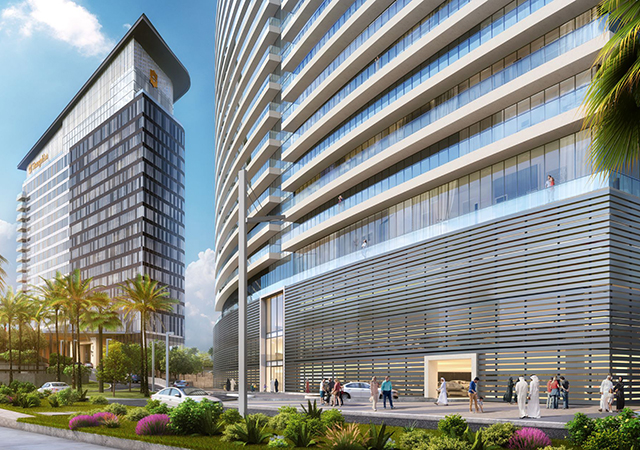
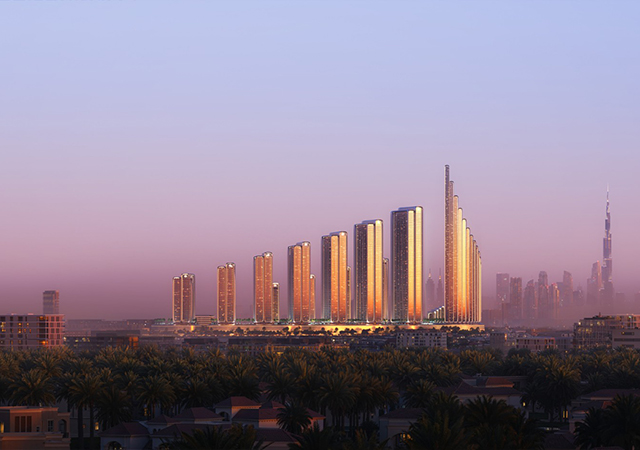
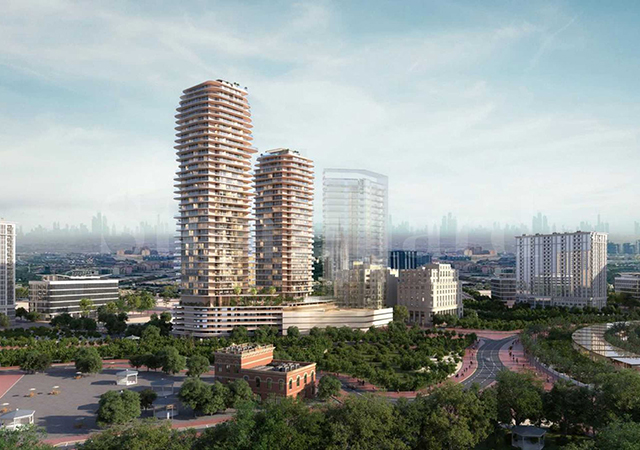
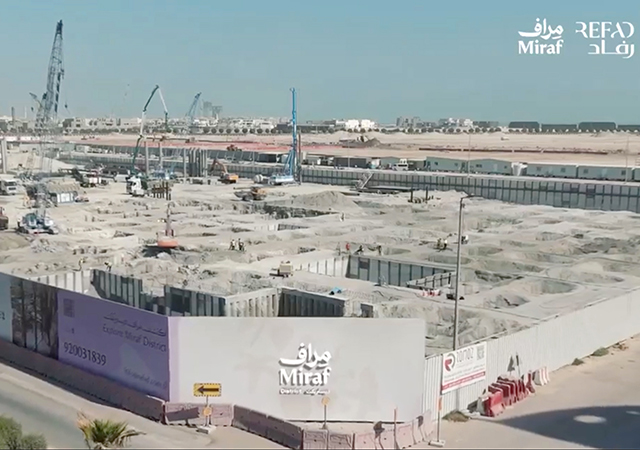
Adding further momentum, Refad Real Estate has launched Miraf District, a 42,000-sq-m mixed-use development that introduces a new urban landmark in central Al Khobar. The project includes two residential towers, a premium office tower, a retail and lifestyle plaza, and a 240-key Hotel Indigo managed by IHG. Designed by Gensler, Miraf District is positioned as a human-centred community that aligns with Vision 2030’s goals for liveability and sustainable growth (see Page 22).
.jpg)